





New Delhi: The Supreme Court on Wednesday said laws that penalise people for having more than two children have lost their relevance, observing that fears of overpopulation have weakened amid significant demographic changes over the past few decades.
Noting that India's total fertility rate (TFR) has fallen from 3.0 to 1.9 since 2003, the court said laws intended to restrict population growth must be reconsidered in light of current realities.
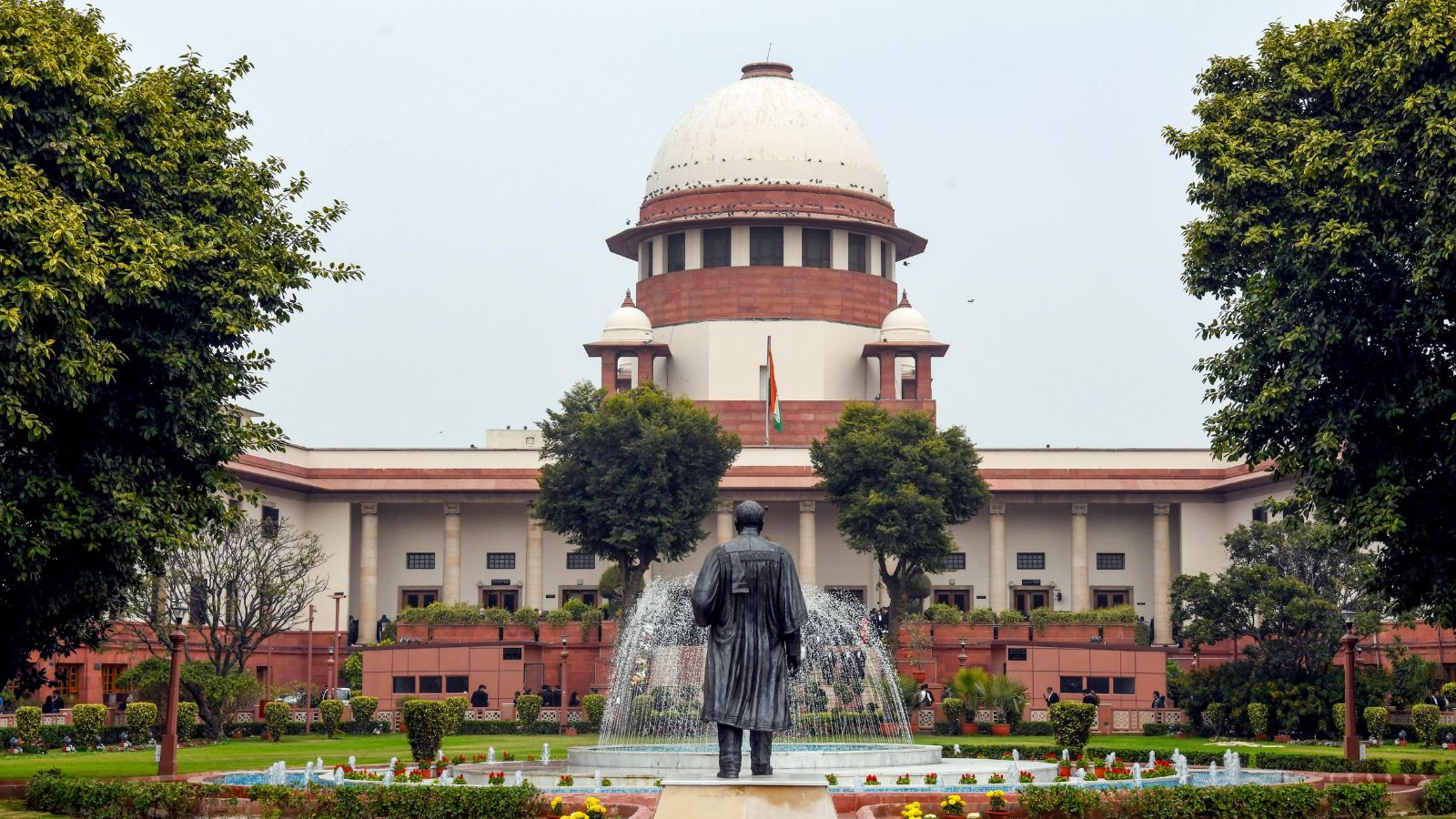
The bench of Justices P S Narasimha and Alok Aradhe referred the matter to a larger bench to reconsider the principles laid down in the Supreme Court's 2003 judgment in Javed versus State of Haryana.
The verdict came in an appeal filed by Mangala Bhimrao Ingle, whose election as sarpanch of Kakoda gram panchayat in Maharashtra was set aside because she had more than two children. Her disqualification was based on Section 14(1)(j-1) of the Maharashtra Village Panchayats Act, 1959.
In its July 2003 judgment, the Supreme Court had upheld a provision under the Haryana Panchayati Raj Act, 1994, disqualifying people with more than two living children from contesting or holding panchayat positions.
Court links demographic changes to reproductive autonomy
The bench observed that the right to make reproductive decisions is an integral part of the right to life and personal liberty under Article 21 of the Constitution.
"We are of the strong opinion that laws that penalise having more than two children have lost their relevance. The foundation of such laws, i.e. the fear of overpopulation, has crumbled due to demographic changes in the past few decades," the bench said.
It noted that the replacement fertility rate is 2.1, meaning that a generation can replace itself at that level of fertility.
India's TFR has fallen below this rate, the court said, warning that the trend could lead to an ageing population and a declining share of people in the working-age group.
"If we fail to take note of such demographic changes, India will face serious consequences. Adapting to change is important for achieving justice, as failure to adapt produces injustice and is, in a sense, an abuse of power," it said.
The bench also questioned the reasoning used in the 2003 judgment to justify what it described as a "manifestly arbitrary act".
"Allowing such laws to stand excludes an entire class of citizens from political representation on grounds bearing little rational connection to their capacity to hold public office," it said.
The court added that such provisions force people to choose between having children and participating in democratic processes, affecting their right to reproductive autonomy under Article 21.
It said population projections indicated significant changes ahead and warned against dismissing the implications of declining growth rates merely because India has a large population.
"We need to guard against potentially irreversible decline in fertility and respond to the changing demographic realities," the bench said.
Court cites China's shift away from one-child policy
The bench noted that population-control measures, alongside the state's development efforts, appeared to have reduced fertility faster than expected.
It warned that India could face the consequences of an ageing population, including a disproportionately large share of people beyond working age. The effects of slowing population growth, it said, could be difficult to reverse.
The court also revisited the 2003 judgment's reference to China as an example of successful population control through stringent measures.
China abandoned its one-child policy in 2015 and began encouraging families to have two children, recognising the need to improve its population structure, increase labour supply and address ageing.

In 2021, the country further relaxed the policy to allow three children. It also removed earlier disincentives and introduced measures to encourage childbirth, including support for childcare, education, maternity protection and family welfare.
"The Chinese experience therefore demonstrates the danger inherent in treating fertility reduction as a policy achievement capable of being calibrated at will," the bench said.
Referring to other countries facing declining fertility and ageing populations, the court said population control alone could not justify coercive interference in a married couple's decision to have children.
"It is high time we recall Javed. We cannot ride into the future on a horse that is dead. It is not the strongest of the species that survives nor the most intelligent, but the most responsive to change," the bench said.
Larger bench to reconsider legal position
The Supreme Court directed its registry to place the judgment before the Chief Justice of India for the constitution of an appropriate larger bench.
The bench noted that it had earlier stayed an August judgment of the Bombay High Court in the matter while issuing notice on Ingle's appeal. It had also allowed her to continue as sarpanch.
"The interim order shall continue until disposal of the civil appeal," the court said.