




New Delhi: With the Delhi government imposing restrictions on non-Delhi-registered BS-IV vehicles, CNG installation centres in Noida, Ghaziabad and Gurugram have reported a sharp rise in demand, with operators seeing a spike of up to 50 per cent in installations as people look to convert their existing cars to CNG rather than purchase new vehicles.
These restrictions, which took effect on November 1 and will remain in place until January 31, 2027, prohibit vehicles registered outside Delhi that do not meet BS-VI emission standards from operating in the city.
The restrictions apply to BS-IV and older petrol and diesel vehicles, whereas CNG and electric vehicles, along with specified emergency vehicles, are exempt.
For vehicle owners in Noida, Ghaziabad, Gurugram, and nearby areas who regularly travel to Delhi for work, education, and other activities, these restrictions have prompted a reevaluation of their transportation options. Many are considering converting their existing petrol cars to CNG instead of buying newer, BS-VI-compliant vehicles.
Shakti Singh, a car expert associated with a CNG installation venture in Sector 122, Noida, said demand had increased by more than 50 per cent over the past 15 days following the restrictions.
He noted that the cost of converting a vehicle to CNG starts at approximately Rs 35,000, making it an affordable option for middle-class families, particularly those with a single small car. Environmental concerns and a personal sense of responsibility toward reducing pollution are also motivating some customers, Singh added.
The trend is also visible in Ghaziabad, where a CNG installer said the establishment had converted four to five vehicles in the past two to three days, compared with the usual four to five installations in an entire week.
Another CNG installer in Karnal said the establishment witnessed a 25-30 per cent rise in installations over the past few days, along with an increase in follow-up calls from customers who had previously made enquiries. While the business generally witnessed a seasonal increase during the pollution months every year, the surge this time appeared more pronounced, the installer said.
Yatin Bansal of Car Craft in Sector 83, Noida, said the establishment had witnessed an almost 50 per cent increase in daily calls and enquiries about CNG installations.
Many customers who initially sought information are now returning to schedule appointments and inquire about the registration process and other formalities, he said.
Bansal explained that the cost of installing CNG in BS-IV vehicles generally ranges from Rs 35,000 to Rs 50,000, while for BS-VI vehicles, it can be between Rs 50,000 and Rs 70,000. Most inquiries are coming from middle-class vehicle owners who cite the new entry restrictions as the primary reason for considering the conversion, he said.
With many dependent on their personal vehicles for daily commutes to work, customers were increasingly looking at CNG as an alternative amid changing transport regulations and pollution-control norms, Bansal added.

A CNG installer in Ghaziabad said the establishment had received nearly 20 calls a day over the past two to three days, marking a significant increase in enquiries. Customers were increasingly returning after their initial enquiries to discuss costs, documentation, registration requirements and the installation process before making a decision, he said.
Deshraj from RB Autos, who has been in the CNG installation business for 20 years, confirmed that there has been a significant rise in inquiries in the days following the implementation of the restrictions on November 1.
He said the business generally witnessed a seasonal rise during the pollution months every year, but the increase was more evident this time. While a similar trend was seen last year, more vehicle owners were approaching installation centres this year, with the latest restrictions adding to their concerns, he said.
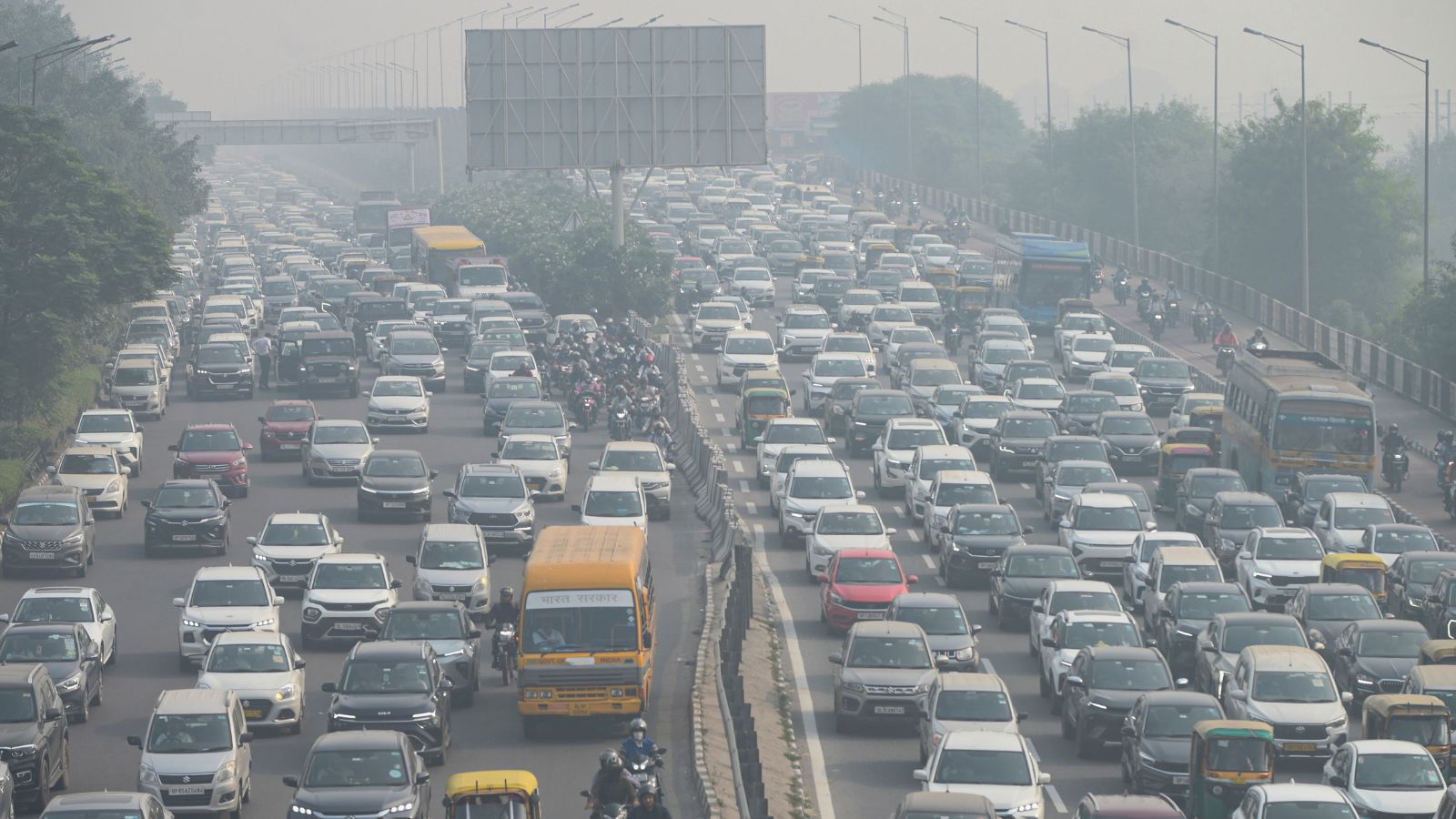
With Delhi's air quality deteriorating to 'very poor' and 'severe' levels, the winter pollution season has brought renewed scrutiny of vehicles entering the city.
The national capital's Air Quality Index (AQI) crossed the 400 mark during the recent spell of pollution, while long queues of vehicles at entry points have added to the difficulties of commuters travelling from neighbouring cities.
At several Delhi-NCR border crossings, vehicles could be seen lining up to enter the national capital, with bumper-to-bumper traffic and long waits as checks were carried out to ensure compliance with the new restrictions.
Parents travelling from neighbouring districts to drop their children at schools in Delhi, along with office-goers and other daily commuters, have also been affected, with some spending hours waiting at entry points.
The Bharat Stage (BS) emission standards regulate the amount of pollutants released by vehicles. BS-IV norms were first introduced in Delhi-NCR and 13 other major cities in April 2010 and made mandatory for new vehicles across the country from April 2017.
India subsequently transitioned directly from BS-IV to the stricter BS-VI emission standards, skipping BS-V altogether. The BS-VI norms, which impose tighter limits on vehicular emissions, came into force nationwide from April 1, 2020.