


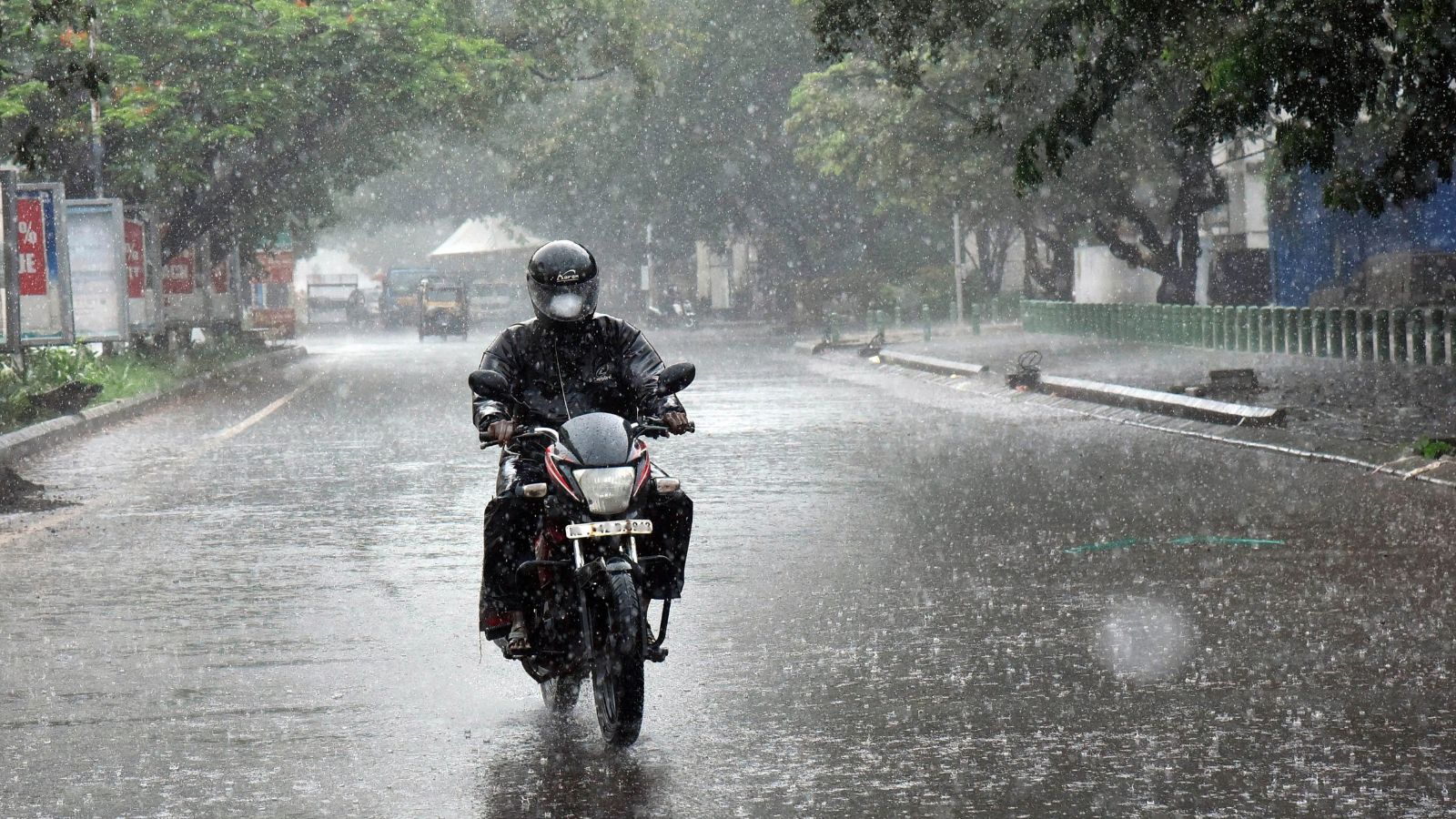


New Delhi: The southwest monsoon withdrew from the entire country on Thursday, the India Meteorological Department (IMD) said, noting that northeast monsoon rainfall activity began over parts of south India on the same day.
Tamil Nadu, Puducherry, Karaikal, coastal Andhra Pradesh, Rayalaseema, south interior Karnataka, Kerala and Mahe witnessed northeast monsoon activity, the IMD added.
“With the onset of the northeast monsoon, a wet spell with isolated heavy falls is likely over many parts of south peninsular India till October 21,” it said in its daily forecast.
There are two notable types of monsoon in India: the southwest monsoon, which is active from June to September, and the northeast monsoon, also known as the retreating monsoon, which affects parts of the country from October to December.
The southwest monsoon plays a crucial role in the country’s economy, particularly because of its direct impact on the kharif crop cycle.
The northeast monsoon, which is less intense than the southwest monsoon, is significant for the growth of rabi crops.
This year’s southwest monsoon ended with 759.4 mm of rainfall, 12.6 per cent below the normal of 868.6 mm, according to the IMD.
One of the key reasons behind the rainfall deficit has been the prevailing El Nino conditions over the tropical Pacific, which emerged in June and have been gaining strength since.
El Nino is one of the three phases of the El Nino Southern Oscillation (ENSO), a climate phenomenon characterised by changes in sea temperatures along the central and eastern tropical Pacific Ocean, accompanied by fluctuations in the atmosphere above.
While El Nino, which is associated with reduced monsoon rainfall in India, is known to have a warming effect on the planet, its opposite phase, La Nina, usually produces a cooling effect. ENSO also has a neutral phase.
Global weather agencies such as the World Meteorological Organization (WMO) have forecast that this year’s El Nino event is likely to peak in December 2026 and could become the strongest since observations began in 1950.
Moreover, El Nino conditions are expected to persist through February 2027.