

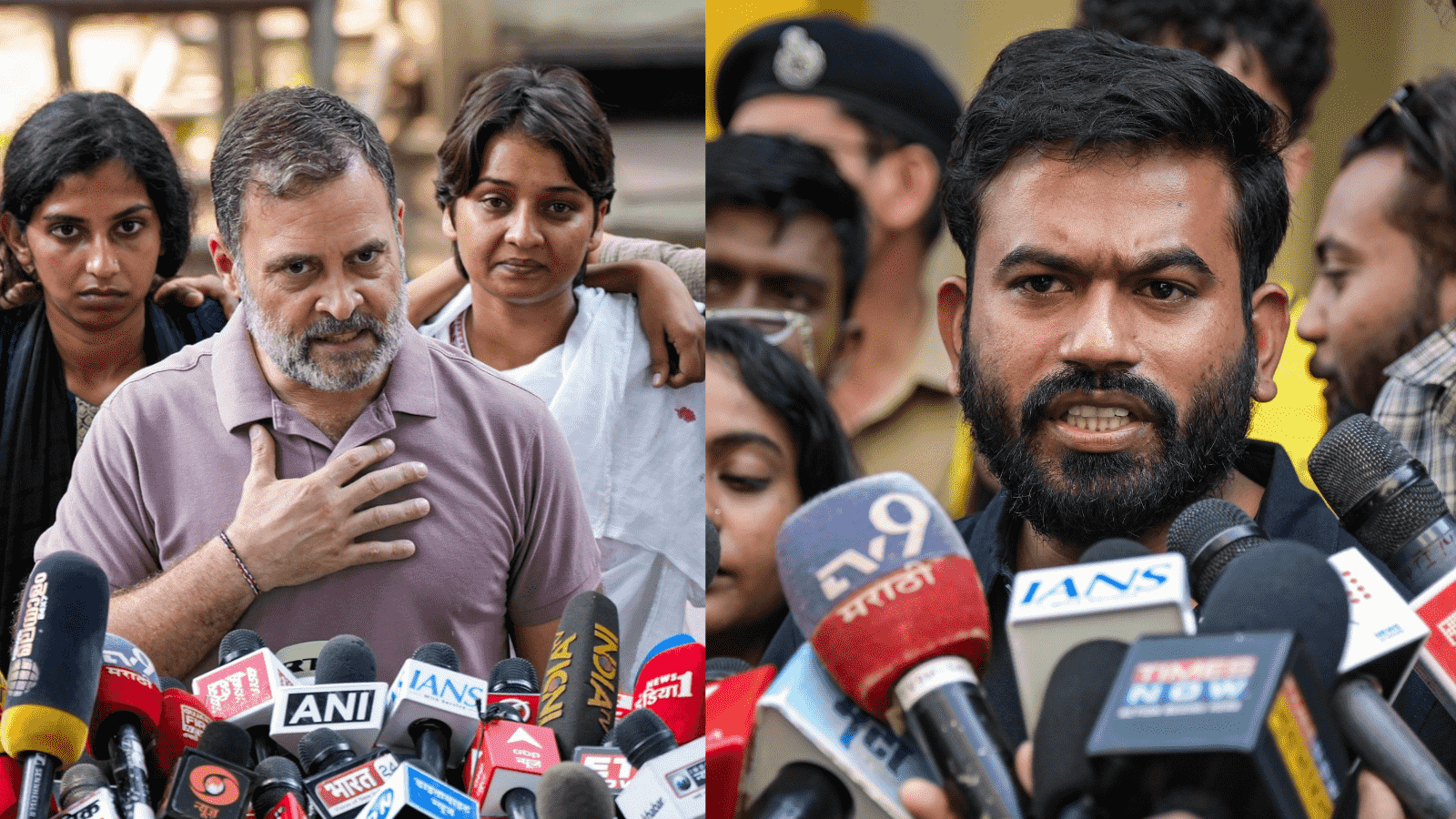


The Cockroach Janta Party (CJP) and Rahul Gandhi have found themselves on the same side of several political battles against the Narendra Modi-led Union Government over the past few months, ever since the former’s inception in May this year. Yet, despite their overlapping demands, the Congress leader and CJP founder Abhijeet Dipke have largely kept their distance, choosing separate protests and distinct political messaging.
The distance was evidently visible during the July protests against the then Union Education Minister Dharmendra Pradhan and once again during the recent protests demanding the resignation of Chief Election Commissioner (CEC) Gyanesh Kumar over allegations of irregularities in electoral roles.
However, in what is widely seen as a shift in approach, Rahul Gandhi on Wednesday, October 14, publicly condemned the jailing of two CJP leaders (without naming them), who had been detained after attempting to enter Jantar Mantar, a designated protest venue that authorities had reportedly denotified.
“Waving the Tricolour at Jantar Mantar in a peaceful protest is not a crime. Jailing youth for it is an act of cowardice,” he wrote on X. “Students. Youth. Journalists. The INDIA bloc. Different banners, one cause. All protests are one: citizens demanding their constitutional rights.Jantar Mantar belongs to the people of India. We will reclaim it,” he added.
Dipke responded with a public thank-you, marking a rare moment of warmth between two political formations that have, until now, maintained separate identities.
The exchange has raised several questions among political observers: has Rahul Gandhi changed his approach towards CJP, or is he attempting to bring an independent youth movement into a broader opposition campaign without formally aligning the Congress with it?
A shared cause, but separate stages
CJP emerged as a prominent face of Gen Z mobilisation, with its July protests at Jantar Mantar and elsewhere attracting attention well beyond its original demands. The agitation eventually culminated in Pradhan's resignation on July 25, alongside government assurances on the protesters' demands.
The Congress also demanded accountability from the Education Minister. However, Rahul did not join CJP's agitation at Jantar Mantar, instead pursuing the issue through the party's own political campaign.
Come October and Congress spokesperson Reetam Singh accused CJP of “piggybacking and hijacking issues of others”, while alleging that the outfit was an AAP initiative. These were allegations made by a Congress spokesperson, not independently established facts about CJP's affiliations.
Also Read:
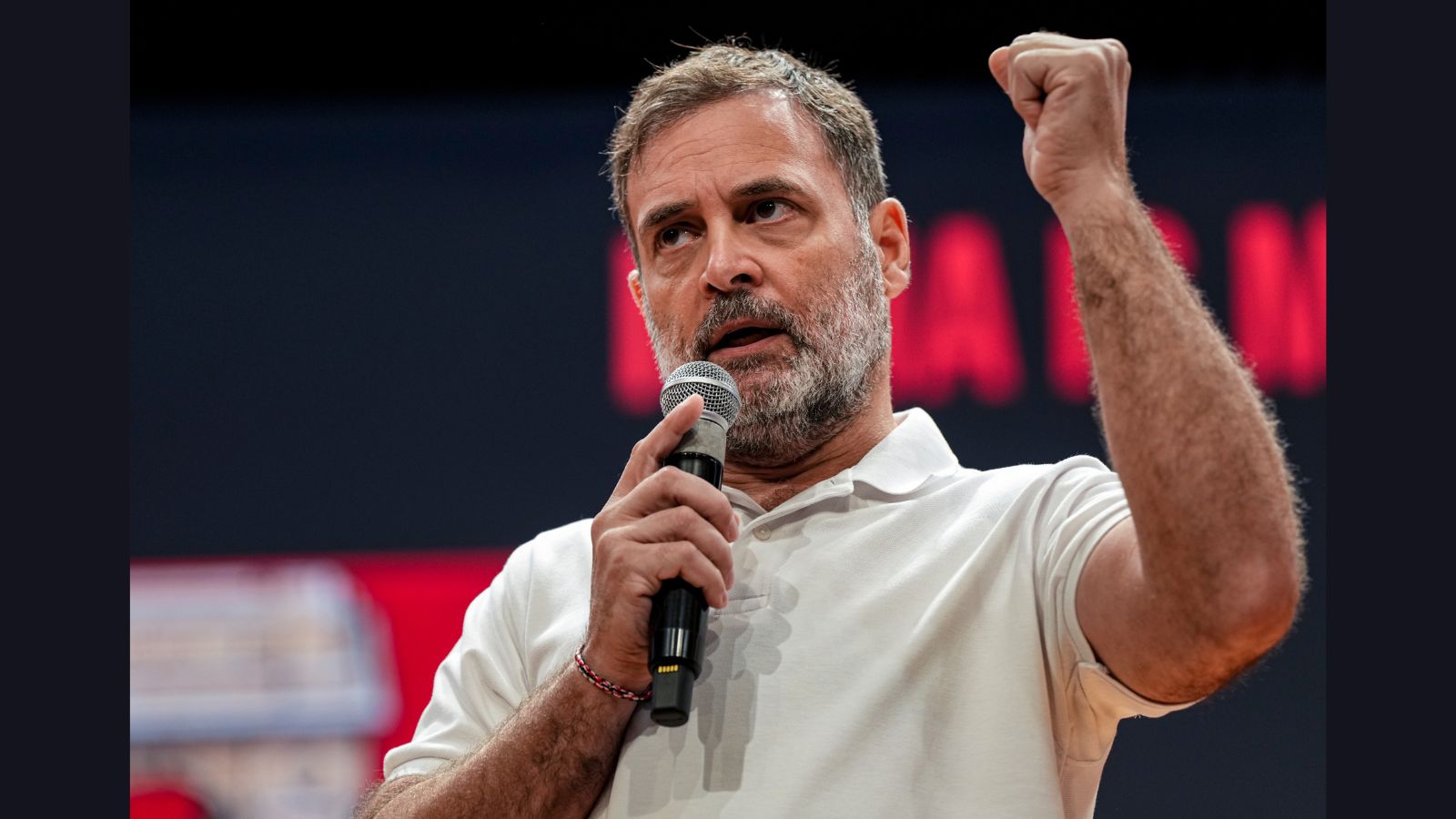
The friction reflected a larger problem for the Congress. It could support the protesters' demands, but sharing a platform with an independent organisation that had acquired its own public visibility carried political implications.
Speaking to Reporter World, Nilanjan Mukhopadhyay, a New Delhi-based author and journalist, remarked that Congress had rightful reasons to be wary of a group like CJP. “CJP was an impromptu formation and it had declared that it does not have any interest in direct party politics. We have a history of similar mobilisations in India,” says Mukhopadhyay, hinting at the 2011 India Against Corruption movement, led by Anna Hazare, which later resulted in the formation of the Aam Aadmi Party (AAP) in 2012. “So it is only natural for any mainstream political party to be cautious of a newly formed group,” he adds.
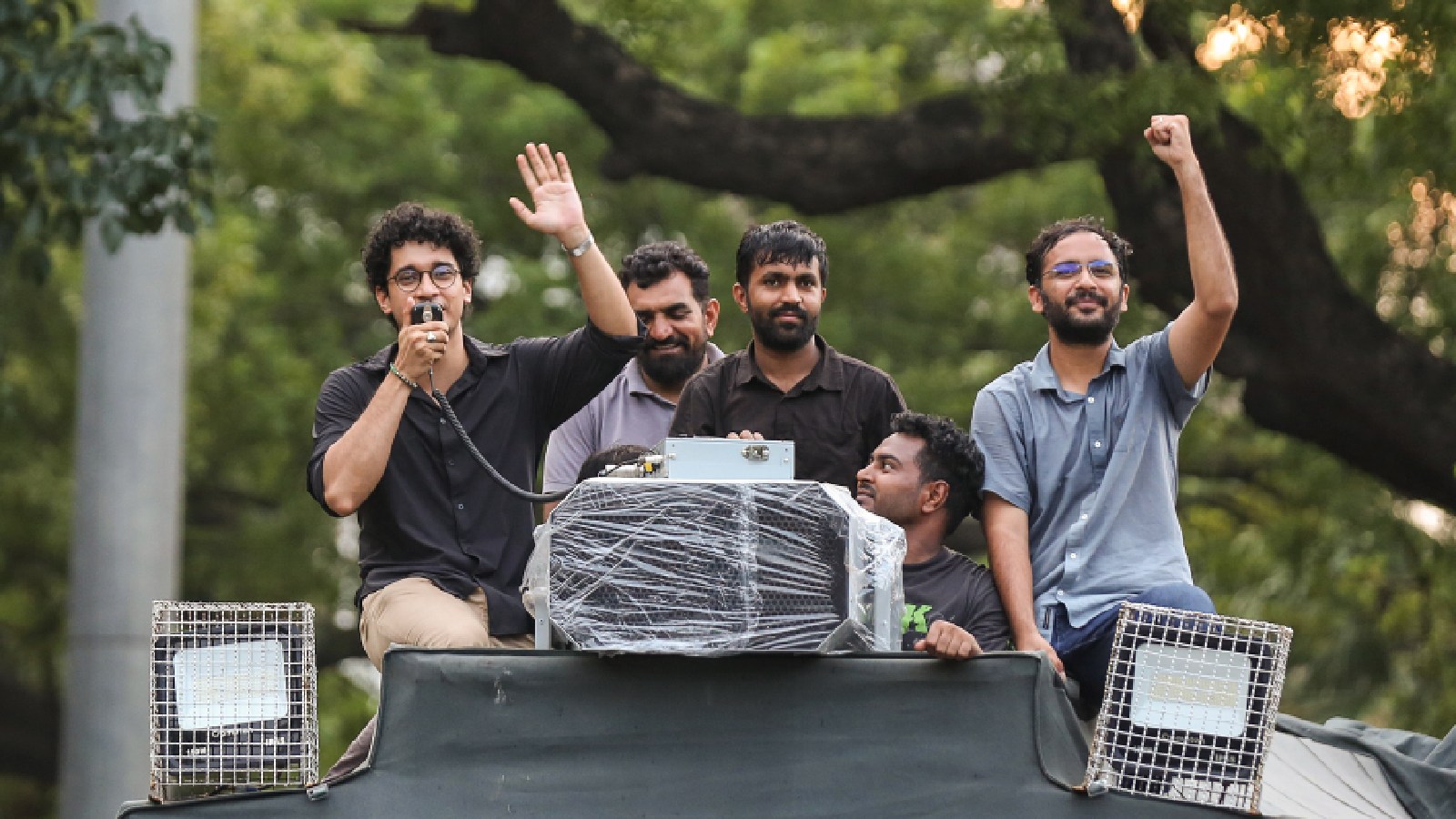
The tension is also partly about political ownership.
“It’s not surprising that two sides opposing a third, very powerful, overarching institution or individual differ with each other,” Rasheed Kidwai, Author and political analyst tells Reporter World.
An established party such as the Congress has a parliamentary presence, a nationwide organisation and a long-standing political campaign against the BJP-led government. CJP, by contrast, has built its profile through a youth-led movement and a distinct identity rooted in direct mobilisation. “Traditional political parties are generally a bit apprehensive about lending support to a newcomer in their space. Especially with regard to the talks of the CJP founder’s former association with the AAP as well as the Punjab elections coming up where the Congress is in a direct battle with the AAP, it won’t be surprising that the Congress would want to maintain a distance with CJP,” observes Kidwai.
Gyanesh Kumar protests revive the divide
The confrontation over Gyanesh Kumar brought the same tension back into focus.
The current agitation centres on the Special Intensive Revision (SIR) of electoral rolls. Opposition parties have raised concerns about the removal of voters' names and the implications for eligible voters, while the Election Commission maintains that the exercise is intended to update electoral rolls and remove ineligible entries. Allegations of electoral manipulation remain contested and should not be treated as established findings.
Both Congress and CJP have demanded Kumar's resignation, but their campaigns have largely proceeded independently.
The Congress-led INDIA bloc held a series of protests in Delhi beginning on October 6. Rahul and Priyanka Gandhi Vadra staged a sit-in near Akashvani Bhavan, followed by further demonstrations involving opposition leaders and workers. The bloc subsequently marched towards the Supreme Court, challenging the government's handling of the protests and the wider electoral controversy.
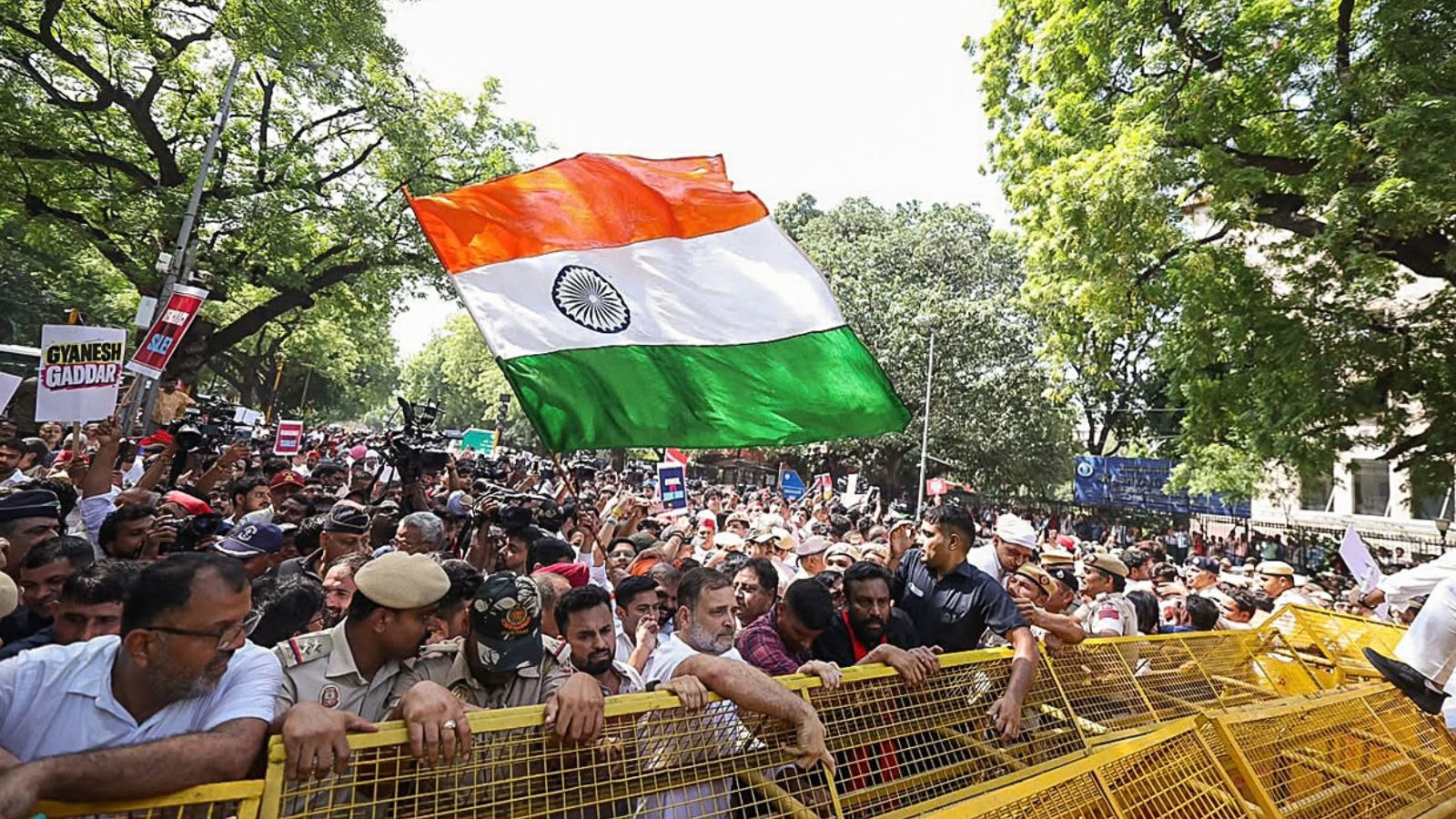
CJP, meanwhile, organised its own demonstrations, including a protest march on October 10. The Congress did not join that mobilisation. CJP also stayed away when the opposition bloc held its march on October 12. The two sides were therefore not simply divided over leadership: each was pursuing a distinct programme despite the overlap in their central demand.
From “no parallel protests” to explicit solidarity
Rahul's public messaging began to shift as the October protests intensified.
On October 10, as police detained protesters in Delhi, Rahul issued a broader message of support to young people protesting against the government. “Youth of India, I am proud of you. Keep protesting. We are standing with you,” he wrote, promising that the opposition would defend the Constitution and the voice of Indian citizens.
The statement did not name CJP.
Two days later, Rahul sought to present the opposition's campaign and the youth-led protests as part of a common struggle. Speaking at a press conference, he said: “There are no parallel protests. There is one protest, to remove Gyanesh Kumar, and then the Prime Minister, Amit Shah, we are not going to stop.”
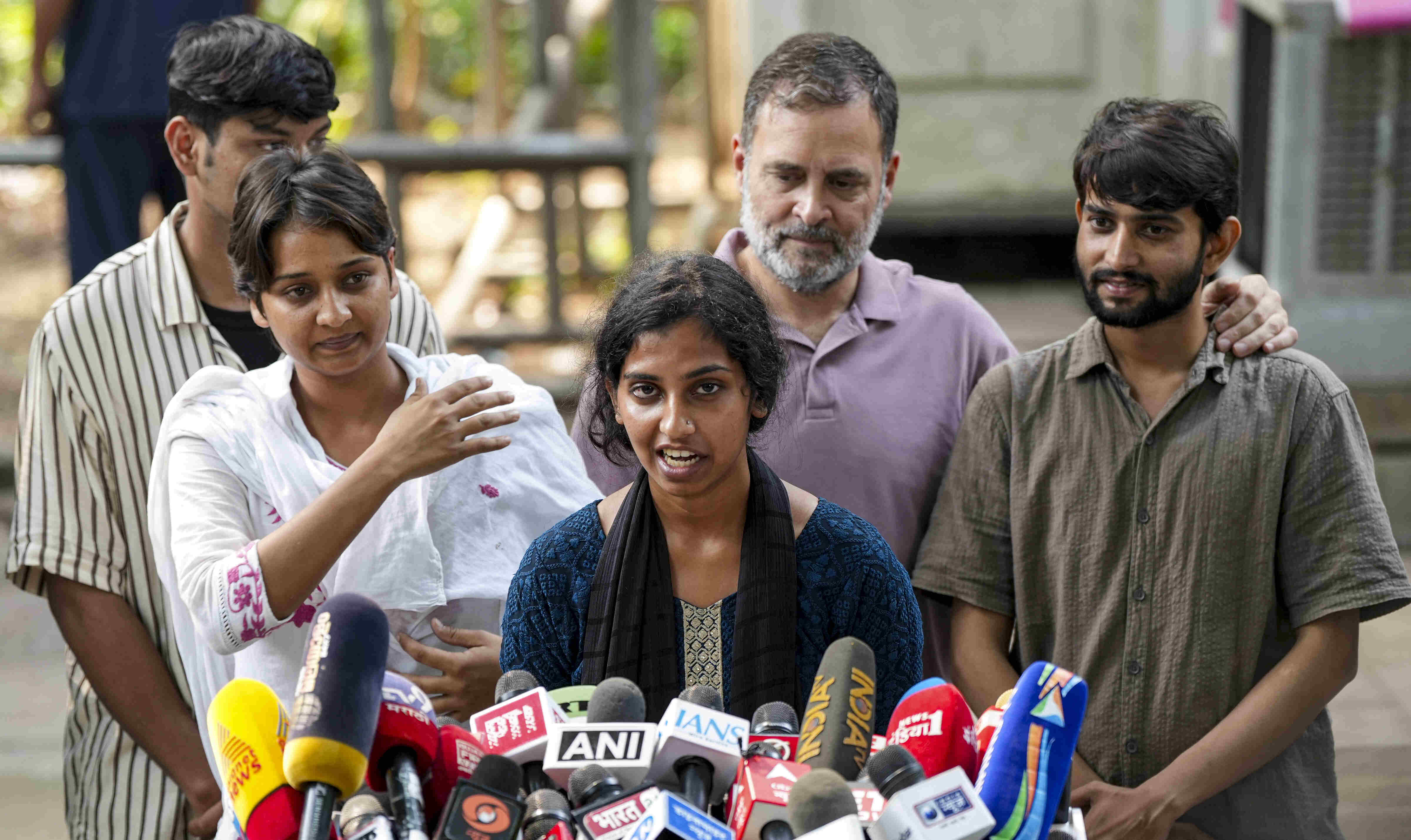
The formulation was politically significant. It offered a way to bridge the gap between the Congress-led opposition and independent protest groups without requiring either to abandon its organisational identity.
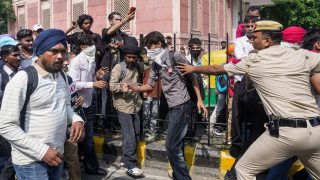
On October 13, CJP leaders Ashutosh Ranka, Saurav Das and Ajinkya Shinde were detained after entering Jantar Mantar and raising the national flag. The police action came amid heightened restrictions around demonstrations against the Chief Election Commissioner.
Ranka and Das were subsequently sent to five days of judicial custody over allegations of trespassing and violating peace-bond conditions. The authorities had reportedly denotified Jantar Mantar as a protest site. The circumstances of the detentions, and the legal grounds cited by police, are important to distinguish from the protesters' characterisation of their action as peaceful dissent.
On October 14, Rahul's response was more pointed. By condemning the jailing of young protesters for raising the Tricolour, he moved beyond a general expression of support for the youth and addressed the immediate circumstances involving CJP's leaders.
The shift was notable not because Rahul had suddenly adopted CJP's demand, but because he was now publicly defending activists associated with an organisation from which the Congress had maintained its distance.
Rahul's recent statements also suggest that he is increasingly willing to acknowledge a common political struggle. They do not, however, establish that the underlying differences have disappeared.
Mukhopadhyay cites the example of the INDIA bloc’s recent march to the Supreme Court on October 12, for which Rahul Gandhi made it clear that all citizens of the country, irrespective of their affiliates, can join in solidarity.
“The people who joined in for the protest were not just mainstream political party workers but many young ordinary citizens who became politicised during the Jantar Mantar protests organised by the CJP in July. Even though this was not a CJP protest, it was ultimately the goal of calling for the resignation of the CEC that brought them together,” adds Mukhopadhyay.
But it would be premature to describe this as an alliance. Rahul has defended the protesters' constitutional rights and embraced the idea of a common struggle; he has not formally endorsed CJP's leadership or announced a joint campaign.
The relationship therefore remains defined by both convergence and competition. Congress and CJP share demands, but they also have separate constituencies, organisational priorities and claims to political credibility.
The next test will be whether the public expressions of solidarity translate into concrete cooperation: shared platforms, coordinated demonstrations, legal support or a common programme of demands.