

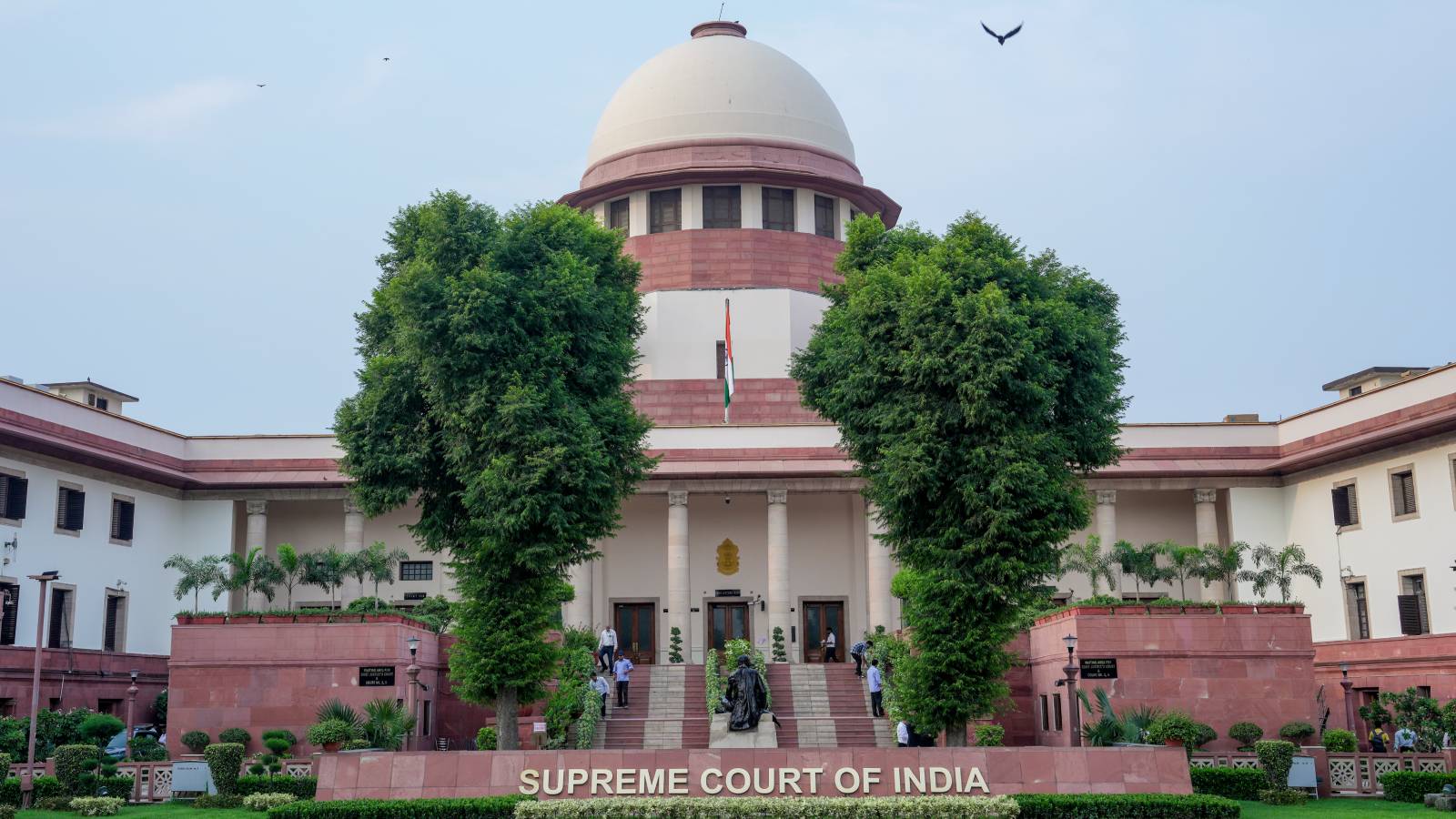


New Delhi: The Supreme Court will hear on Sunday a plea seeking initiation of contempt proceedings against authorities for allegedly violating the apex court's direction on ensuring that there is no "complete prohibition" of metro and train services in view of the Cockroach Janata Party (CJP) protest in Delhi.
According to the cause list of October 11 uploaded on the apex court website, the plea would come up for hearing before a bench of justices Joymalya Bagchi and V Mohana.
The plea, filed by advocate Shailendra Mani Tripathi, has arrayed Union Home Secretary Govind Mohan, Delhi Police Commissioner Anurag Kumar and Delhi Metro Rail Corporation chairperson D Thara as respondents.
"This brutal assault on the fundamental rights of the citizens and sheer disregard to the orders of this court amounts to deliberate, intentional attempt on the part of Delhi Metro, Delhi Police and the Union government which must be dealt with an iron hand," the plea, filed through advocate Chand Qureshi, said.
The petition referred to the top court's October 9 order which was passed while hearing a separate petition against the closure of 57 metro stations and cancellation of trains to Delhi in view of the protest.
The protest call was given by the CJP and some student organisations against Chief Election Commissioner (CEC) Gyanesh Kumar over alleged irregularities in the functioning of the Election Commission.
Apex court bars complete transit halt
The Supreme Court on Friday directed authorities to ensure that metro train services are not completely suspended ahead of the October 10 protests in Delhi, asking the union goverment to consider regulated operations of metro and other railway services to prevent inconvenience to commuters.
A bench of Chief Justice of India (CJI) Surya Kant and Justices Joymalya Bagchi and V Mohana emphasised the distinction between a complete prohibition on movement and regulating public transport in the interest of law and order.
Recording the assurance given by Solicitor General Tushar Mehta, appearing for the union government, the apex court said the authorities would reconsider the restrictions and allow metro trains and other railway services to operate in a suitably regulated manner, keeping in mind the principle of proportionality.
“...there shall be no complete prohibition on the movement of metro trains,” the top court clarified in its order.
Though law enforcement agencies have the right to take steps to restrict unruly movement, citizens should not be unduly harassed, the top court had said.
(With inputs from PTI & ANI)