

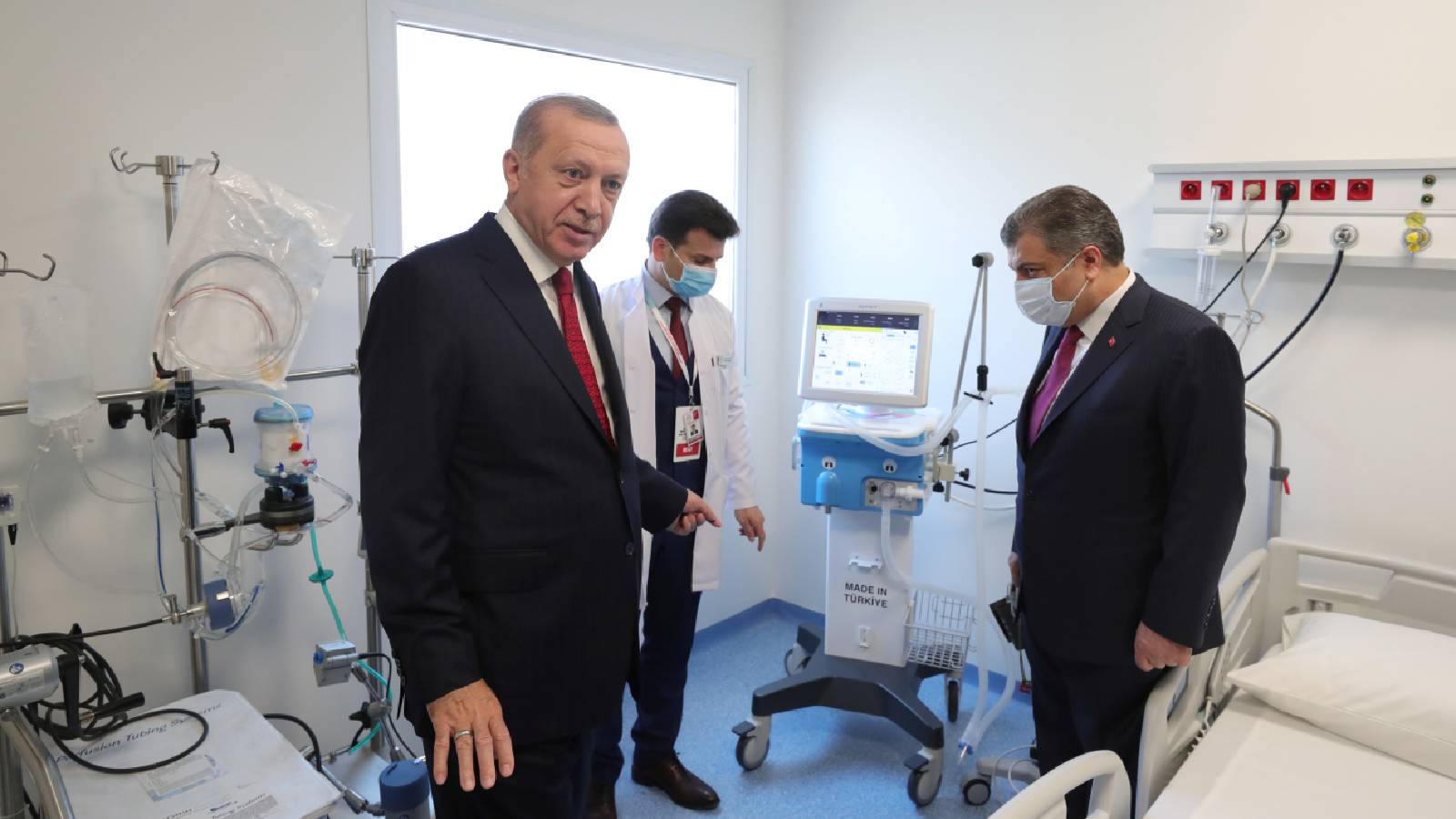


Antalya: Turkish President Recep Tayyip Erdogan has called on the international community to recognise the environmental destruction caused by the Israel-Hamas war in Gaza, describing it as both a genocide and an “ecocide”, while urging Israel to allow more humanitarian aid into the Palestinian territory.
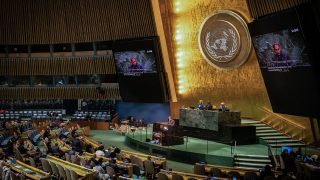
Speaking on Wednesday at the United Nations climate summit, COP31, in Antalya, Türkiye, Erdogan said the destruction of Gaza's environment, including its agricultural land, water resources and infrastructure, should be recognised alongside the humanitarian toll of the conflict.
“What has taken place in Gaza is not only a genocide, but it is also an ecocide,” Erdogan said, drawing applause from world leaders and climate envoys.
A UN-backed panel of independent experts concluded last year that Israel had committed genocide in Gaza. Israel has vehemently denied the allegations and accused the panel of antisemitism.
“Centuries-old olive trees have been cut down. The soil and water have been polluted in Gaza, and cities in Gaza have been turned into enormous piles of rubble,” Erdogan said.
He also highlighted the impact of recent torrential rainfall and flooding on displaced Palestinians, saying the destruction of infrastructure had left tens of thousands of tents and shelters inundated.
Israel's Foreign Ministry responded on X, accusing Erdogan of “using an international forum to push his anti-Israel campaign of lies” and supporting Hamas.
“Those who truly care about Gaza should demand that Hamas disarm so reconstruction can begin,” the ministry said.
Israel was not invited to COP31.
Israel launched its military campaign in Gaza following the October 7, 2023, attacks by Hamas-led militants in southern Israel, in which around 1,200 people were killed and 251 taken hostage. The subsequent Israeli offensive has killed more than 74,000 Palestinians, according to local health authorities, and destroyed much of the territory.
The Health Ministry, which operates under Gaza's Hamas-run government, does not distinguish between civilians and combatants, but says women and children account for nearly half of those killed.
Erdogan has been an outspoken critic of Israel, while Israeli Prime Minister Benjamin Netanyahu has previously described him as an antisemitic “tyrant”.
“The latest country to become a super spreader of antisemitic lies is Türkiye,” Netanyahu said in September while addressing the UN General Assembly.
Gaza's environmental devastation
The environmental consequences of the war have also emerged as a major concern at the climate summit.
A 2025 report by the United Nations Environment Programme (UNEP) documented extensive damage to Gaza's ecosystems, agricultural land and essential environmental infrastructure.
Remote-sensing assessments cited in the report showed that by May 2025, more than 97 per cent of tree crops, 82 per cent of annual crops, 95 per cent of shrubland and 89 per cent of grass and fallow land had been damaged.
“As of now, our families only have 3 per cent of cropland to use, and that is assuming it's distributed across 2 million Palestinians,” said Mohammed Usrof, co-founder and executive director of the Palestinian Institute for Climate Strategy.
“Not talking about these losses undermines Palestinians' food supply, livelihoods and ability to remain on their land,” he added.
The war has also severely damaged Gaza's waste disposal systems, sewage treatment facilities and clean water infrastructure, worsening living conditions for hundreds of thousands of displaced residents.
The conflict has “all but eliminated” fishing livelihoods in Gaza, according to the UNEP report, which highlighted the contamination of marine ecosystems by munitions, sewage and solid waste.
“For people in Gaza, this translates into severely limited access to safe drinking water, greater exposure to waterborne diseases and toxic substances, deepening food insecurity and the loss of livelihoods dependent on agriculture and fishing,” Ghiwa Nakat, executive director of Greenpeace MENA, told The Associated Press.
Nakat warned that the environmental damage could take years to reverse.
“The environmental damage will not end when the war ends,” she said, adding that contaminated soil and groundwater, destroyed ecosystems and the collapse of essential environmental infrastructure could undermine public health, food security and livelihoods for generations.
Recent heavy rainfall and flooding have further worsened conditions for displaced Palestinians. Several tents and makeshift shelters were destroyed, while at least four people were killed earlier this week when a sand embankment collapsed on their shelter.
The rainfall also left many displaced residents without adequate food, drinking water or dry shelter.
Although humanitarian aid continues to enter Gaza, imports remain far below pre-war levels, with several items still blocked by Israel.
COP31 and the global climate agenda
The developments in Gaza have brought renewed attention to the relationship between armed conflicts, environmental destruction and climate vulnerability as world leaders gather for COP31 in Türkiye.
The 31st Conference of the Parties to the United Nations Framework Convention on Climate Change (UNFCCC) began on November 9 in the Mediterranean resort city of Antalya and will continue until November 20, 2026.
Türkiye is hosting the summit and holds the COP Presidency, while Australia will serve as President for Negotiations. Türkiye's COP31 Presidency has been entrusted to Murat Kurum, the country's Minister of Environment, Urbanisation and Climate Change.
The summit is being positioned as a 'COP of implementation', with a focus on translating climate commitments made at previous conferences into concrete action.
More than 70 world leaders and senior government officials are addressing the summit, although several key leaders, including those from the United States, China and India, are absent.
In a post on X ahead of the summit, United Nations Secretary-General Antonio Guterres highlighted the unequal consequences of the climate crisis.
“The climate crisis is a double injustice. Between countries: those who have contributed the least to it are the hardest hit. Between generations: what we emit today will be paid for by our grandchildren,” he said, calling for stronger climate action.
According to the official COP31 website, the summit aims to build on the foundations of previous climate conferences, particularly COP30 in Belém, by advancing dialogue, strengthening consensus and accelerating implementation.
Several key areas are expected to feature in the negotiations, including climate adaptation and mitigation, a just transition and climate finance.
The Centre for Science and Environment (CSE), a Delhi-based climate think tank, has also highlighted the Presidency-led Action Agenda, which includes a proposed global electrification target of '35 by 2035'.
The three major areas of focus include strengthening national emission-reduction commitments under the Paris Agreement, delivering the new collective quantified climate finance goal agreed upon at COP29, and improving adaptation and resilience among vulnerable countries and communities.
The Paris Agreement was adopted at the UNFCCC's COP21 in December 2015. It aims to limit the rise in global average temperatures to well below 2°C above pre-industrial levels, while pursuing efforts to restrict the increase to 1.5°C.
According to the World Meteorological Organization (WMO), the 11-year period from 2015 to 2025 was the hottest on record.
The UNFCCC is one of three international environmental conventions that emerged from the landmark 1992 Rio Earth Summit. The other two are the Convention on Biological Diversity and the United Nations Convention to Combat Desertification.
As COP31 seeks to advance global climate action, the destruction of Gaza's agricultural land, water resources and ecosystems has added another dimension to discussions on environmental protection, humanitarian crises and the long-term consequences of conflict.