

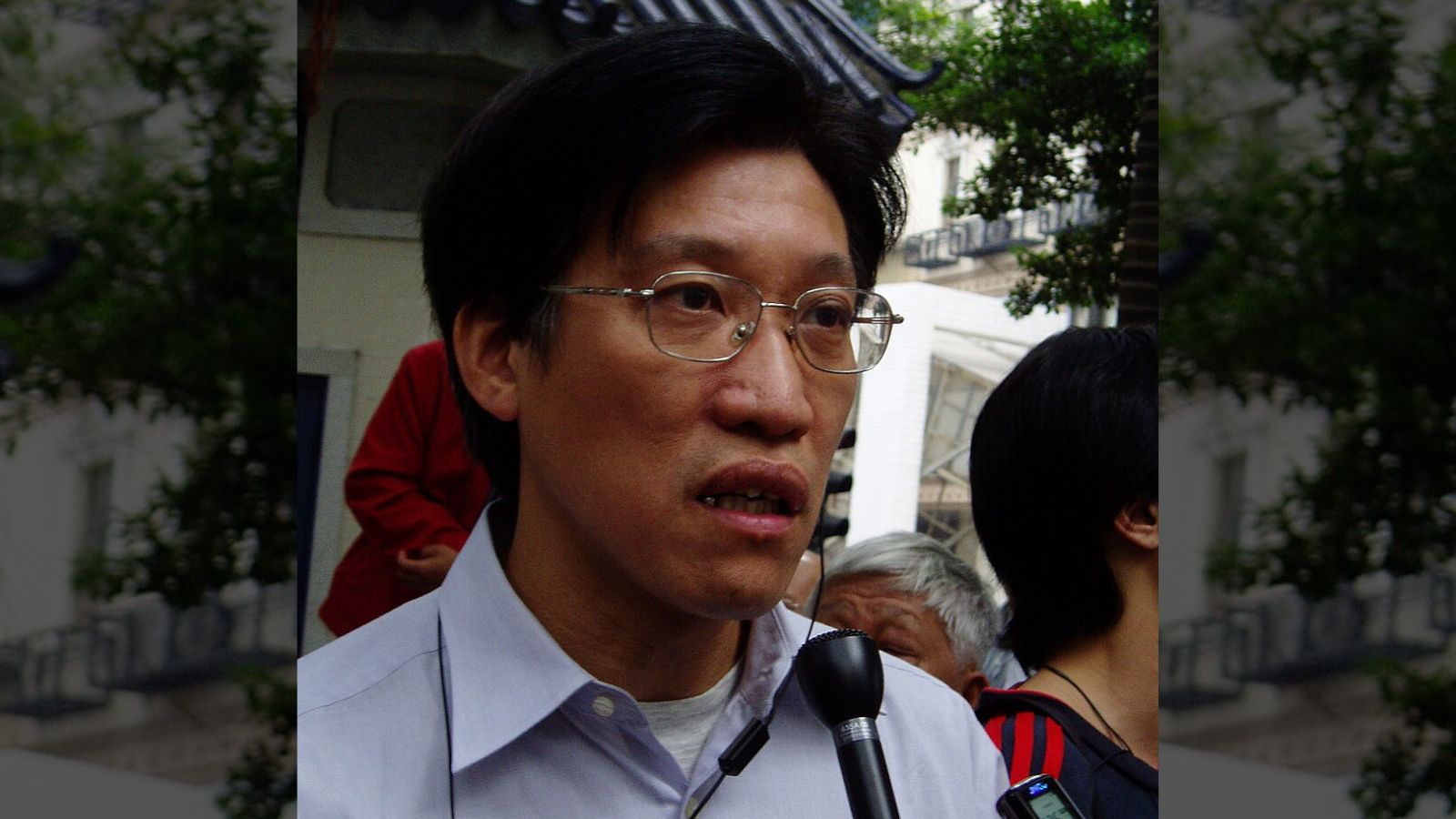


Hong Kong: Former pro-democracy lawmaker Au Kam San has been sentenced to 12 and a half years in prison in Macao's first national security case, following a closed-door trial that raised concerns about the fairness of the proceedings.
Au, 69, was sentenced on Friday after a court found him guilty of subverting state power, breach of confidentiality and establishing contact with organisations, groups or individuals outside Macao to commit acts endangering national security.
His arrest last year was the first publicly known prosecution under Macao's national security law since it was enacted in 2009.
According to a court statement, Au had assisted and cooperated with “hostile organizations” outside Macao over a long period to collect and disseminate political views that allegedly promoted the subversion of state power and false information.

The court said he had colluded with these organisations in an attempt to incite hatred among Macao residents towards the central government, with the intention of overthrowing and undermining the country's fundamental system.
Critics said the case reflected Beijing's emphasis on national security and intolerance of dissent, despite Macao's pro-democracy movement having historically been less influential than that in neighbouring Hong Kong.
Au's political career and pro-democracy activism
A teacher-turned-lawmaker, Au served in Macao's legislature, which is dominated by Beijing loyalists, for 20 years before stepping down in 2021. He also helped organise the territory's annual commemoration of the 1989 Tiananmen Square crackdown in Beijing.
Au said he entered politics after witnessing social problems in everyday life that required people to speak out. He said the 1989 Tiananmen Square pro-democracy movement brought him and like-minded friends together, and that he later felt Macao needed people to work towards building a more open and democratic society.
Before his arrest, Au was one of the few voices in Macao who regularly criticised government policies and political developments through Facebook posts and media interviews, although many considered his criticism relatively mild.
Family raises concerns over legal representation
The case also drew concerns from Au's family over his access to legal representation and contact with relatives.
In July, the court said Au would be represented by a court-appointed lawyer who, according to authorities, had been approved by him. It added that his legal rights were being protected.
However, Au's daughter, Au Hon I, who lives in London, previously told The Associated Press that a lawyer appointed by the family had not been allowed to meet him in prison. She also said the family had been unable to speak with him for almost a year.
Au's trial was held behind closed doors in September. The court had said the judge decided against an open hearing to prevent national security interests from being undermined.
The decision followed a request from the Public Prosecutions Office and confirmation from Macao's national security committee, which is led by Chief Executive Sam Hou Fai.
Also Read:
Macao's status under Chinese rule
Macao, a former Portuguese colony, returned to Chinese rule in 1999 and has since operated as a special administrative region, like neighbouring Hong Kong. It retains its own political and legal systems.
The territory is also the only city in China where casino gambling is legal. Its casino resorts include properties operated by affiliates of US gaming companies MGM Resorts, Las Vegas Sands and Wynn Resorts.