


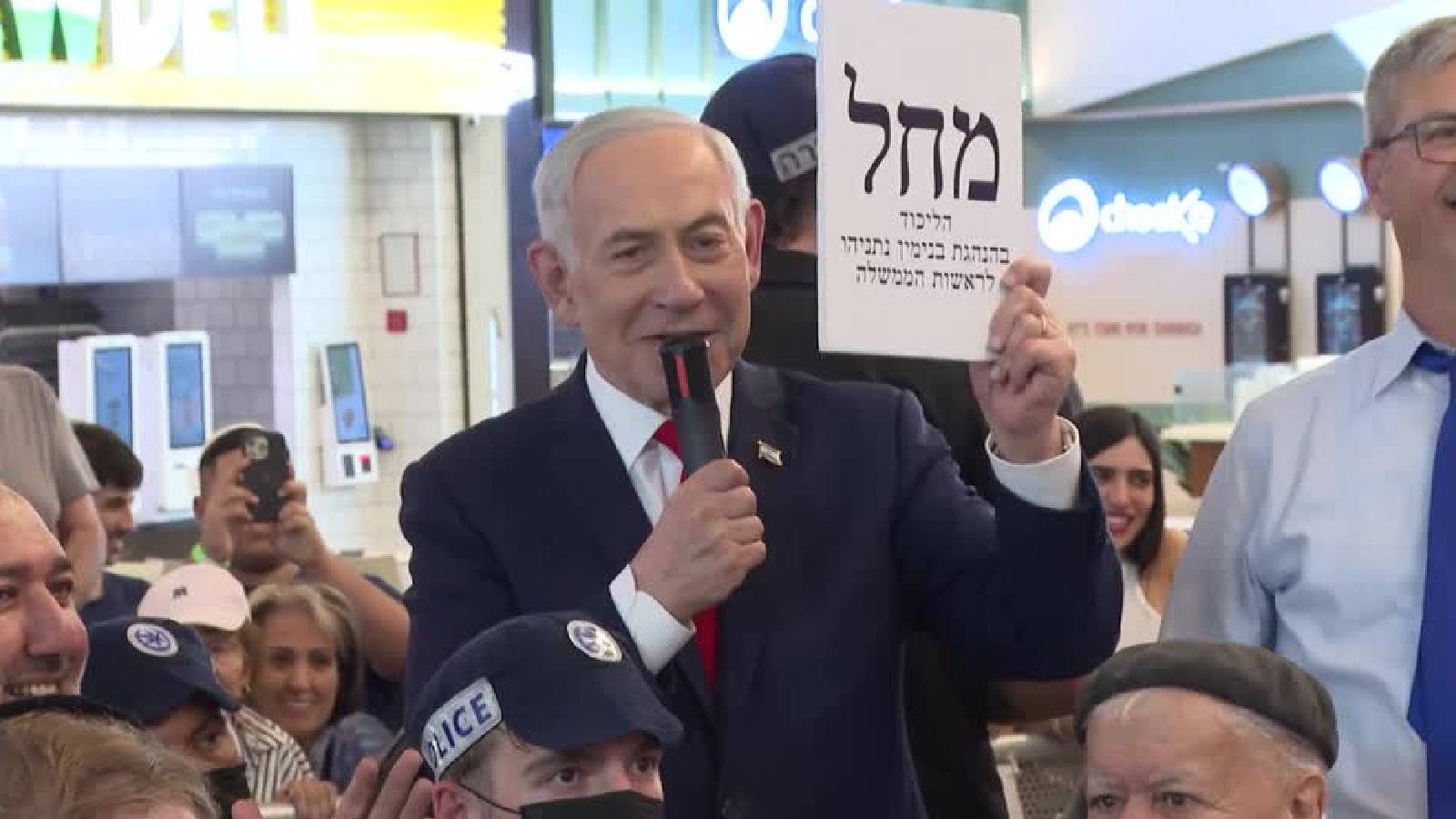


Jersualem: Israelis are voting on Tuesday in a pivotal election in which incumbent Prime Minister Benjamin Netanyahu faces a tough fight for political survival.
Netanyahu faces an array of parties seeking to oust Israel's him from power.
Opinion polls show a close race between Netanyahu's Likud party and its right-wing allies and a rival alliance led by Gadi Eisenkot, former military chief of staff and security hawk with backers on the right and in the center.
The election follows one of Israel's most turbulent periods since its establishment in 1948, shaped by the trauma of the October 7, 2023, Hamas attacks, Israel's subsequent military assault in Gaza and deep domestic divisions over the policies of Netanyahu's right-wing government.
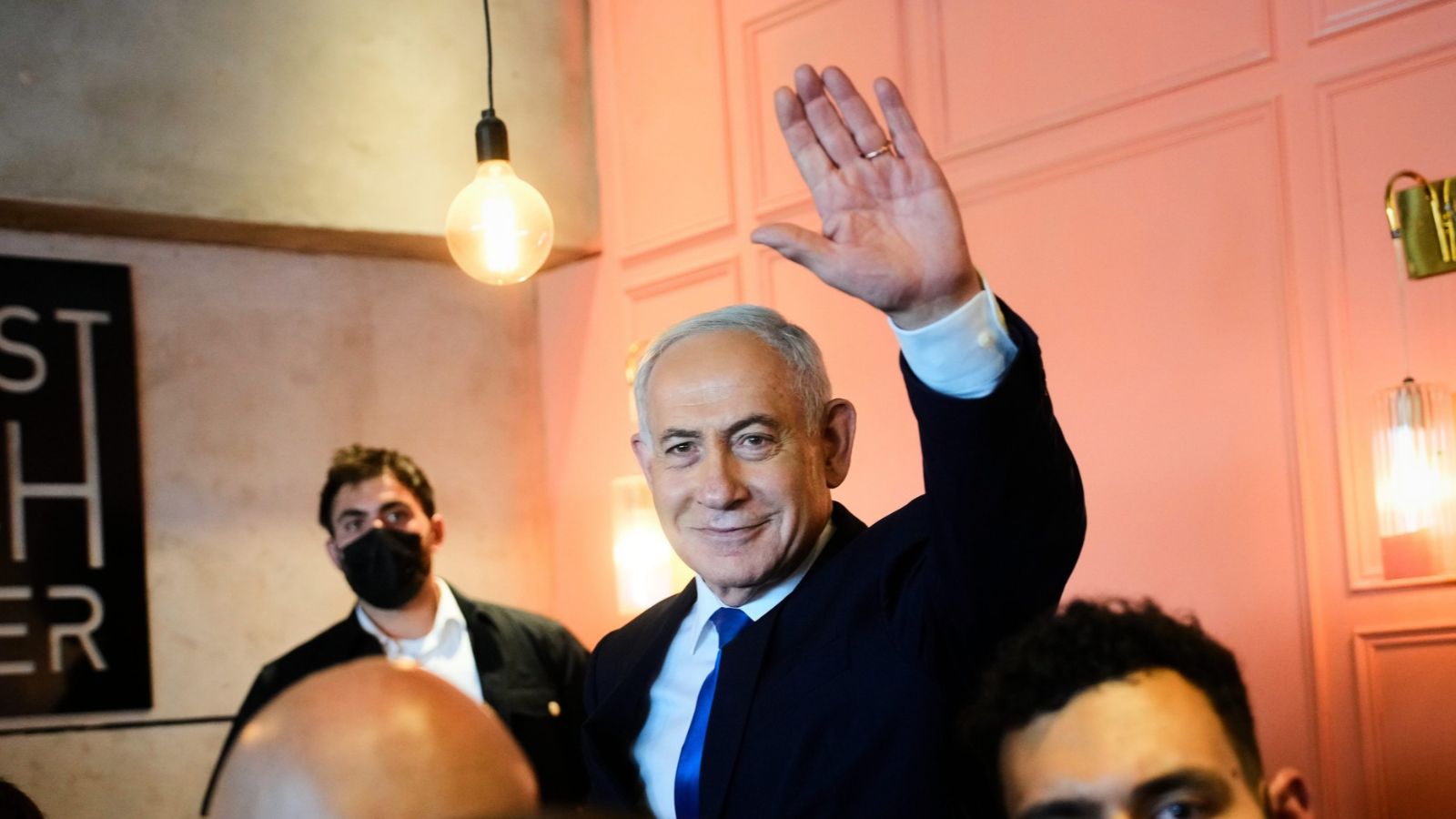
The Israeli Central Election Committee said 7.3 million Israelis are eligible to vote, some 330,000 of them for the first time.
Polling stations opened across the country at 7 am local time and are scheduled to close at 10 pm, allowing 7,331,981 eligible voters to exercise their franchise at 12,018 polling stations nationwide.
However, polling stations in small localities, hospitals, prisons and nursing homes will close at 8 pm, according to the election schedule.
The official results will be announced on November 4, while a broad indication of the election outcome is expected to emerge by Wednesday.
Israel records highest voter turnout by 10 am since 1981
Voter turnout in Israel's parliamentary elections stood at 16.68 per cent by 10 am on Tuesday, the highest level recorded at that hour since 1981, authorities said.
Central Elections Committee (CEC) Acting Director-General Din Livneh said 16.68 per cent of eligible voters had voted by 10 am, compared with 15.9 per cent at the same time during the previous elections.
More than 1.2 million eligible voters having cast their ballots, he said.
It is the highest turnout at this hour since 1981, when Menachem Begin was reelected as prime minister.
An election that focuses on security
Inside Israel, the race is largely about security and who should serve to defend the country. Outside Israel, it's mainly about the country's reputation - and the security of Jewish people worldwide - after growing criticism over the war in Gaza and Jewish settler violence in the occupied West Bank.
In Israel's fragmented parliamentary politics, no single party has ever won an outright parliamentary majority. There is a chance that neither Netanyahu's religious and ultranationalist coalition nor the group of parties hoping to remove him has enough support for a majority. That could set off weeks of negotiations before a leader is declared.
“Our vote will change the government,” Mansour Abbas, head of the Islamist Ra'am party, said while voting, adding that he hoped turnout would surpass 70% in Arab communities. Arabs in Israel make up about 20 per cent of the population.
Israel's far-right national security minister, Itamar Ben-Gvir, known for taunting Palestinian detainees and saying some Palestinians in Gaza are “not even people,” warned that “it will be Mansour Abbas' government” if Netanyahu and his allies don't win.
The vote serves not only as a referendum on Netanyahu's leadership but also on what kind of country Israel should be - heavily influenced by religious and nationalist forces, or more firmly anchored in liberal and secular values.
Israel has found itself increasingly isolated over its conduct in Gaza and the West Bank. Public support among Americans has plummeted, and partners in Europe and elsewhere have slapped sanctions on Israel.
Divided opinions on Netanyahu
Netanyahu's supporters see him as a steady hand and a consummate statesman who they believe has triumphantly guided Israel through multiple wars. They think he is protecting Israel's Jewish identity while keeping in check what they see as an interventionist judiciary.
His Israeli detractors see him as a polarizing leader who, beset by an ongoing corruption trial, dragged on the war in Gaza and its hostage crisis for political reasons.
They say he is undermining Israel's independent judiciary and weakening its democratic underpinnings. And they accuse him of abetting a system that has allowed ultra-Orthodox religious Jews to avoid enlistment in Israel's compulsory military.
“The present government is driving the country into the ground,” voter Angela Bengur said in Jerusalem.
Eisenkot is viewed by supporters as a capable leader with sterling security credentials who, along with his likely governing partners, could act as a bulwark against creeping illiberalism.
As someone personally touched by the conflict - his son and two nephews were killed in Gaza - his backers believe that he feels deeply the pain that still courses through Israel.
Parties that likely would support Eisenkot have vowed to improve Israel's international standing and work to conscript ultra-Orthodox men while bolstering the independence of the judiciary.
The elections are about “who serves and who evades service - who takes an active part in building this country and who doesn't," said voter Nisso Shitrit in Jaffa.
(With inputs from AP via PTI & Reuters)