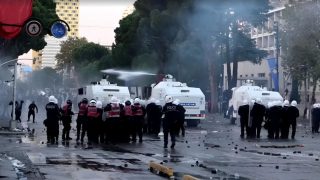


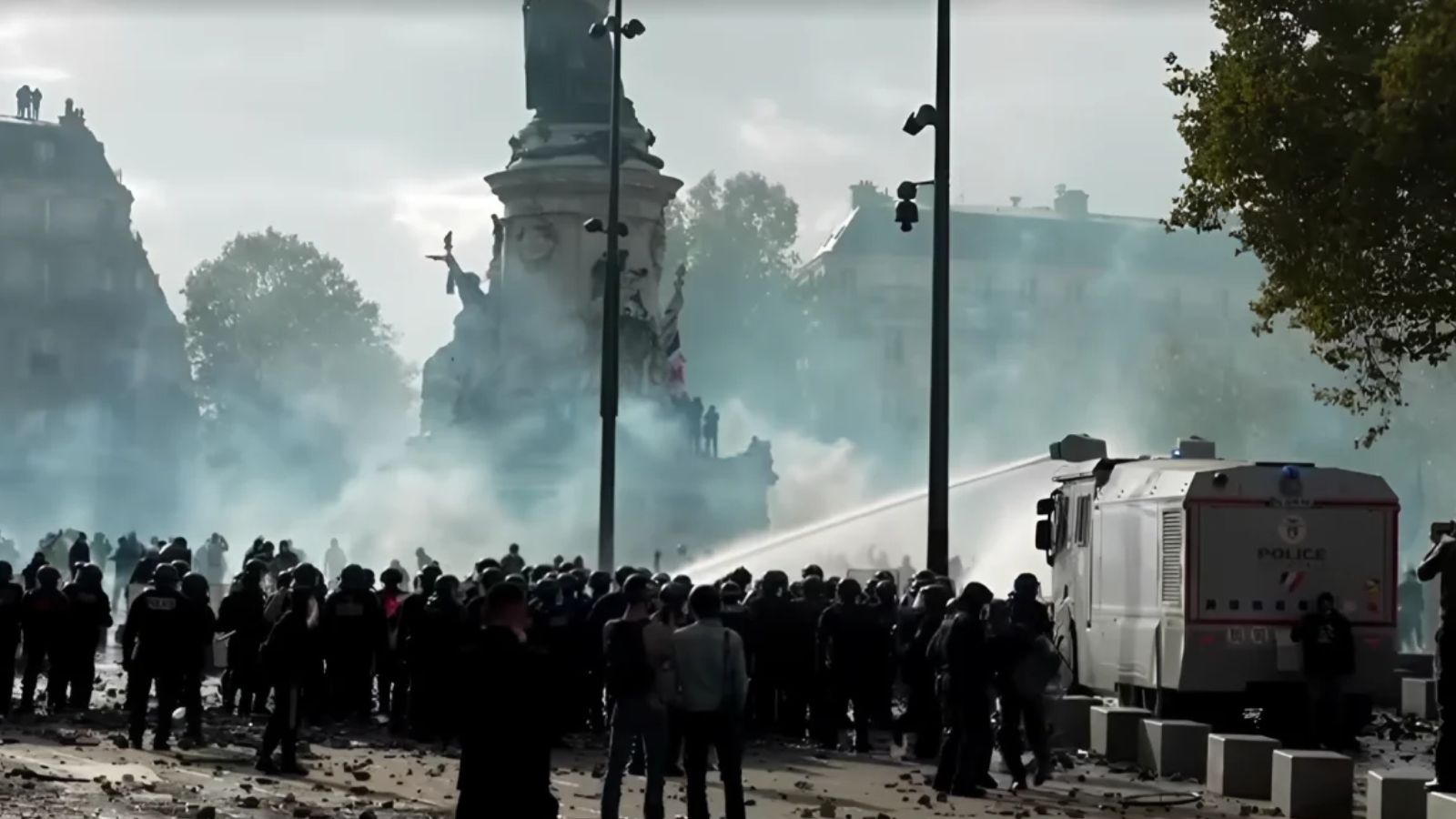


Paris: Cars were set on fire and shops were looted in Paris on Saturday, as police used tear gas and water cannons to disperse violent protesters who joined nationwide demonstrations against rising living costs and in support of high school students’ grievances.
Tens of thousands of people took to the streets across France, expressing anger over rising prices and declining public services. The Interior Ministry said 272 people had been arrested by mid-afternoon following violent incidents involving hooded individuals in several cities, including Paris, Marseille, Rennes, Toulouse, Angers and Lyon.
Interior Minister Laurent Nunez’s office reported “a growing number of violent incidents” across the country, including assaults on officers, looting and damage to public buildings. It also reported confrontations with law enforcement and attempted looting, blaming the unrest on groups it described as the “ultra-left”.
Protesters across France responded to calls on social media to revive the Yellow Vest movement, which emerged in 2018 against diesel taxes before expanding into a broader campaign against social inequality and the cost of living.
Demonstrators expressed widespread frustration with the government as gasoline, energy and food prices have risen in recent months.
Also Read:
Clashes and fires in Paris
Police fired tear gas and used water cannons to push back people wearing hoods and masks and throwing fireworks, paving stones and other objects at officers in Place de la République, northeast of central Paris.
Associated Press reporters saw thick black smoke rising from cars, bicycles and other vehicles, while rubbish bins were set on fire. A kiosk was also burning, and several shops were looted. Several people were injured in the clashes.
In some parts of Paris, police occasionally fired tear gas rounds as they retreated in the face of mostly young protesters, many dressed in black and wearing hoodies, masks and goggles to protect themselves from the gas.
Police tried to prevent other small groups of protesters from converging on government buildings, Nunez’s office said.
A large police presence was deployed in central Paris, particularly near landmarks such as the Champs-Elysees and the Arc de Triomphe, which were excluded from the routes of two authorised demonstrations.
Many metro stations were closed at police request, including those around the Champs-Elysees and near the presidential palace, parliament and government offices.
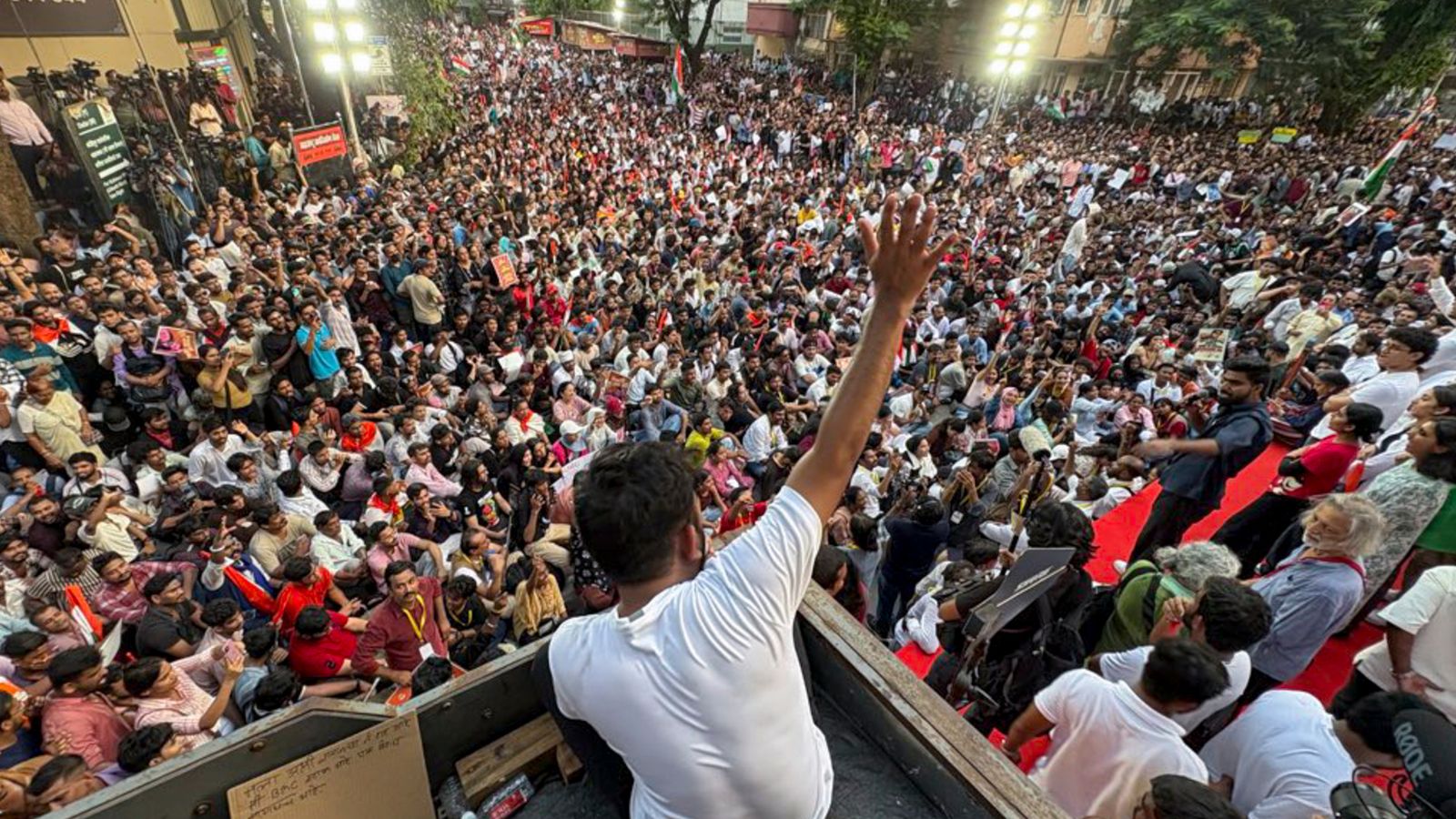
Meanwhile, the majority of peaceful protesters joined a march towards northwestern Paris. The crowd chanted France’s national anthem and waved flags, while some participants played trumpets and violins.
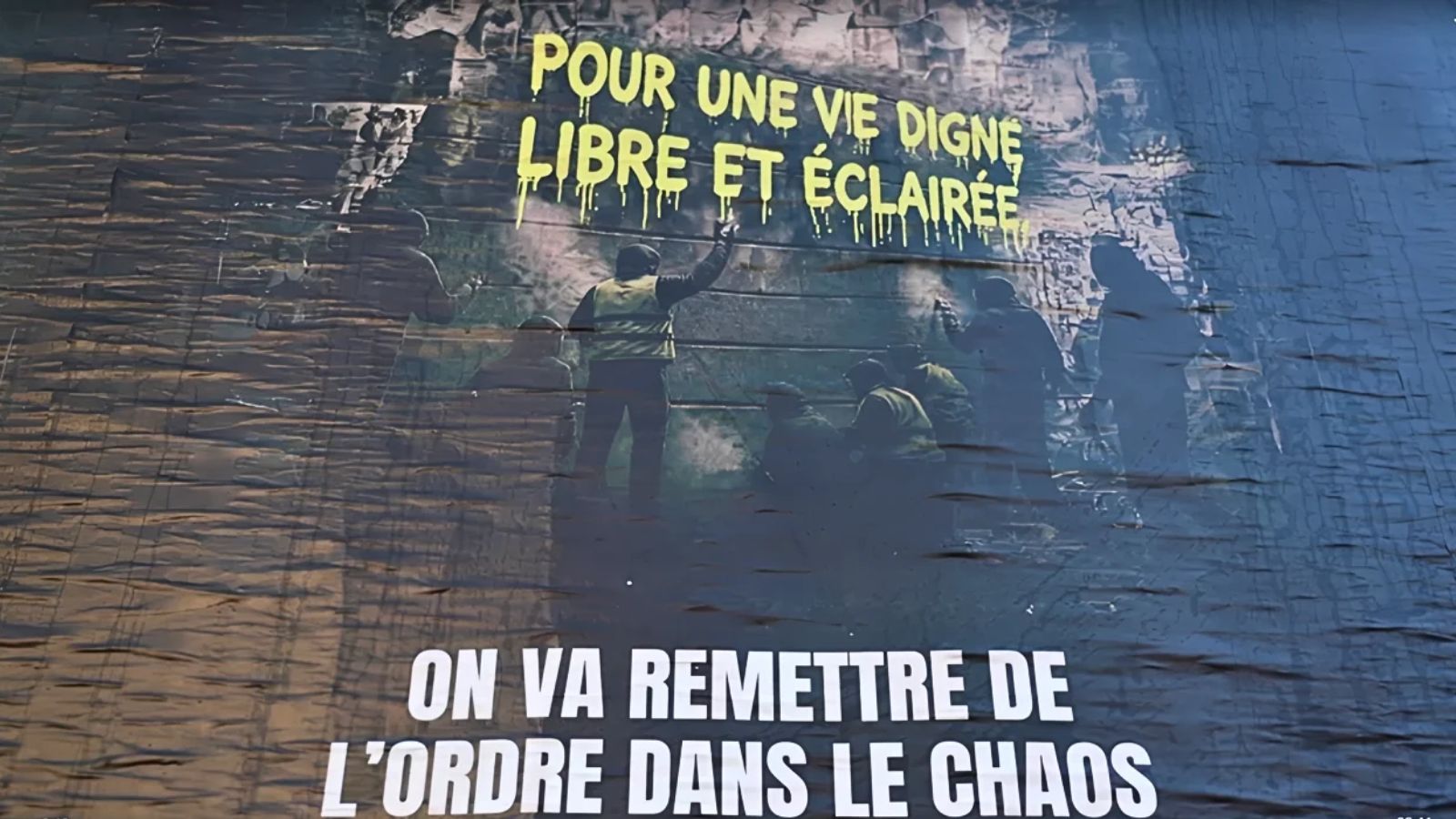
Protesters wearing high-visibility yellow vests blocked streets, recalling the movement that marked French President Emmanuel Macron’s previous term in office.
Violence reported in Lyon, Marseille and other cities
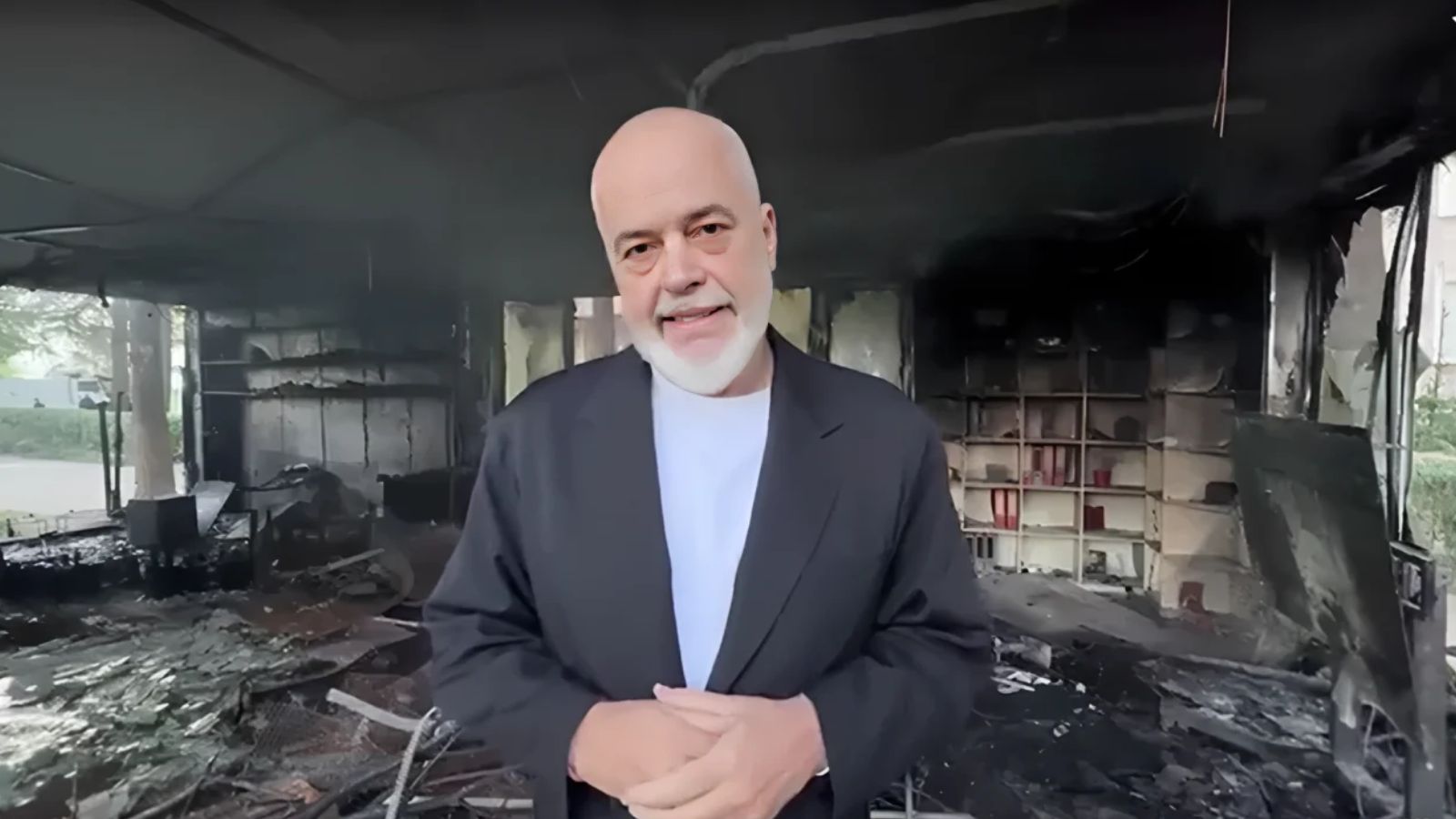
In Lyon, France’s third-largest city, where about 20,000 protesters joined the march, a fire broke out inside a tourist office.
In the southern port city of Marseille, some shops and a municipal police station were damaged, while protesters briefly forced their way into the lobby of City Hall.
“This is unacceptable,” Marseille Mayor Benoît Payan told BFM TV, describing the damage at City Hall as “limited”.
Nunez’s office also reported violence involving masked groups in Rennes, Toulouse, Montpellier and Grenoble, among other cities.
The Interior Ministry said 272 people had been arrested by mid-afternoon following violent incidents across the country. The unrest included confrontations with police, looting and damage to public buildings.
Some protesters said most demonstrators were peaceful and blamed much of the violence on troublemakers who had set out to cause damage and clash with police.
Yellow Vest movement returns amid cost-of-living anger
The protests brought together people angered by rising living costs, declining public services and policies they believe have deepened inequality.
Sonia Mabrouk, 40, said she had travelled from a suburb west of Paris with her daughter, a high school student, to protest against “everything that's going wrong”, particularly the neglect of public services.
Mabrouk, who took part in the Yellow Vest protests, criticised “policies that favour the rich and always hit the poorest people in their wallets”.
Many protesters wore the fluorescent yellow vests that became a symbol of the 2018 demonstrations.
“There's a general sense of frustration and anger,” Mabrouk said as she marched alongside peaceful demonstrators of different ages.
The Yellow Vest movement began in 2018 in opposition to diesel taxes before expanding into a wider protest against living costs and inequality. The movement subsided after Macron announced billions of euros in tax cuts.
Student protests expand into a nationwide movement
Saturday’s demonstrations followed weeks of school blockades by students protesting since mid-September. Student groups urged supporters to join the nationwide rallies.
The protests began last month at high schools in Paris’s poorer northern suburbs, where anger over teacher shortages and inadequate facilities developed into a broader movement focused on inequality, public spending and living standards.
The CGT, one of France’s major labour unions, also backed the demonstrations, calling for “higher wages and pensions, lower prices and the protection of public services that meet people's needs”.
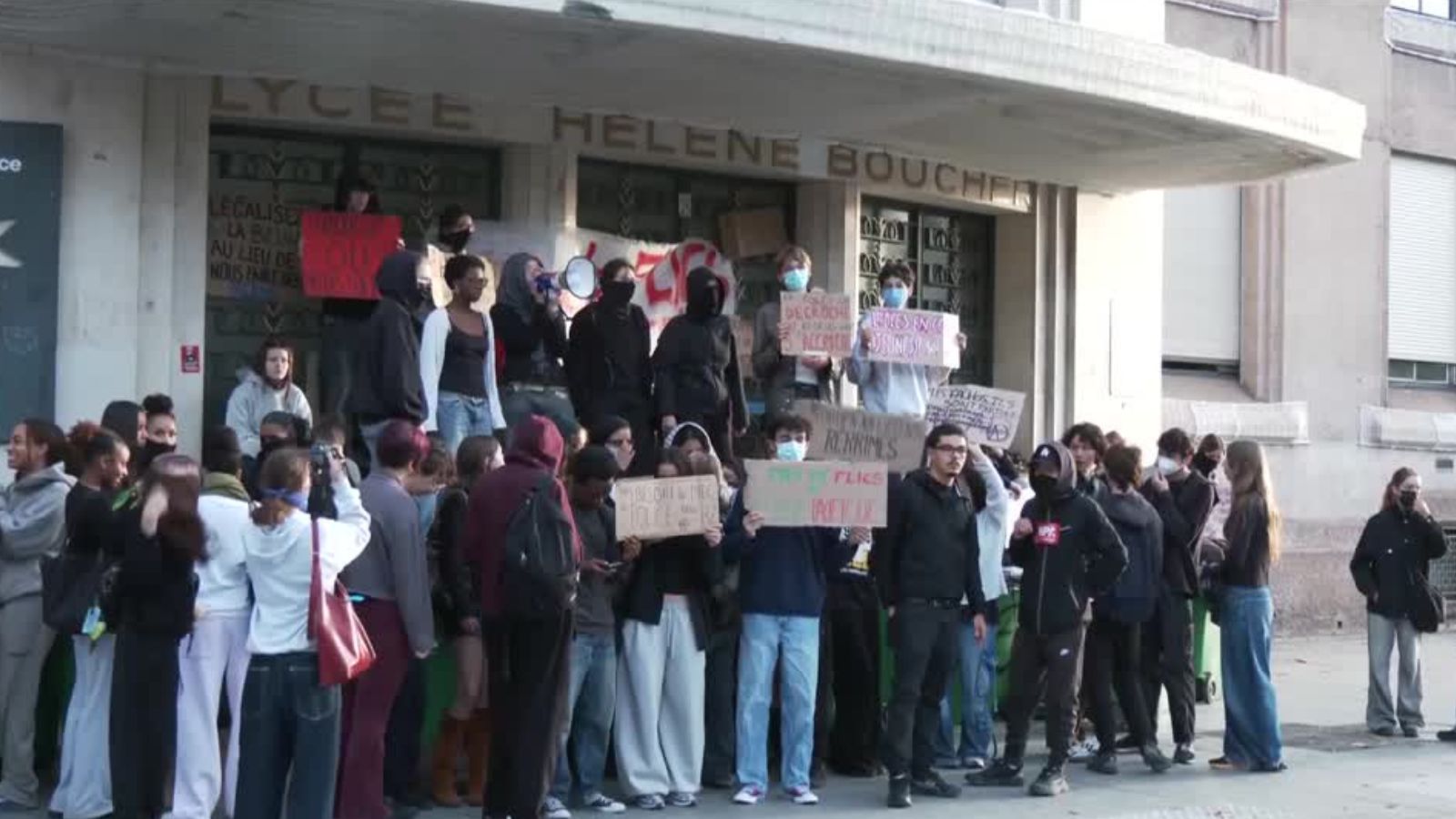
The union said more than 500,000 protesters had joined the rallies on Saturday.
Far-left presidential candidate Jean-Luc Melenchon, who backed the high school students’ movement, also took part in the Paris protest.
In recent weeks, France has seen thousands of arrests, hundreds of injuries and schools set on fire as student demonstrations spread nationwide. The unrest has influenced the country’s presidential election campaign and drawn international attention.
Among the concerns raised by protesters were serious injuries suffered by some teenagers, which they blamed on police riot-control weapons. Nunez suspended the use of a type of police stun grenade against young demonstrators after a 15-year-old lost a hand.
Macron faces pressure over economy and public spending
Macron, who urged calm on Friday, is entering the final stretch of his presidency amid a fragmented political landscape and growing pressure over the economy.
France’s efforts to reduce public debt have failed to reassure investors, pushing government borrowing costs to their highest levels in more than two decades.
The protests reflect growing public frustration over living standards, public spending and the condition of public services, alongside student grievances over school facilities and teacher shortages.
(With inputs from AP via PTI & Reuters)