

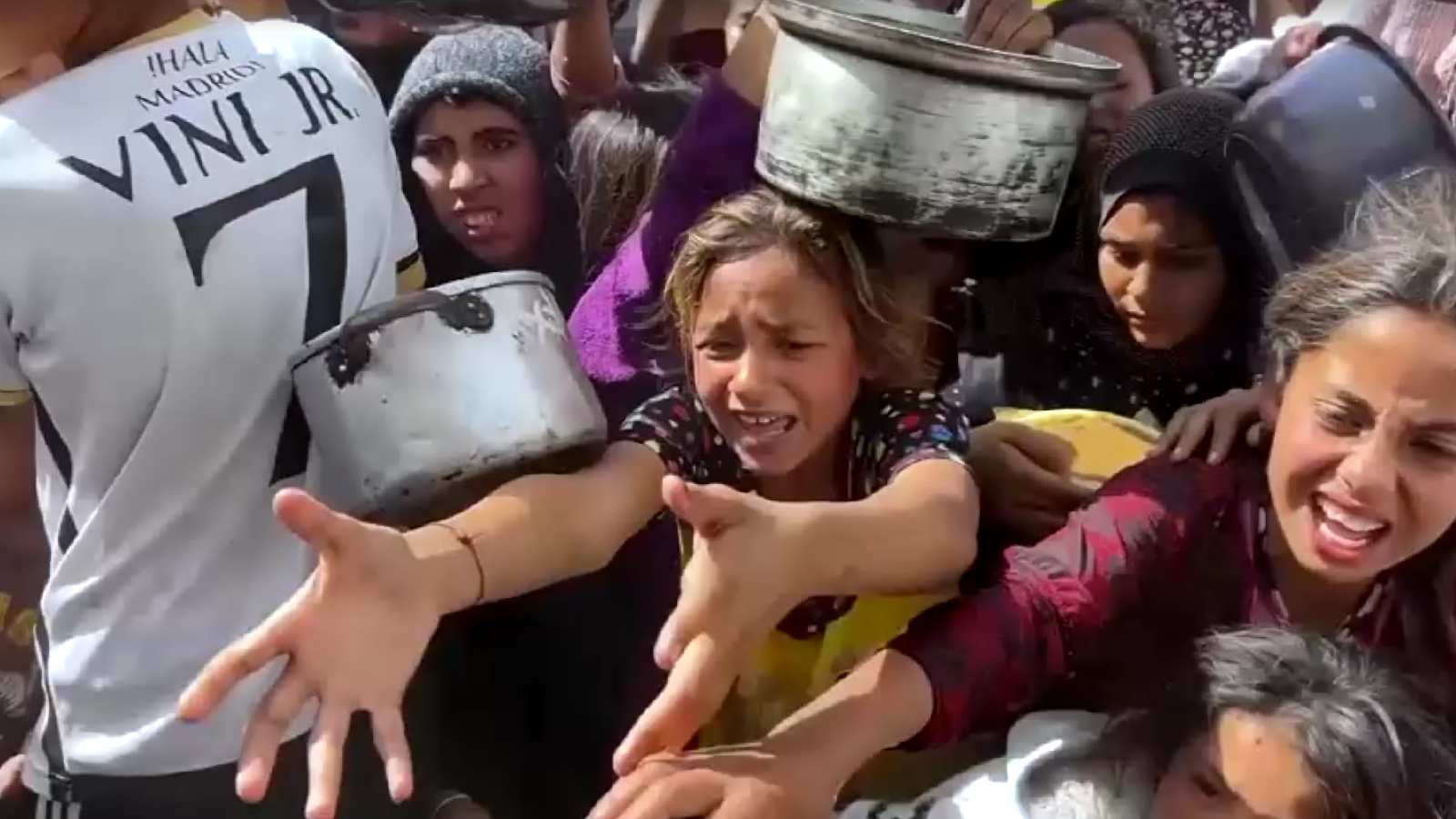


Israel-Hamas war began with Hamas’ October 7, 2023 attack on southern Israel. The conflict came at a heavy human cost on both sides, with thousands killed, families separated and displaced, homes destroyed, and children growing up amid war and destruction.
The fighting soon escalated into a devastating war in Gaza. It later widened beyond the enclave, with hostilities involving Lebanon and direct exchanges between Israel and Iran.
Here are the key moments that shaped the conflict over the past three years.
October 7, 2023 — Hamas attacks Israel
Hamas gunmen entered Israeli communities and a music festival near Re’im, killing hundreds and taking hostages. Some attackers crossed into Israel using paragliders.
Hamas military commander Mohammed Deif announced the start of what he called the “Al Aqsa Flood” operation. Israeli Prime Minister Benjamin Netanyahu declared that Israel was "at war" and vowed to retaliate. On the same day, Israel launched intensive air strikes across Gaza, saying it was targeting Hamas militants and command centres. Buildings were destroyed, and large numbers of Palestinians were killed and wounded as the bombardment continued.
October 17, 2023 — Al-Ahli hospital blast
A blast at the al-Ahli al-Arabi Baptist Hospital in Gaza City killed Palestinians and became one of the most disputed incidents of the war.
Palestinian officials blamed an Israeli air strike, while Israel said the explosion was caused by a rocket fired by a Palestinian militant group.
October 21, 2023 — Aid enters Gaza
The first humanitarian aid trucks entered Gaza from Egypt through the Rafah crossing after days of diplomatic negotiations.
November 21–24, 2023 — First major hostage-prisoner exchange
Israel and Hamas agreed to a four-day humanitarian pause. Under the deal, Hamas released Israeli and foreign hostages while Israel released Palestinian women and children held in Israeli prisons. Additional aid was also allowed into Gaza.
January 26, 2024 — World Court orders Israel to prevent genocidal acts
The International Court of Justice ordered Israel to take measures to prevent acts covered by the Genocide Convention and to improve the humanitarian situation in Gaza. The court did not order an immediate ceasefire.
April 13–14, 2024 — Iran directly attacks Israel
Iran launched drones and missiles towards Israel in its first direct attack on Israeli territory. Sirens sounded across Israel as the projectiles were intercepted in the night sky.
May 7–8, 2024 —’All eyes on Rafah’
Israeli forces took control of the Gaza side of the Rafah border crossing with Egypt and began military operations in the southern Gaza city.
Rafah had become a major refuge for Palestinians displaced from other parts of Gaza, making the offensive a major international concern.
October 26, 2024 — Israel strikes Iran
Israel launched what it described as "targeted and precise strikes" on military targets in Iran. The operation came in response to Iranian attacks on Israel earlier in the month.
October 28, 2024 — Israel bans UNRWA
Israel's parliament passed legislation banning the United Nations Palestinian refugee agency UNRWA from operating in the country.
Israeli lawmakers cited allegations concerning some UNRWA employees and their alleged links to Hamas and the October 7 attack.
November 21, 2024 — ICC issues arrest warrants
The International Criminal Court issued arrest warrants for Israeli Prime Minister Benjamin Netanyahu, former Defence Minister Yoav Gallant and Hamas commander Mohammed Diab Ibrahim al-Masri, also known as Mohammed Deif.
November 27, 2024 — Israel-Hezbollah ceasefire
A ceasefire between Israel and Hezbollah came into effect in Lebanon after the United States and France brokered an agreement.
January 19, 2025 — Ceasefire begins
A ceasefire between Israel and Hamas came into effect after more than 15 months of war. In Gaza, crowds gathered as Hamas fighters drove through the streets on pickup trucks.
January 30, 2025 — Hamas confirms Mohammed Deif's death
Hamas' armed wing announced the death of its military commander Mohammed Deif, who had been killed in an Israeli airstrike in July 2024, according to Israel.
February 4, 2025 — Trump proposes US takeover of Gaza
US President Donald Trump said the United States would take over the Gaza Strip and develop it economically after Palestinians were resettled elsewhere.
February 23, 2025 — Israeli tanks enter the West Bank
Israeli forces sent tanks into the occupied West Bank for the first time in more than two decades as Israel expanded its military operations against Palestinian militant groups in refugee camps.
March 2, 2025 — Aid blockade begins
Trucks carrying humanitarian aid lined up at Egypt's Rafah border crossing after Israel blocked the entry of aid into Gaza.
March 18 — Ceasefire collapses
The strikes effectively shattered the two-month ceasefire and marked the return of large-scale fighting.
August 21–25 — Israel prepares to seize Gaza City
Israeli forces intensified their campaign as Israel moved ahead with plans to seize Gaza City. Palestinians fled areas under attack as thick smoke rose over Deir al-Balah and Gaza City.
August 25 — Nasser Hospital strike kills journalists
Israeli strikes hit Nasser Hospital in Khan Younis, killing at least 15 people, including four journalists, according to Palestinian health officials.
September 11 — Netanyahu rejects Palestinian state
Israeli Prime Minister Benjamin Netanyahu signed an agreement advancing a controversial settlement expansion plan in the West Bank.
He also said Israel would not allow the creation of a Palestinian state.
September 29 — Trump presents a 20-point Gaza plan
US President Donald Trump announced a 20-point proposal aimed at ending the war in Gaza.
October 13 — Gaza ceasefire agreement signed
Trump signed the Gaza ceasefire agreement at Sharm el-Sheikh in Egypt, marking a major diplomatic moment after two years of war.
October 28–29 — Fighting resumes
Netanyahu ordered the Israeli military to carry out what he called "forceful" strikes in Gaza.
February 2, 2026 — Rafah crossing reopens
The Rafah crossing reopened for a limited number of Palestinians for the first time in months, allowing ambulances and a small number of people to cross under strict Israeli security checks.
February 11 — Netanyahu joins Trump’s Board of Peace
Israeli Prime Minister Benjamin Netanyahu said Israel would join US President Donald Trump’s “Board of Peace” initiative during a visit to Washington, where he met Trump and Secretary of State Marco Rubio.
April 25 — Palestinians vote in local elections
Palestinians took part in local elections that included Gaza for the first time in two decades.
July 6 — Hamas says it is dissolving its Gaza government
Hamas announced that it had dissolved its de facto government in Gaza and was prepared to hand administrative responsibilities to a group of Palestinian technocrats.
August 9 — Netanyahu rejects Trump's Gaza plan
Netanyahu said Israel rejected Trump's 15-point plan for Gaza and would not withdraw its forces until Hamas was fully disarmed.
September — Reconstruction remains stalled
Nearly a year after the ceasefire that ended major fighting, most of Gaza remained devastated, and millions of Palestinians were living in tents or damaged buildings.
Israel continued to control large parts of the territory, while Hamas retained control over areas where most Palestinians lived. Reconstruction remained tied to unresolved questions over Hamas' disarmament and an Israeli military withdrawal.
The war had changed shape, but its consequences remained visible in ruined homes, displaced families, unfinished burials, and children growing up among the wreckage.
(This copy is compiled by Mariya, with agency inputs from Reuters)