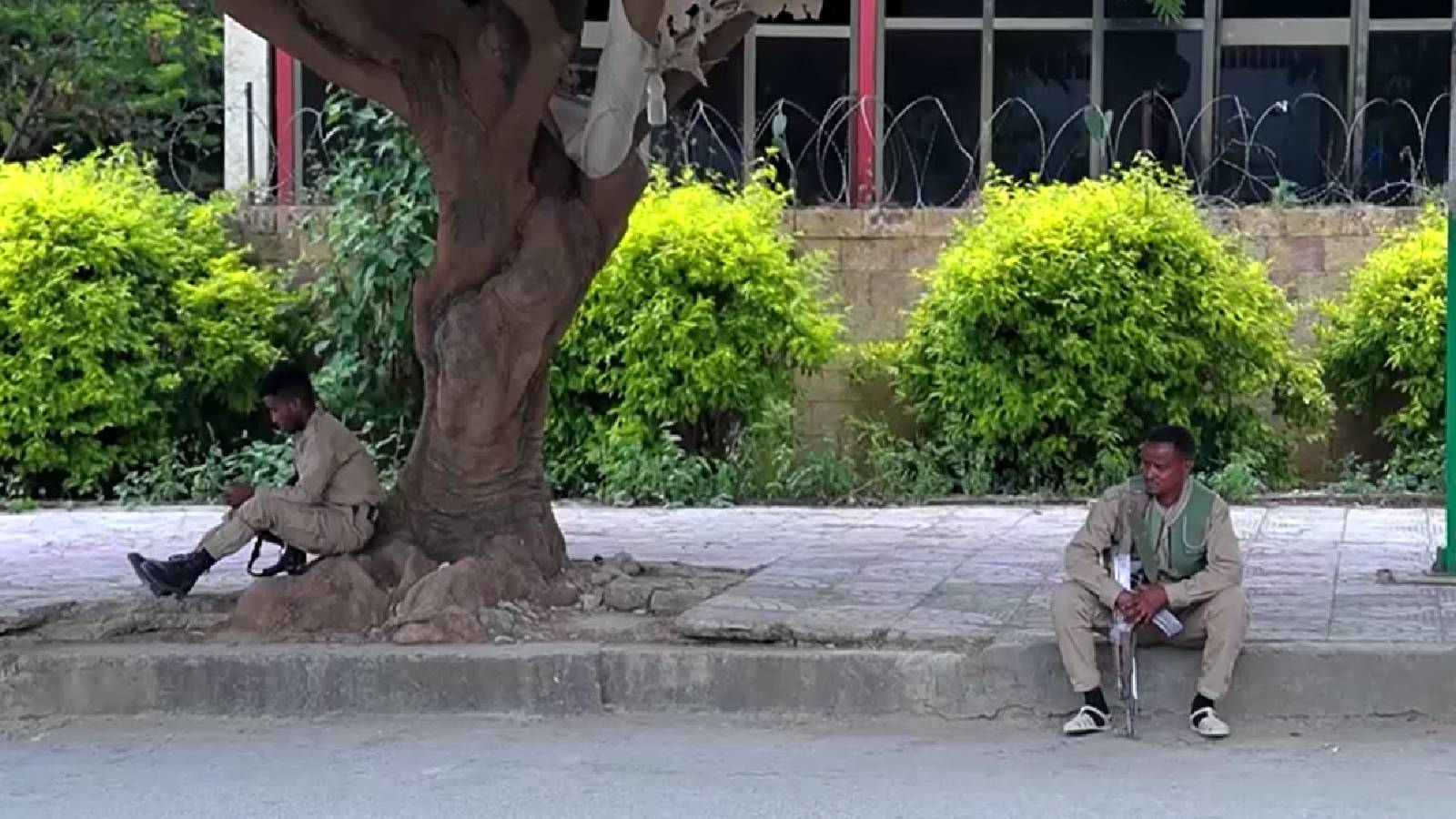


Fighting has erupted again in northern Ethiopia, threatening to undo a peace deal that ended one of the country’s deadliest conflicts and raising fears that a new war could draw in neighbouring countries and armed groups across the Horn of Africa.
Tigrayan forces seized control of three airports on Wednesday and clashed with federal troops in several locations. Fighting has also spread into the neighbouring Afar and Amhara regions. Ethiopian Airlines suspended flights to Mekelle, Axum and Shire as the security situation deteriorated.
The renewed violence comes after months of tensions between the Tigray People’s Liberation Front (TPLF) and Prime Minister Abiy Ahmed’s federal government.
Here is why the latest fighting matters.
The clash continues
The Pretoria Agreement, formally the Agreement for Lasting Peace through a Permanent Cessation of Hostilities, was signed on November 2, 2022, between the federal government of Ethiopia and the Tigray People's Liberation Front to end the devastating two-year Tigray War.
But even though the war was formally ended, the conflict that killed hundreds of thousands of people has been under strain for months, with each side accusing the other of violating the deal.
The peace process began to unravel after splits emerged within the TPLF, and a hardline faction reasserted control over the region, ousting an interim administration.
Most recently, the TPLF allied with six other armed groups from across Ethiopia, including former enemies from the war, aimed at overthrowing Prime Minister Abiy Ahmed's government.
It is not clear how many members of the alliance were involved in the clashes that happened, but Ethiopia is home to many heavily armed regional groups.
Abiy's government has accused Eritrea of financially backing members of the alliance, allegations Asmara has denied.
What role will Eritrea play?
As the situation unfolds, all eyes will be on Asmara, which has endured a turbulent relationship with Addis Ababa since independence in 1993.
Soon after coming to power, Abiy won the Nobel Peace Prize in 2019 for ending two decades of hostility between Ethiopia and Eritrea.
When the civil war erupted the following year, Eritrean forces supported Ethiopia's federal army. Relations have deteriorated since the Pretoria peace agreement, to which Eritrea was not a party to despite having fought in the war.
Access to the Red Sea
Ethiopia’s dispute with Eritrea is not only about borders or old political rivalries. It is also about something Ethiopia lost when Eritrea became independent in 1993: direct access to the Red Sea.
Landlocked Ethiopia had a coastline for decades until Eritrea broke away. Since then, Addis Ababa has repeatedly argued that restoring access to the sea - specifically the port of Assab - is vital for its long-term security and economic development. Asmara has said it fears Addis Ababa will try to take Assab by force.
Earlier this month, the US government lifted sanctions on Eritrean Defense Forces and other entities.
It is not clear what impact removing sanctions would have on any conflict in Ethiopia, but the move is seen as a nod by the Trump administration to Eritrea’s strategic coastline opposite Saudi Arabia, and a warning to Ethiopia not to go to war with Asmara.
The regional risks
Diplomats warn that a renewed Tigray war would no longer be a largely isolated Ethiopian conflict.
Instead, it would unfold as the Horn of Africa faces its most volatile security environment in years, with war raging in Sudan, persistent instability in Somalia, tensions over the Nile, and expanding war and geopolitics from West Asia spilling into the region.
Ethiopia has been accused of backing the Rapid Support Forces (RSF) paramilitary group, which is fighting Sudan’s army in one of the world’s deadliest conflicts.
This support, which Ethiopia denies, is in line with its close relationship with the United Arab Emirates, the most active Gulf power in the region, which UN experts say is also supporting the RSF. The UAE has denied the accusations.
For its part, Eritrea is closer to Sudan and has cultivated relatively close ties with Egypt, which is a long-time rival of Ethiopia. Egypt and Sudan both see Ethiopia's Grand Ethiopian Renaissance Dam, built on a tributary of the Nile, as a serious threat to their vital water supplies.
(With agency inputs from Reuters)