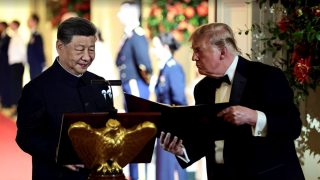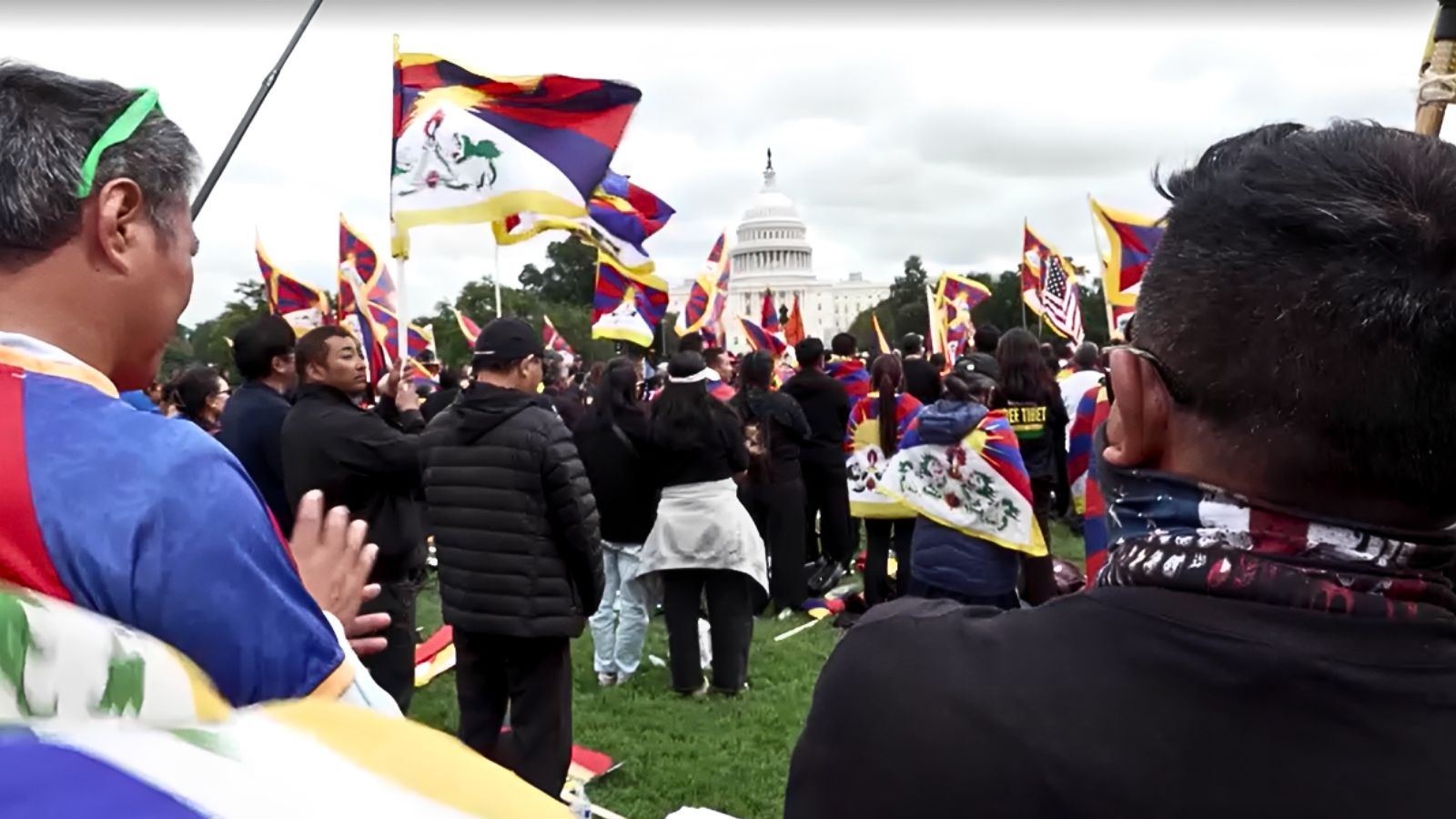


Washington: Tibetans, Uyghurs and other diaspora communities held protests in Washington DC, against Chinese President Xi Jinping's three-day US visit, calling for greater attention to human rights concerns in Tibet, East Turkistan/Xinjiang and other regions.
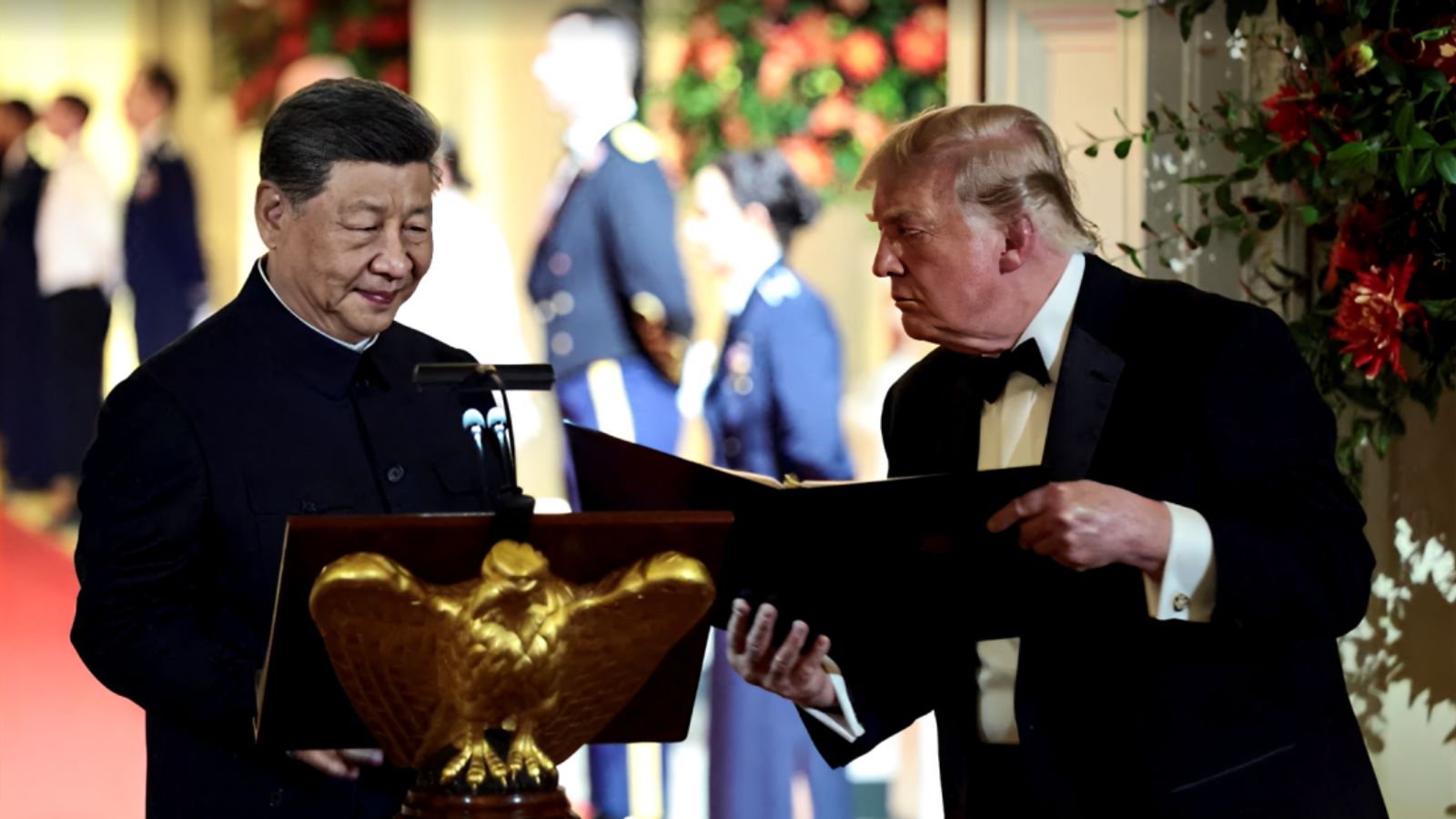
Tibetan protesters raised slogans including "We want China out of Tibet" as Xi met US President Donald Trump in Washington.
The demonstrations brought together Tibetan, Uyghur, Hong Kong, Southern Mongolian and Chinese democracy activists. The day-long mobilisation included a protest outside the Chinese Embassy, a march towards the US Capitol and a rally attended by representatives of several diaspora and human rights organisations.
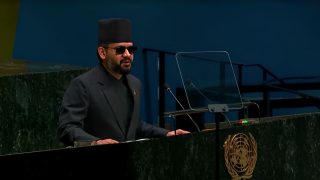
Speaking at the protest, Uyghur Human Rights Project (UHRP) Executive Director Omer Kanat drew comparisons between the concerns raised by Tibetan and Uyghur communities.
"The situation of Tibetans and Uyghurs is identical. As already said, Tibet was never part of China; East Turkistan was never a part of China. East Turkistan was occupied in 1949. Tibet was occupied in 1959," Kanat said.
He alleged that Chinese government policies had restricted religious practice, language and cultural life in Tibet, and said Uyghurs faced similar restrictions.
"In Tibet, the Chinese government imposed severe restrictions on religious practice, on Tibetan language and on cultural life. Tibetan children and separated from their families, raised without their language, culture or faith. Uyghur children now face the same fate as the boarding school system expands to East Turkistan," Kanat said.
"Uyghur have experienced mass arbitrary detention, forced labour, surveillance, family separation and sweeping restrictions on our religion, language and culture," he added.
Also Read:
Kanat also said the concerns extended beyond communities living in China, arguing that members of the diaspora faced pressure as well.
"This repression is aimed at something fundamental - our ability to preserve our identity and pass it to the next generation. That's why solidarity between Tibetans and Uyghurs matters. It matters especially today as Xi Jinping is welcomed here in Washington, DC," he said.
"For Tibetans, Uyghurs and others forgotten by the Chinese Govt, repression does not stop at the Chinese border. Even here in the diaspora, many of us face a terrible question - do we speak freely or do we protect our families? China's new Ethnic Unity Law makes that fear even more serious," Kanat said.
The Tibetan mobilisation was led by the Tibetan Youth Congress and Capital Area Tibetan Association, with support from the International Campaign for Tibet, Students for a Free Tibet, Tibetan National Congress and other organisations.
More than 2,000 Tibetans from across North America were expected to take part in the demonstrations.
The protests coincided with Xi's meetings with Trump, with participating organisations urging the US administration to raise concerns over Tibet and broader human rights issues during their bilateral discussions.
Tibetan protesters also called for the Tibet issue to be raised with Beijing and for efforts towards resolving the longstanding dispute.
The demonstrations reflected longstanding disagreements between Beijing and Tibetan and Uyghur advocacy groups over China's policies in Tibet and Xinjiang. Beijing rejects allegations that its policies constitute repression and says its measures in the regions are aimed at development, stability and combating extremism.
The protests came as Xi's US visit put China-US relations in focus, with issues including Taiwan, trade, technology and human rights featuring in discussions between the two leaders.