

With the race for the next UN Secretary-General underway, here’s how the world body chooses who gets the top job.
Unlike any other election, the UN Secretary-General is appointed by the General Assembly on the recommendation of the Security Council.

The process is designed to build broad support among the 193 UN member states while securing the backing of the Security Council’s five permanent members: China, France, Russia, the UK and the US.
The Secretary-General serves a five-year term, which can be renewed. In practice, the office has traditionally been held for a maximum of two terms.
Here’s how the UN Secretary-General is chosen:
Countries nominate candidates
UN member states can nominate candidates for the post. The nominations are made public, along with each candidate’s curriculum vitae, vision statement and campaign-financing disclosures.
Candidates face General Assembly dialogues
Candidates then participate in interactive dialogues with UN member states, presenting their vision and answering questions.
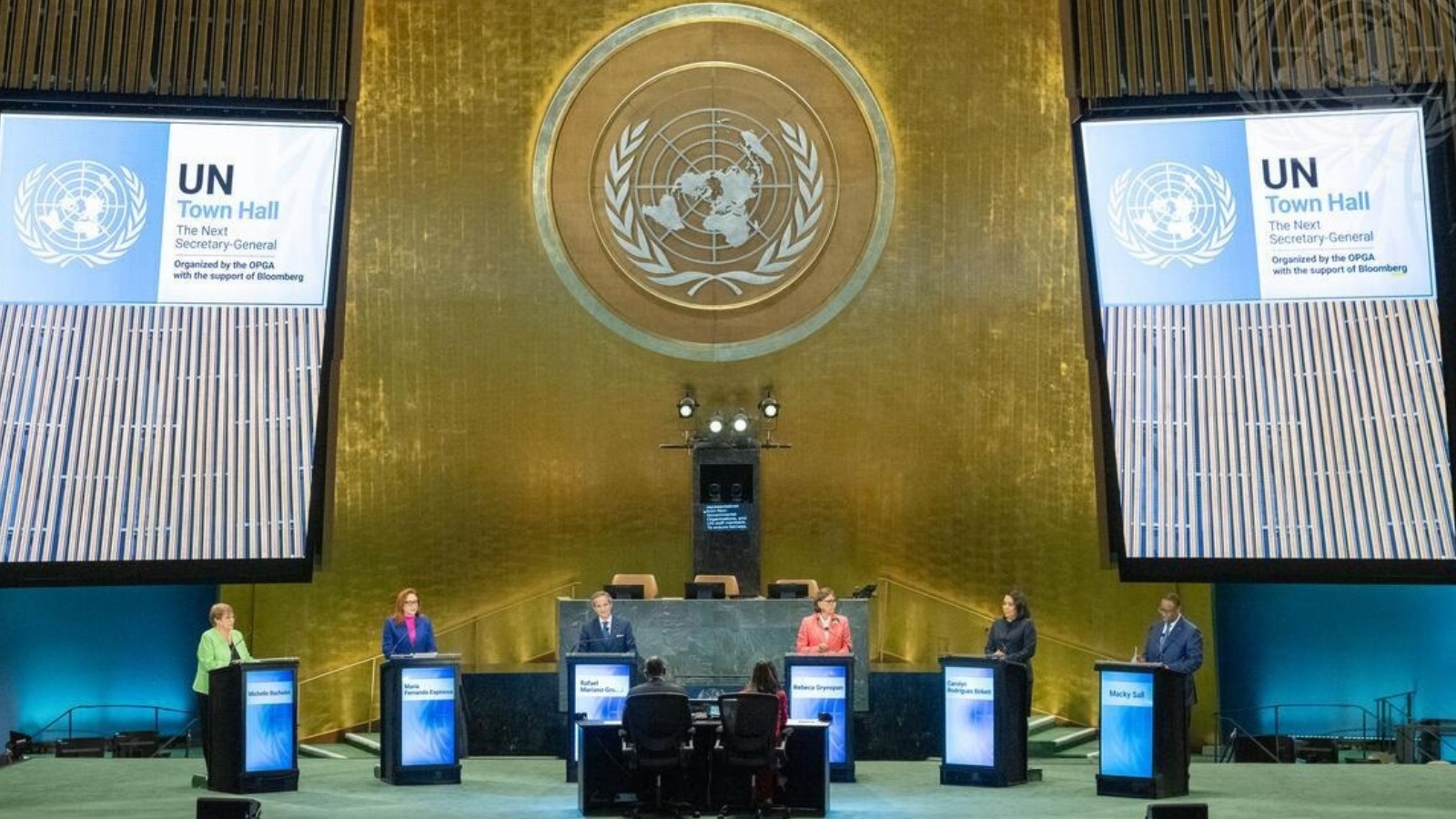
The process has become more open in recent years, with greater participation from civil society and other stakeholders. In 2026, candidates also took part in a UN Town Hall and multiple rounds of interactive dialogues.
The Security Council conducts secret straw polls
The 15-member Security Council, made up of five permanent and 10 elected members, then tests support for the candidates through confidential straw polls*.
The ballots use three categories: ‘encourage’, ‘discourage’ and ‘no opinion.’
These polls are informal and do not formally select the Secretary-General. But they indicate which candidates are gaining support and whether any face opposition from a permanent member.
That matters because the five permanent (P5) members hold veto power over substantive Security Council decisions, including the recommendation of a Secretary-General candidate. A candidate therefore needs to emerge with sufficient support while avoiding a veto from any of the P5.
The 2026 polls have so far shown a closely contested field, with support shifting between candidates. In the third poll on September 18, Rebeca Grynspan received nine ‘encourage’ votes, while Carolyn Rodrigues-Birkett received eight.
*A straw poll is an informal, non-binding vote utilising anonymous ballots to gauge opinions, test support, and check for consensus before an official vote. It serves as a preliminary tool to measure group alignment without official consequences.
It is often conducted via a quick show of hands, a voice vote, or an informal online survey.
The Security Council recommends one candidate
Once the Council reaches agreement, it formally recommends one candidate to the General Assembly through a Security Council resolution.
This is the key decision-making stage because the General Assembly cannot appoint a Secretary-General without a Security Council recommendation.
The General Assembly appoints the Secretary-General
The 193-member General Assembly then appoints the candidate recommended by the Security Council.
The General Assembly’s role is therefore formal but essential: the appointment cannot happen without the Council’s recommendation.
How long can a Secretary-General serve
A UN Secretary-General has five-year term. The UN Charter does not set a formal two-term limit. However, by established practice, Secretary-Generals have generally served a maximum of two five-year terms.
António Guterres served two terms, from 2017 to 2021 and from 2022 to 2026. His successor is due to take office on January 1, 2027.