

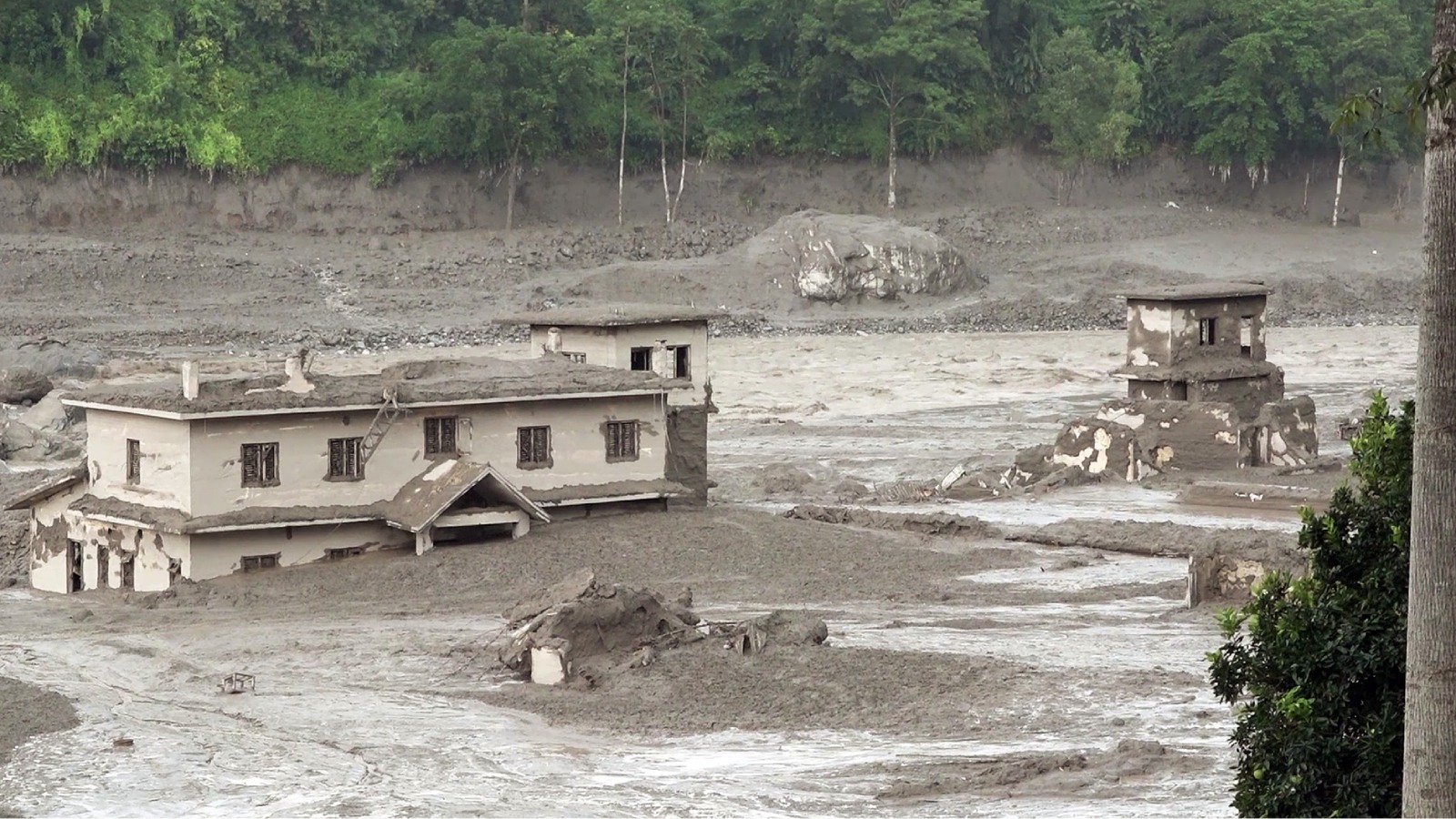


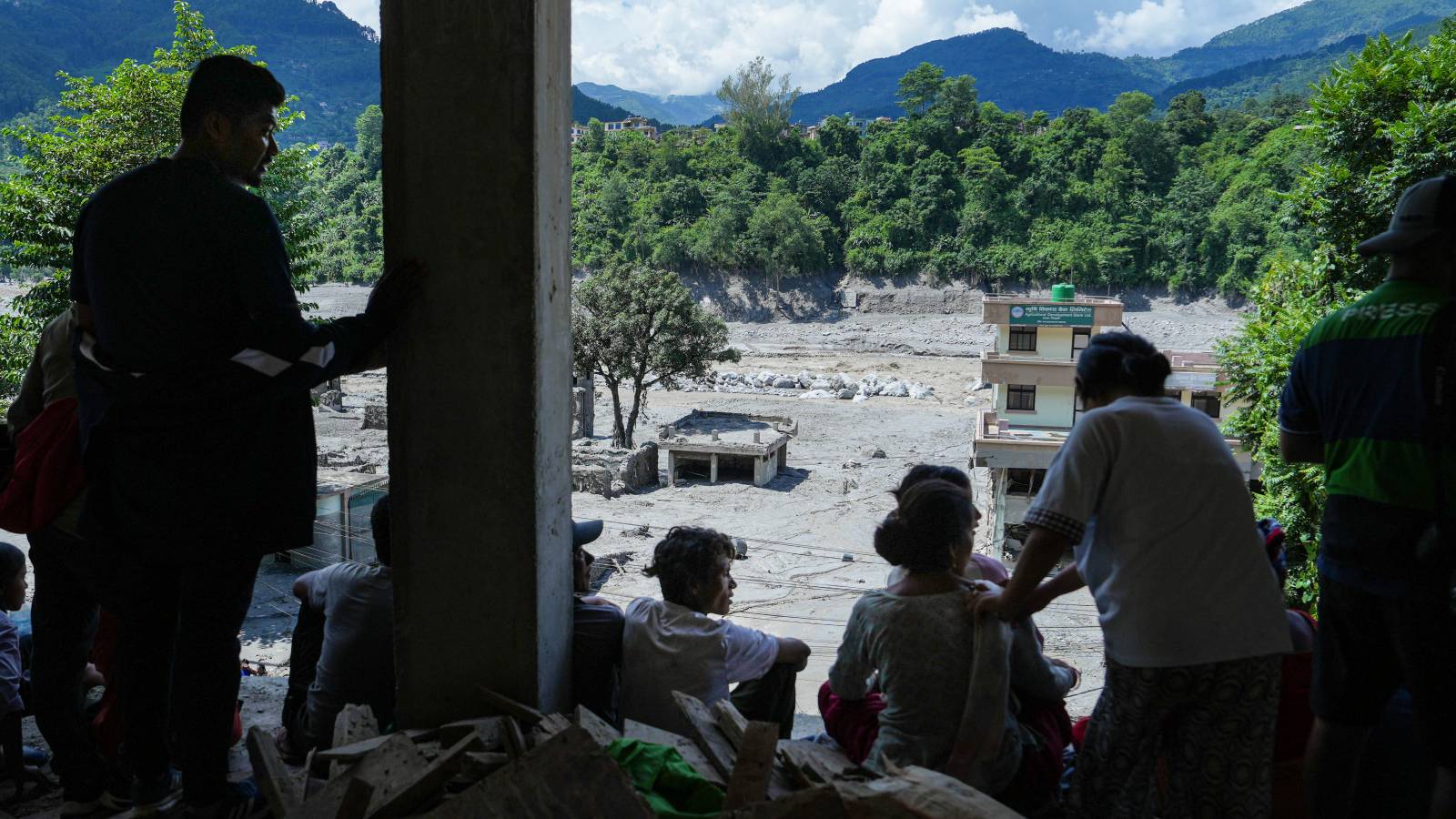
The recent deadly flash floods in Nepal have once again highlighted the country's vulnerability to natural disasters. But this is not an isolated event. Over the years, Nepal has witnessed deadly earthquakes, landslides, flash floods and avalanches, causing widespread loss of life and destruction across the country.
The country's vulnerability is rooted in its unique geography and geology. Located in the young Himalayan mountain system, Nepal faces a combination of powerful tectonic forces, steep terrain, intense monsoon rainfall and a rapidly changing high-altitude environment.
So, why is Nepal so prone to natural disasters? Several interconnected factors help explain its vulnerability.
1. An active tectonic zone
Nepal sits along the collision zone between the Indian and Eurasian tectonic plates. The Indian plate is pushing beneath the Eurasian plate, a process that continues to uplift the Himalayas.
This makes Nepal particularly vulnerable to earthquakes. The geological forces shaping the Himalayas have also contributed to fractured and unstable mountain slopes, increasing the risk of landslides.
2. Steep mountains and unstable slopes
Nepal's terrain is dominated by steep mountains, deep valleys and fast-flowing rivers. This makes the landscape naturally susceptible to slope failures. Heavy rainfall, snowmelt, erosion, deforestation, road construction and earthquakes can destabilise soil and rock, triggering:
* Landslides and debris flows
* Flash floods
* Rockfalls and avalanches
* River blockages caused by landslides
When a landslide blocks a river, water can build up behind the natural barrier. If the blockage suddenly fails, a powerful surge can rush downstream, threatening communities and infrastructure.
Also Read:
The recent Bhote Koshi disaster illustrates this danger, with reporting pointing to a rock-and-ice avalanche or landslide that blocked the river before a sudden flood surge moved downstream.
3. Heavy monsoon rainfall
Nepal experiences a powerful summer monsoon, generally from June to September, bringing intense rainfall to large parts of the country.
When large amounts of rain fall over a short period, water runs rapidly down steep slopes instead of being absorbed into the ground. Rivers can rise quickly and carry mud, rocks, boulders, trees and other debris downstream.
This creates conditions for flash floods and landslides, particularly in mountain valleys and areas where roads and settlements are located close to rivers.
4. Glaciers and glacial lakes
Nepal's high Himalayan region contains numerous glaciers and glacial lakes. Rising temperatures are causing glaciers to retreat and changing the size and stability of some glacial lakes.
Some lakes are held back by natural dams made of loose rock and sediment, known as moraines. If such a dam fails, or if an avalanche or landslide suddenly enters a lake, enormous quantities of water can be released.
This phenomenon is known as a glacial lake outburst flood (GLOF).
Also Read:
GLOFs are particularly dangerous because floodwaters can race through narrow mountain valleys at tremendous speed, giving downstream communities little time to respond. Nepal has recorded at least 24 significant outburst-flood events, including some originating across the border in Tibet.
5. Climate change is increasing the risks
Climate change is adding another layer of risk to Nepal's already hazardous environment.
Rising temperatures are affecting glaciers, snow cover and glacial lakes, while changing rainfall patterns can increase the likelihood of intense precipitation events.
These changes can also interact with existing hazards. Melting ice, unstable slopes and extreme rainfall can combine to trigger landslides, debris flows and floods.
6. People and infrastructure are highly exposed
Natural hazards become disasters when people and critical infrastructure are exposed to them. Nepal's geography makes avoiding these risks particularly difficult.
Flat land is limited, so villages, highways, bridges, hydropower projects and transmission lines are often built along river valleys and slopes.
Remote mountain communities face additional challenges. Difficult terrain can make it harder to:
* Receive timely warnings
* Evacuate residents
* Reach affected areas
* Conduct search-and-rescue operations
* Restore damaged roads and bridges
* Rebuild essential infrastructure
Also Read:
Why hazards become disasters
Nepal's vulnerability is not caused by a single factor. It is the result of geology, geography, weather, climate change and human exposure coming together.
For example, intense monsoon rainfall can destabilise a mountain slope and trigger a landslide. The landslide can then block a river, creating a temporary natural dam. If that blockage collapses, a flash flood can sweep through settlements and damage roads, bridges and hydropower infrastructure downstream.
This interconnected chain of hazards is what makes Nepal particularly vulnerable: one natural event can quickly trigger another, turning a local hazard into a much larger disaster.