


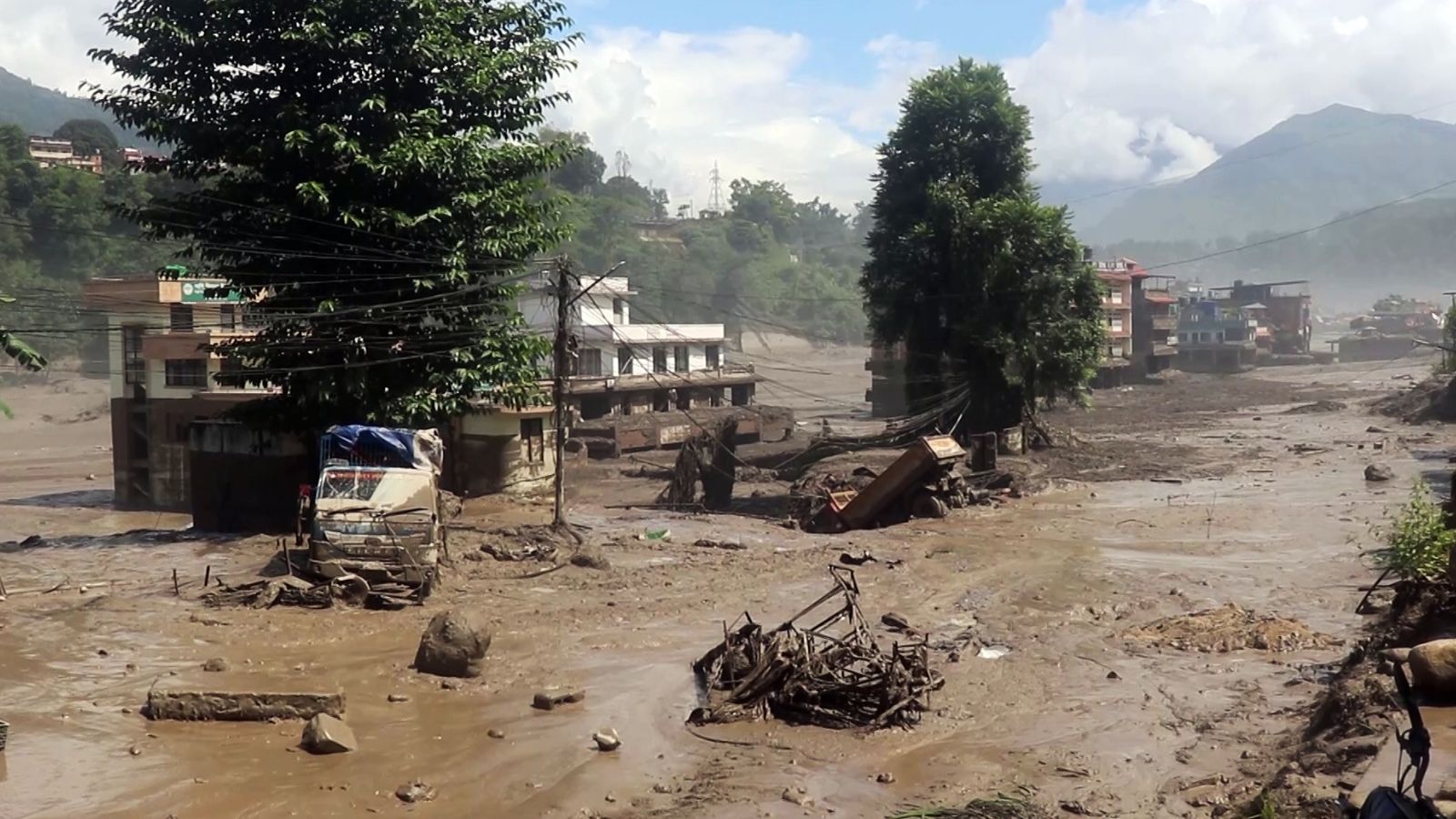


Nepal, known for its landlocked scenic hilly regions near the Himalayan mountain range is praised for its beauty and cold atmosphere.
Along with the beauty comes its dangers.The country is always on radar for its natural calamities disrupting livelihood. Major earthquakes, flash floods have all been uninvited guests in the country making it difficult for the survival of humankind.
Today, August 26, Nepal saw one of the biggest flash floods in its history with over 400 missing and death toll rising every minute.
Let’s trace back to some of Nepal’s biggest natural disasters which caused great loss for the country.
2025
Multiple floods burst out in regions across Nepal, specifically, a sudden glacial lake outburst occurred in the remote Himalayan village of Tilgau, Humla on the night of May 14.
The disaster left two glacial lakes to burst causing an avalanche leaving snow debris all over the region. The disaster has also damaged homes, irrigation and hydropower infrastructure, and displaced around 32 villagers into temporary shelters.
Similarly on July 18, another glacial lake outburst, swept away the Friendship Bridge over Nepal’s Trishuli River at Rasuwagadi. The disaster left at least eight people dead, dozens missing (including Nepali and Chinese workers), destroyed hundreds of parked trucks and electric vehicles, and halted cross-border commerce.
2024
Nepal faced multiple flood disasters during the monsoon season. In July, flooding killed at least 14 people and left nine missing. On August 16, a glacial lake outburst flood (GLOF) struck Thame village in the Everest region after two glacial lakes burst, damaging homes, disrupting roads and communications, and displacing 135 residents, though no deaths were reported. The worst disaster occurred in late September when torrential rainfall triggered widespread floods and landslides across the country, particularly in Bagmati Province and the Kathmandu Valley. Kathmandu recorded its heaviest rainfall in decades, causing rivers to overflow, widespread infrastructure damage, power and internet outages, and large-scale displacement. By October 1, at least 217 people had been killed, 28 were missing, and around 4,000 required rescue, making it one of Nepal’s deadliest flood events in recent years.
2023
In 2023, the country experienced widespread monsoon-related floods and landslides, particularly across the eastern districts. By July 18, at least 30 people had died in floods and landslides, with 25 missing and more than 1,000 families affected. By August 25, monsoon-triggered disasters had killed 73 people, including 12 in floods and 38 in landslides, while damaging roads, bridges and hydropower projects across the country. By September 21, the toll from floods and landslides had risen to at least 61, with 29 people missing and more than 6,000 families affected; lightning strikes during the same monsoon season claimed another 43 lives.
2022
On September 9, heavy rainfall caused the Lasku and Mahakali rivers to overflow in Darchula district, killing at least five people and leaving 10 missing. On September 17, torrential rain triggered landslides in Achham district, killing 22 people, injuring 10 and leaving one missing. The situation worsened in late September and October, when heavy rains triggered floods and landslides across western Nepal. More than 10,700 people were rendered homeless in Karnali Province, while 36 people died there alone. Overall, 118 people were killed in 19 flood-related incidents in Nepal in 2022, alongside 99 deaths from landslides, highlighting the severe impact of extreme monsoon weather that year.
2021
Nepal faced several deadly floods and landslides, with the most severe events occurring during the monsoon and an unusually heavy post-monsoon spell. In June, flooding of the Melamchi River in Sindhupalchowk caused major destruction, killing at least 21 people and leaving several missing, while hundreds of homes and key infrastructure were damaged. By July 15, at least 61 people had died in rain-related disasters since the start of the monsoon on June 11. In October, unseasonal heavy rainfall triggered widespread floods and landslides across the country, particularly in eastern and western districts. By October 31, 121 people had died and 28 were missing in disasters linked to the October rains, with roads, bridges, hydropower projects and farmland also badly affected.
This story is compiled by Aaron Philip Keechireth