


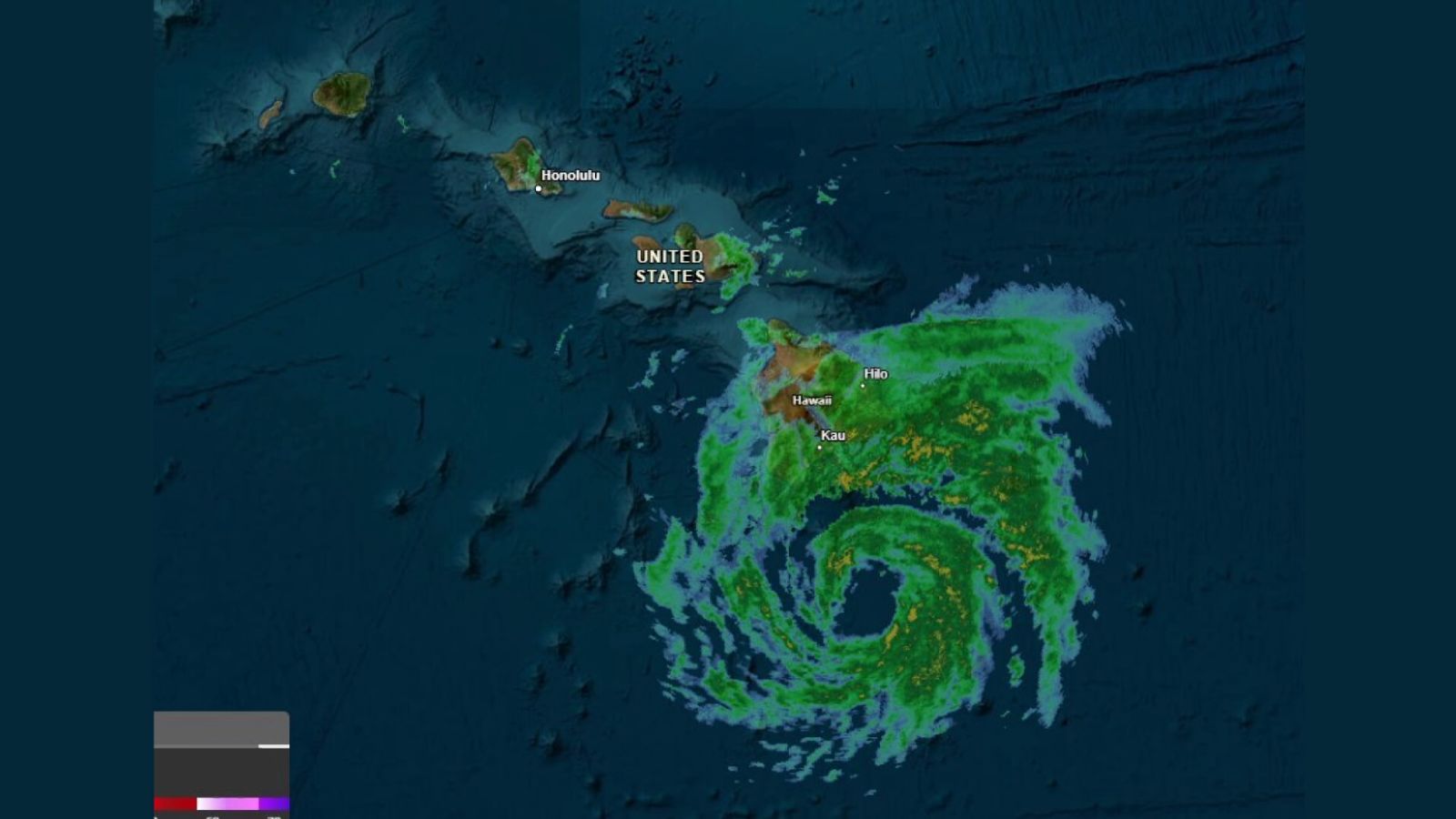


Honolulu, US: Hawaii's Big Island is threatened Saturday with its first possible direct hit from a hurricane in 155 years as Hurricane Lala brought gusty winds, waves and rain to the region.
The National Hurricane Center said Lala's maximum sustained winds increased to 120 kmph, making it a Category 1 hurricane. The storm's centre was forecast to move over or near the island's southern end by the evening.
Governor Josh Green, noting rainfall of 5 cm an hour, said "people should be sheltering in place now".
Forecasters said higher elevations on the island could get as much as 63.5 cm of rain, raising the risk of life-threatening mudslides. The governor also warned of destructive flooding and wildfires fuelled by strong winds. Electricity was knocked out for 32 per cent of customers on the Big Island, according to poweroutage.us.
The Big Island was under a hurricane warning, while tropical storm warnings were issued for Maui, Molokai, Lanai, Kahoolawe, Oahu, Kauai and Niihau.
A Category 3 hurricane hit the northeast corner of the Big Island in 1871, according to research by a University of Hawaii atmospheric scientist. The latest forecast has Lala striking "very close to the southern tip of the Big Island", said Vanessa Almanza, a National Weather Service meteorologist in Honolulu.
Shelters were opened, events were cancelled and ranchers were urged to leave their cattle in pastures rather than structures that might collapse. "It doesn't take landfall to create destruction," Almanza said.
The hurricane centre predicted 20.3-30.5 cm of total rainfall across Maui and the lower elevations of the Big Island, and 10.2-15.2 cm across the island chain. Many Hawaii residents are still dealing with the aftermath of devastating floods in March.
As winds ramped up across the islands, Almanza said dry and breezy conditions outside the storm would elevate fire concerns.
In 2023, the Maui town of Lahaina burned during extreme winds as a hurricane passed far to the south.
Kauai is where Hurricane Iniki made landfall as a Category 4 hurricane in 1992. University of Hawaii scientist Steven Businger said the storm caused $3 billion in damage, destroyed thousands of homes and killed six people.