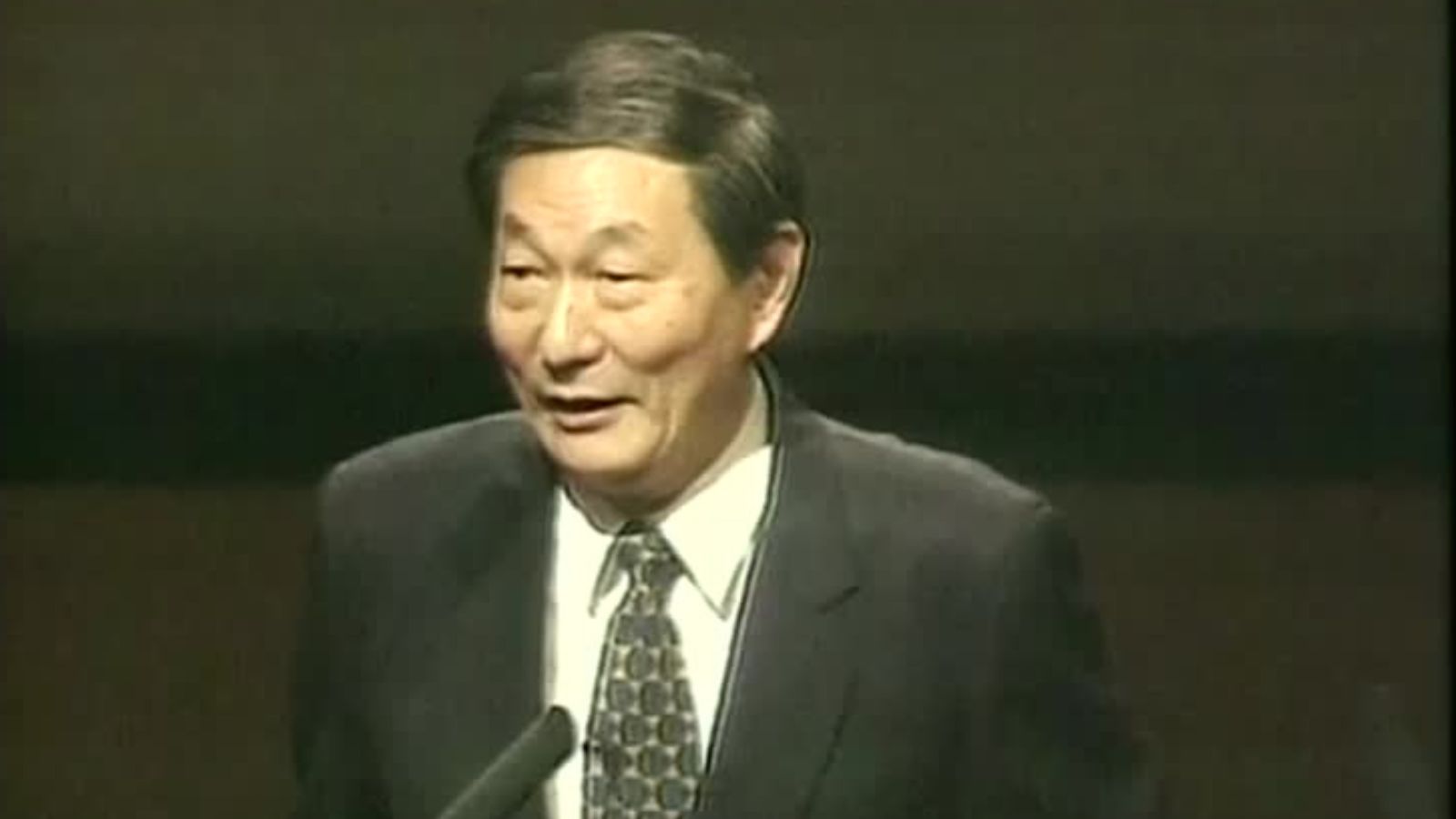


Beijing: Former Chinese premier Zhu Rongji, one of the country's foremost economic reformers who spearheaded sweeping changes to the state-owned enterprises and helped secure China's entry into the World Trade Organisation, died here on Wednesday.
He was 98.
Zhu died of illness, the state-run Xinhua news agency reported.
He served as China's premier from 1998 to 2003 and was remembered for his tough campaign against corruption, efforts to shake up the centrally planned economy and sweeping reforms of the State-Owned Enterprise (SOE) sector.
Zhu also played a key role in securing China's entry into the World Trade Organisation (WTO) in 2001, a landmark step that accelerated the country's integration into the global economy.
He had served as a member of the Standing Committee of the Political Bureau, the top decision-making body of the ruling Communist Party of China (CPC).
An obituary jointly issued by the CPC Central Committee, the Standing Committee of the National People's Congress, the State Council and the National Committee of the Chinese People's Political Consultative Conference described Zhu as an "excellent" party member, a "time-tested and loyal communist fighter" and an "outstanding proletarian revolutionist", statesman and leader of the party and the state.
Zhu also played a major role in improving India-China relations.
He made a landmark visit to India in 2002, the first by a Chinese premier in 11 years, seeking to expand greater economic cooperation and mutual trust.
During the visit, Zhu held talks with the then prime minister Atal Bihari Vajpayee and other Indian leaders and visited Agra, New Delhi, Mumbai, and Bangalore.
Brief Biography and career of Zhu Rongji
Born in Changsha in Hunan province in October 1928, Zhu graduated from Tsinghua University with a degree in electrical engineering.
He joined the revolutionary movement in December 1948 and became a member of the CPC in 1949.
After serving as mayor and Chinese Communist Party (CCP) Secretary of Shanghai (1987–1991), where he spearheaded market-oriented reforms, Zhu was promoted to vice premier in 1991.
He served on the Politburo Standing Committee from 1992 to 2002 and became premier in March 1998, serving one term until stepping down in March 2000.
His reforms included tackling China’s high inflation, mounting debt and SOE losses, which threatened financial stability.
Zhu targeted the risks by centralising fiscal policy, cutting red tape and closing or privatising failing enterprises.
According to observers, while Zhu's reforms transformed China's economic landscape, they also brought significant social disruption, including widespread layoffs in the state sector.
However, supporters credit him with laying the institutional foundation, along with his mentor, reformist leader Deng Xiaoping, for China's rise as an economic powerhouse.
Zhu's role in China's WTO entry was particularly significant. He was closely involved in the prolonged negotiations that culminated in the country's entry into the global trade body in 2001, which opened up China to the international market and ushered in major changes in the country's economy, the Hong Kong-based South China Morning Post reported.
Zhu, who once said he wished to be remembered simply as "an honest official”, navigated the constraints of China's political system deftly while carrying out economic reforms.
CPC historians say his relationship with party founder Mao Zedong was defined by intellectual disagreements as his economic views clashed sharply with the latter's ideological Marxist campaigns.
Zhu, however, shared a more amiable relationship with Mao's successor Deng, who is regarded as a chief architect of China's reforms.
He regarded Deng as a mentor and patron.
Zhu largely withdrew from public life after stepping down as premier in 2003, making only rare public appearances.
He published his speeches and writings in a widely read multi-volume collection, preserving his perspective on governance and economic reforms.