



On August 15, 2021, Taliban fighters entered the Afghan capital Kabul virtually unopposed. Exclusive footage from Al Jazeera made available to Reuters showed the militants entering the presidential palace that same day.
In a video released by the Taliban the next day, a senior official from the militant group, Mullah Baradar Akhund, said it was time to provide for the people and to improve their lives.
Thousands of civilians desperate to flee Afghanistan thronged Kabul airport seeking to escape, including some clinging to a US military transport plane as it taxied on the runway.
The cost to girls' education
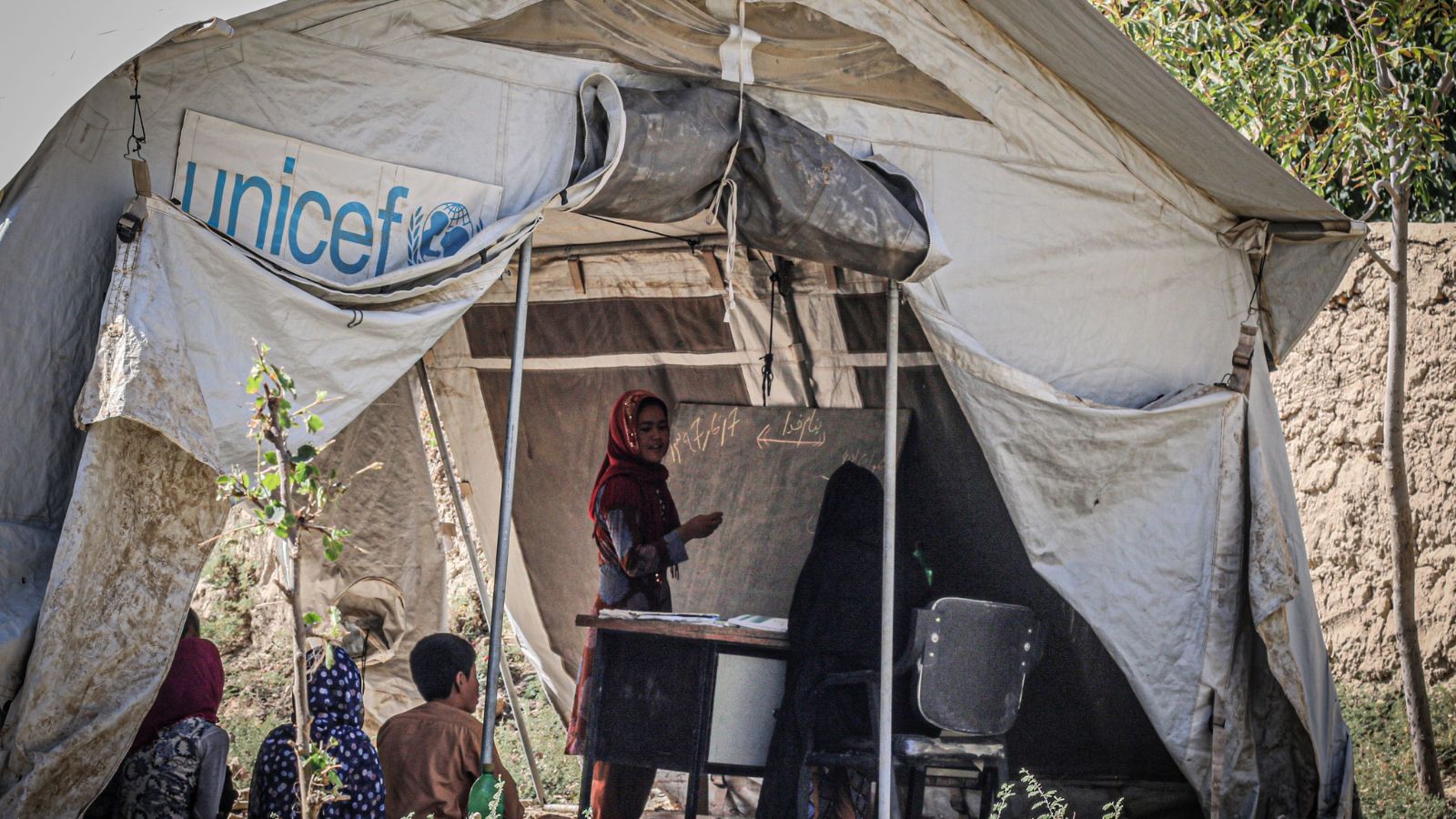
More than two million girls in Afghanistan have been stopped from continuing their education beyond the primary school level since the Taliban's return to power five years ago, the United Nations’ cultural, education and scientific agency UNESCO said.
The Taliban has banned women from most public sector jobs and limited girls to receiving an education only until the age of 12.
UNESCO expert Hoda Jaberian said an estimated 2.4 million girls had been excluded from secondary and higher education and the longer the restrictions remained in place the greater the impact would be for the country.
"This is a complete vicious cycle. Of course, fewer girls are able to study, fewer women can become teachers and professionals, and the education system, little by little, loses the human capital it needs to recover", Jaberian said.
UNESCO said in a statement if the trend continued it projected nearly four million girls would be excluded from education above the primary level by 2030.
Protests against Taliban rule
The first street protests against the Taliban's takeover of Afghanistan took place on August 18, 2021, with demonstrations reported in at least two cities. Taliban militants responded by opening fire at protesters in Jalalabad, killing at least three people and injuring more than a dozen. Protests against the Taliban's takeover had spread to more cities, including Kabul, by the next day.
Former President Hamid Karzai and Afghanistan's top peace official Abdullah Abdullah met with a delegation from the Haqqani Network militant group, local media said, amid efforts by the Taliban to set up a government.
The Haqqani Network is an important faction of the Taliban. The network, based on the border with Pakistan, was accused in the last few years of orchestrating some of the most deadly militant attacks in Afghanistan.
The attacks continue
The Islamic State group struck the crowded gates of Kabul airport in a suicide bomb attack on August 26, 2021, killing 85 people, including 13 US troops, disrupting the airlift of tens of thousands of Afghans desperate to flee.
The attack was carried out as foreign forces raced to complete their withdrawal from Afghanistan.
The Taliban forms a government
The Taliban announced Afghanistan's new government on September 7, 2021, naming Mullah Hasan Akhund, a close associate of the movement's late founder Mullah Omar, as acting prime minister.
It was not clear what role Taliban supreme leader Mullah Haibatullah Akhundzada would play in the government as he had not been seen or heard of in public since the takeover.
A series of blasts tore through cities including Kandahar, Kunduz and Kabul, all claimed by the hardline Sunni Islamic State group, and was part of a growing list of attacks and killings since the Taliban completed their victory over the Western-backed government.
On December 19, 2021, Taliban delegates attended an Organisation of Islamic Cooperation (OIC) meeting where Islamic countries pledged to set up a humanitarian trust fund for Afghanistan as its economic crisis deepened.
The abrupt withdrawal of foreign aid following the Taliban victory left Afghanistan's fragile economy on the brink of collapse, with food prices rising rapidly and causing widespread hunger.
‘Women must cover’
In May 2022, Taliban authorities ordered women to cover their faces in public, a return to their past hardline rule and an escalation of restrictions, causing anger at home and abroad.
In mid- to late-2022, there was another series of blasts at mosques and civilian areas. Many of the blasts were claimed by the Islamic State group. The Hazara, a mostly Shi'ite Muslim ethnic minority, were disproportionately targeted. Two Russian embassy staff in Kabul were among six people killed when a suicide bomber detonated explosives near the entrance of the embassy in September 2022.
In another setback for women's rights in Afghanistan, the Taliban suspended access to universities for female students in December 2022, drawing strong condemnation internationally after reopening them only in February. This followed the ban of women entering amusement parks in Kabul after the country's morality ministry said that there would be restrictions on women being able to access public parks.
"It is difficult to overestimate the gravity of the situation in Afghanistan. It is the largest humanitarian crisis in the world today," said UN Secretary General Antonio Guterres.
A United Nations expert said in June 2023, that the Taliban's treatment of Afghan women and girls could amount to gender apartheid, defined by the global body as "economic and social sexual discrimination against individuals because of their gender or sex."
Three years under Taliban rule
Hundreds of Afghan people and Taliban fighters came out on the streets of Kabul on August 14, 2024 to mark the third anniversary of the Taliban’s return to power in the Afghanistan capital. Taliban fighters paraded through the city on former US military vehicles carrying Taliban flags.
The flag of Islamic Emirate of Afghanistan replaced the state symbol of Islamic Republic of Afghanistan on the facade of the country's embassy in Moscow on July 4, 2025 as Russia became the first major power to officially recognize Taliban. Russia said it had accepted the credentials of a new ambassador of Afghanistan the day before, making it the first nation to recognize the Taliban government of the country.
Pakistani and Afghan border forces clashed on February 26, 2026 after the Taliban launched what it called retaliatory strikes on Pakistani installations. Pakistan accuses Afghanistan of harbouring militants who it blames for plotting attacks in Pakistan. The Afghan Taliban denies the accusations, saying militancy is Pakistan's internal problem.
The conflict between the allies turned foes has killed hundreds of people in 2026, with no results yet from efforts to ease tensions mediated by China.