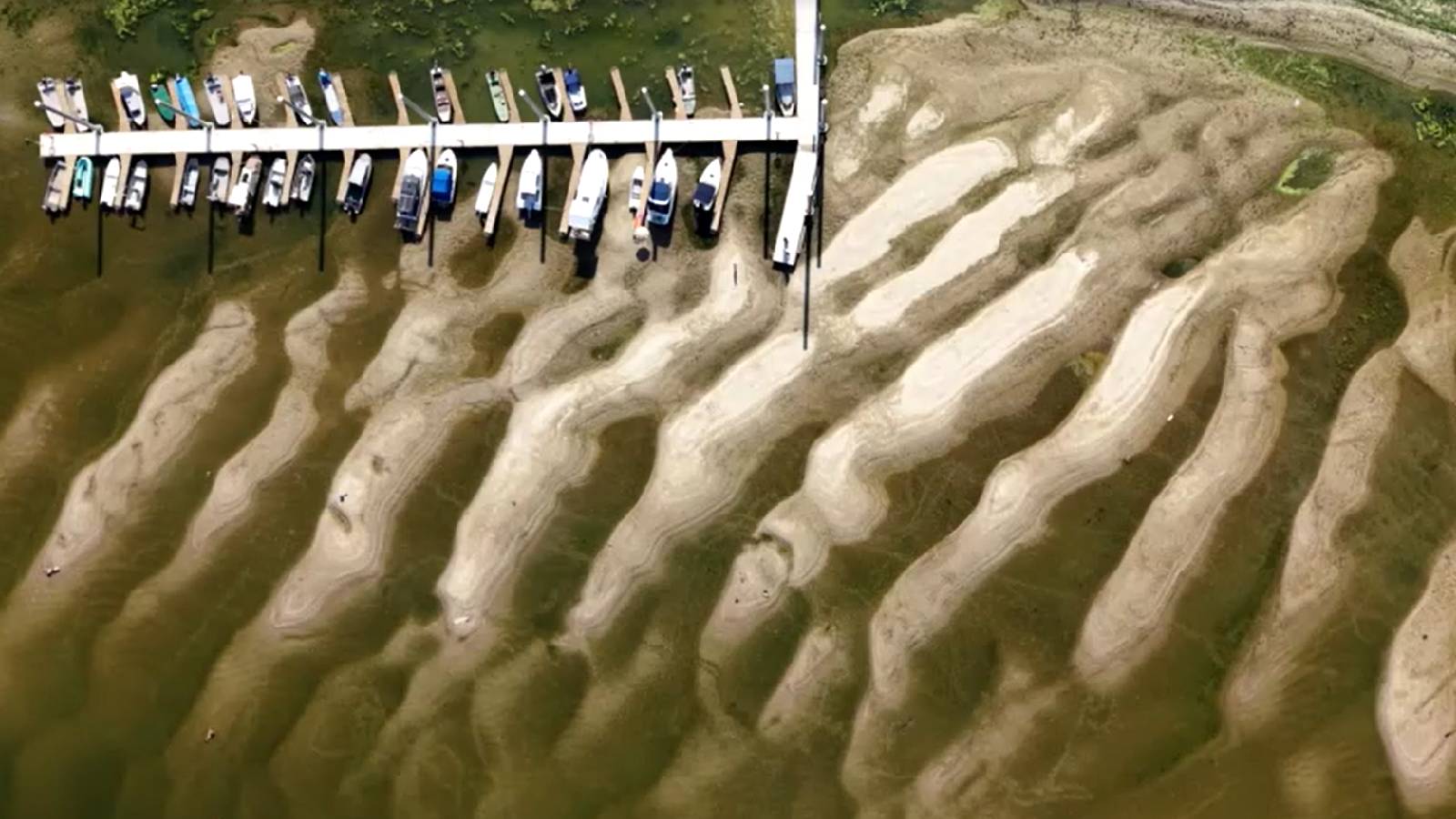


Zagreb: Croatia's prolonged heatwave has pushed two of its major rivers, the Drava and the Danube, to record low water levels, exposing long-submerged shipwrecks and raising concerns over water security and the impacts of climate change.
Along the banks of the Drava River near Osijek, historic shipwrecks that had remained underwater for decades have resurfaced as the river receded.
Residents say they have never witnessed the river at such a low level.
"In my 55 years, I have never experienced the Drava River being this low," one local said, adding that he feared the water level would continue to fall as temperatures remained high.
Another resident described the exposed sandbanks as resembling "a small Bahamas," although he acknowledged that such conditions had never been seen before.
According to Croatia's Meteorological and Hydrological Service, both the Drava and the Danube have dropped below their previous historic minimums.
Tatjana Vujnovic, Head of the Department for Hydrological Studies, Analyses and Forecasts, said the Drava at Osijek recently reached minus 192 centimetres, around 20 centimetres lower than its previous record low. The Danube has also continued to decline, with a new relative minimum of minus 140 centimetres recorded at Batina, surpassing the previous low of minus 84 centimetres set in 2022.
Officials say they cannot yet predict when the rivers will stop falling.
Experts attribute the situation largely to the lack of snowfall in the Alps over the past two years. The Drava and Danube are primarily fed by Alpine snowmelt, and reduced snow accumulation has significantly lowered river inflows.
The declining river levels are also affecting groundwater reserves. Nearly 97 percent of Croatia's population depends on groundwater for drinking water, and hydrologists warn that groundwater levels closely follow the condition of the rivers.
Near the Drava, groundwater levels recently came within just eight centimetres of the historical minimum, raising concerns over future water availability if the dry conditions persist.
With temperatures expected to remain high over the coming days, authorities warn that river levels may continue to decline, posing risks to navigation, ecosystems and water resources.