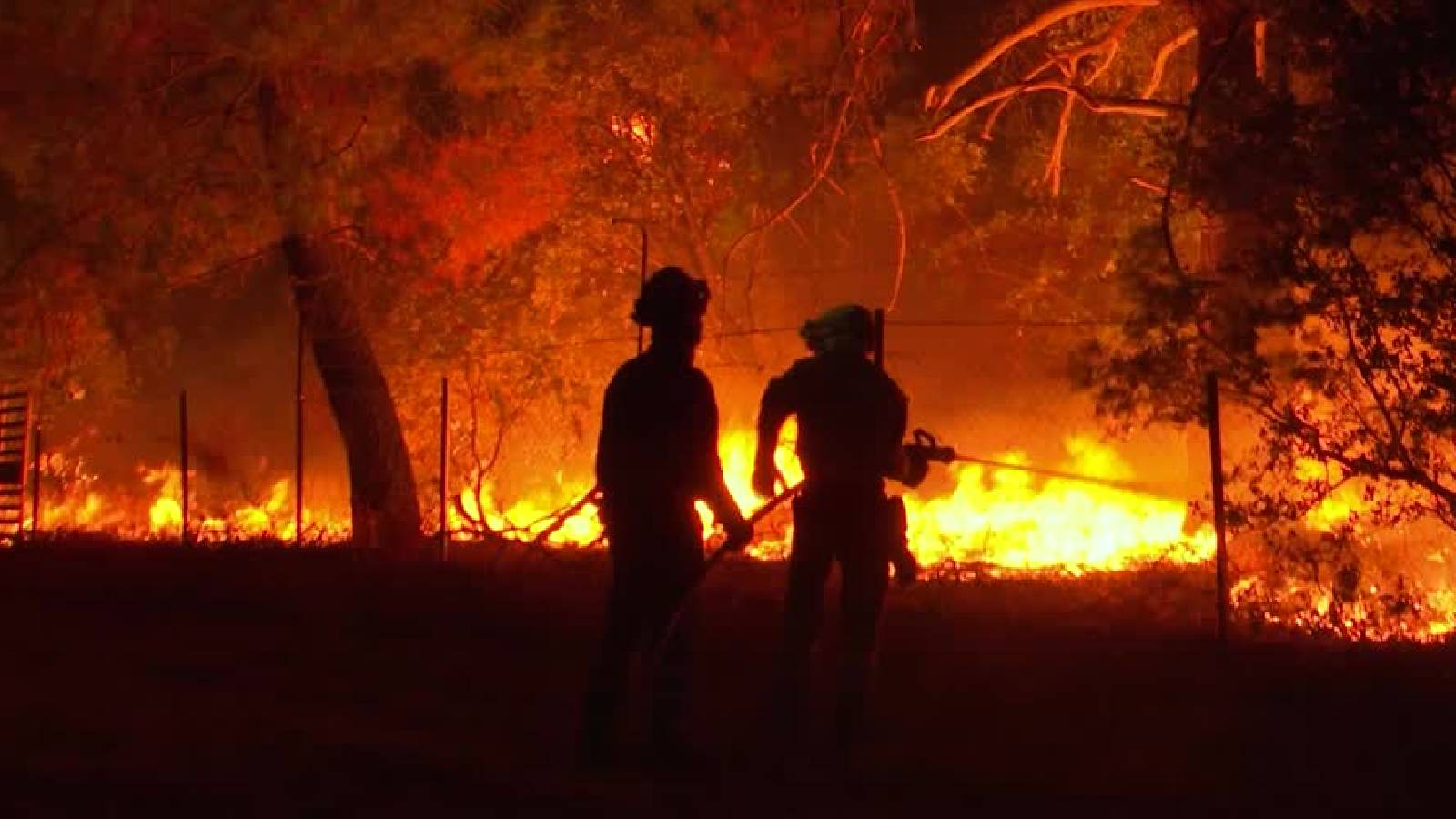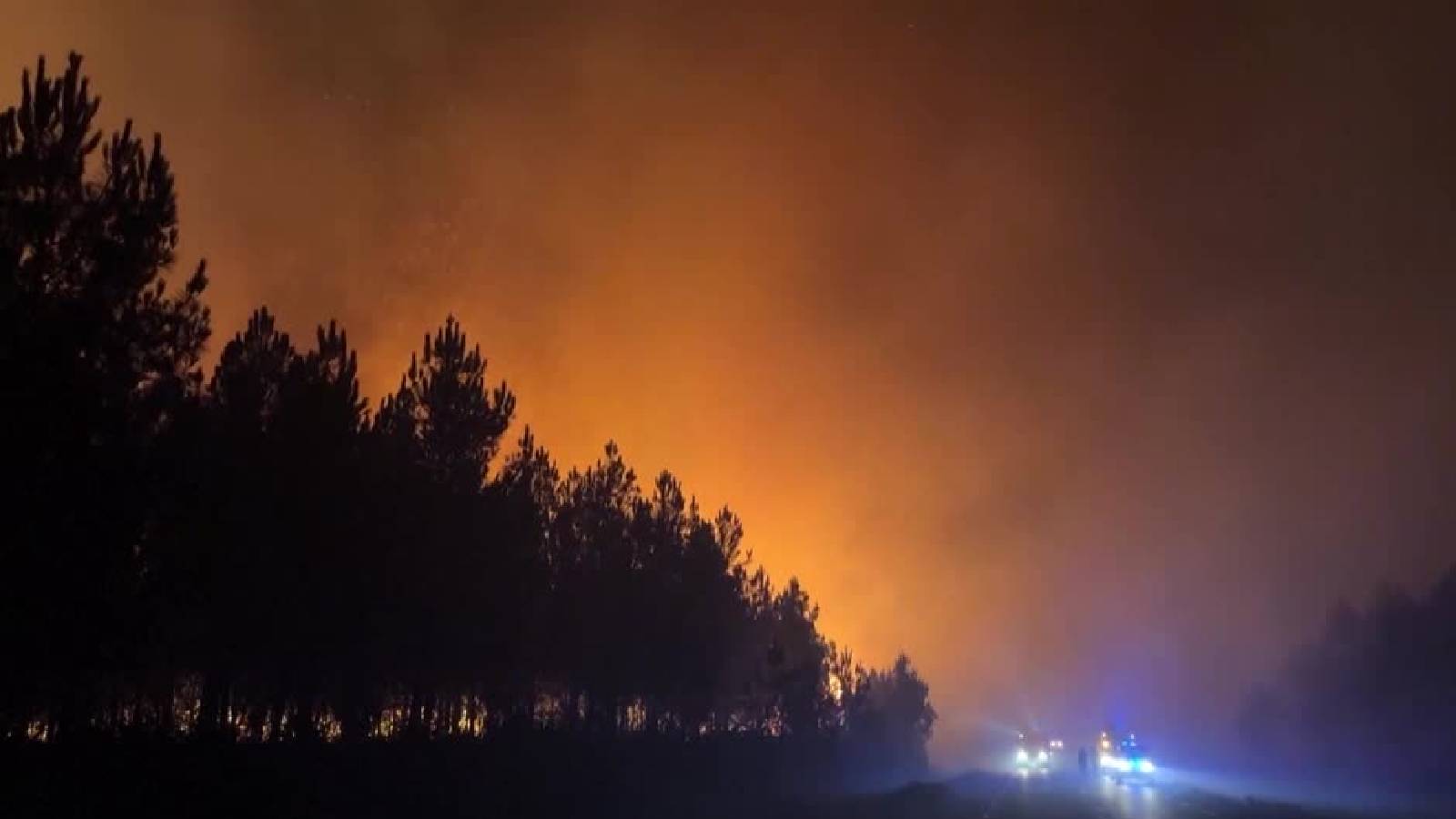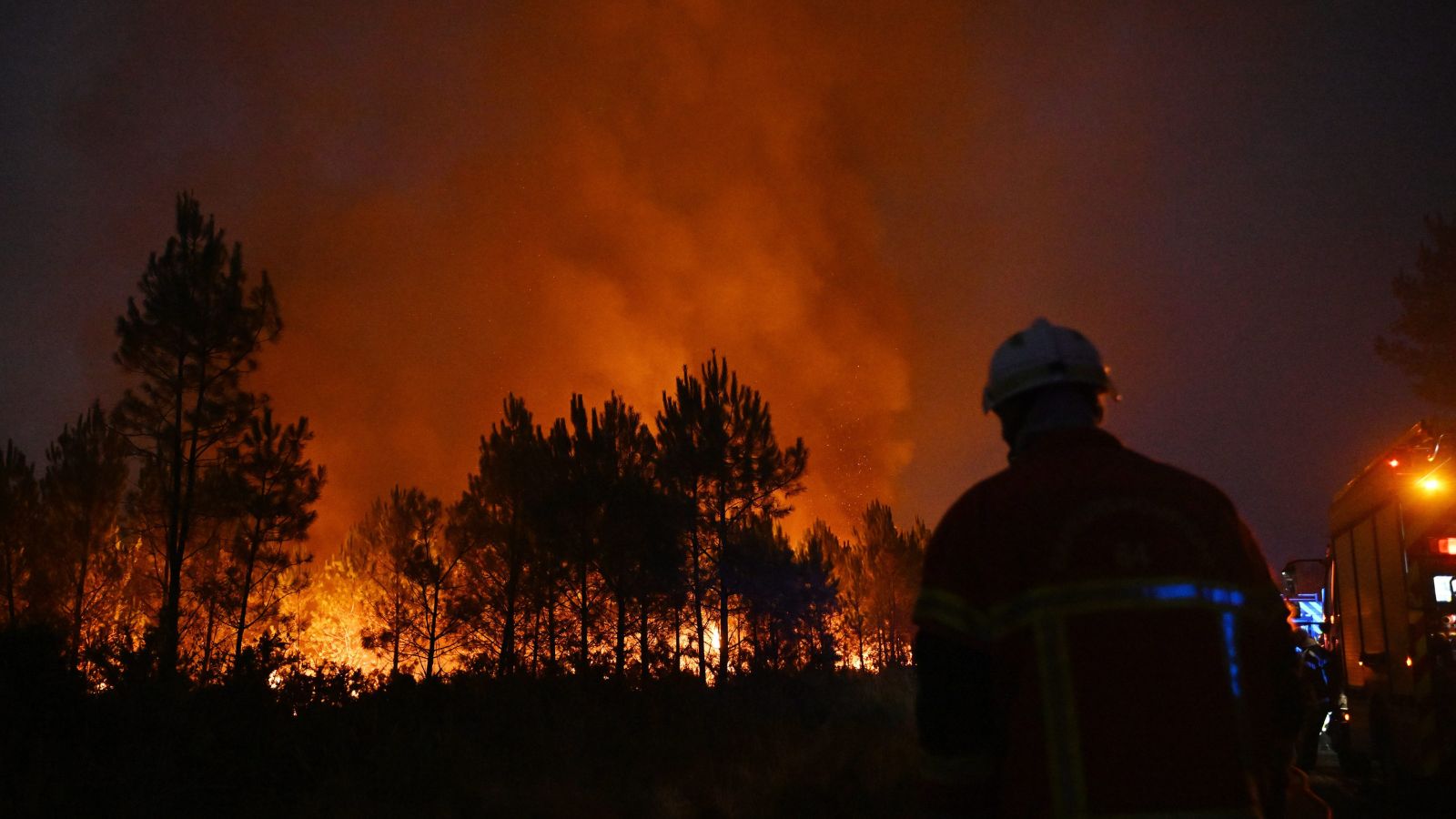


Lège-Cap-Ferret (France): French authorities ordered 4,000 more people to evacuate from tourist sites along its Atlantic coast on Tuesday, widening what may be France's largest peacetime evacuation as rising temperatures threatened to worsen a wildfire west of Bordeaux that firefighters were struggling to contain.
Fresh flames erupted later on Tuesday near Grand Crohot, a popular Atlantic beach on the Lège-Cap-Ferret peninsula, local authorities said. A fleet of 23 planes and helicopters dropped water and fire retardant as crews fought to keep the renewed flames from spreading.
“The situation remains complicated. That's clear. We're not out of the woods,” Gironde prefect Sophie Brocas said.
She said that about 60,000 residents who were evacuated as a precaution from Le Haillan and parts of Merignac and Eysines outside Bordeaux's ring road could return on Tuesday. No fires had broken out in the three areas, but residents were told to keep their mobile phones on and emergency bags packed.
Across France and Spain, roughly 330,000 people have been driven from homes and vacation sites by huge wildfires. Spain braced for its fourth heatwave of the summer, with several blazes still burning out of control, including the largest in its recorded history.
Even so, Spanish authorities began lifting evacuation and stay-at-home orders for thousands of people after firefighters made progress overnight.
The Gironde fire has burned an area four times the size of Paris and forced 220,000 people to evacuate. Interior Minister Laurent Nunez has said it is “very likely” the largest civilian evacuation operation carried out in the country outside war.
A fire making its own weather
At its most intense, the Gironde blaze created a huge black thundercloud, electrified and lit from within. It generated lightning, violent winds and new fires beyond the original front. The phenomenon, known as a pyrocumulonimbus cloud, was the first recorded in France.
France's national weather service placed Gironde under a yellow heat warning beginning at midday Tuesday, forecasting inland temperatures of 33 to 35°C.
More than 1,160 square kilometres have burned across France this year, according to the Interior Ministry.
Europe is the world's fastest-warming continent, heating at more than twice the global average, according to the European Union's Copernicus climate service. Western Europe recorded its hottest June on record, with extreme heat and widespread dryness contributing to the spread and intensification of fires in France and Spain, Copernicus said.
Crews defend homes and cut firebreaks
In Le Porge alone, west of Bordeaux, the municipal government said about 150 homes were destroyed.
Officials warned that smouldering vegetation, rising temperatures and falling humidity could produce fresh outbreaks along the fire's vast perimeter.
Military engineers and forest-fire prevention crews resumed cutting firebreaks early Tuesday. Authorities said crews had completed 103 kilometres of firebreaks.
At least 110 firefighters have been injured, the prefecture said.
Thousands return in Spain
Spanish firefighters made progress Tuesday, and authorities began lifting evacuation orders for at least 20,000 of the 79,000 people forced to flee over the weekend.
Francisco Martín, the central government's representative in the Madrid region, said orders would be lifted in 10 towns, allowing about 20,000 evacuees to return home and ending stay-at-home orders for another 14,000 people.
Hundreds of firefighters backed by military emergency brigades and water-dropping aircraft continued battling several major wildfires.
Spain's national weather service said the country was bracing for its fourth heatwave of the summer, with temperatures expected to exceed 40°C in some areas.
The government declared a national emergency over the fires.
At least 13 people have died in wildfires in Spain this year, making 2026 one of the country's deadliest fire seasons in decades.
Spanish Prime Minister Pedro Sanchez has called for a national pact to fight wildfires, saying climate change is making them worse.