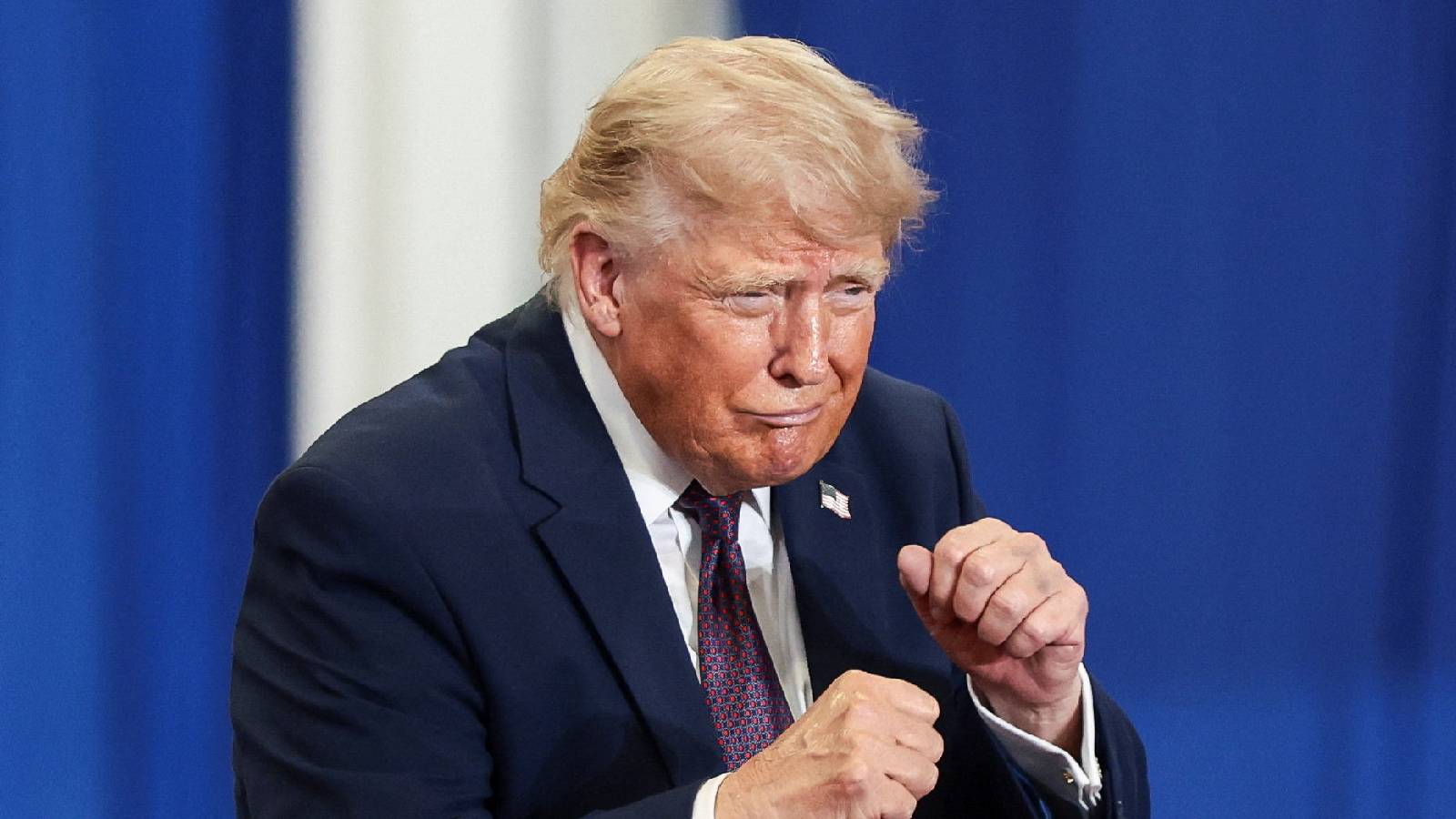


U.S. President Donald Trump said on February 28 that the United States had begun "major combat operations" in Iran, warning that there may be US casualties.
"A short time ago, the United States military began major combat operations in Iran," Trump announced, saying the goal was to eliminate threats posed by Tehran.
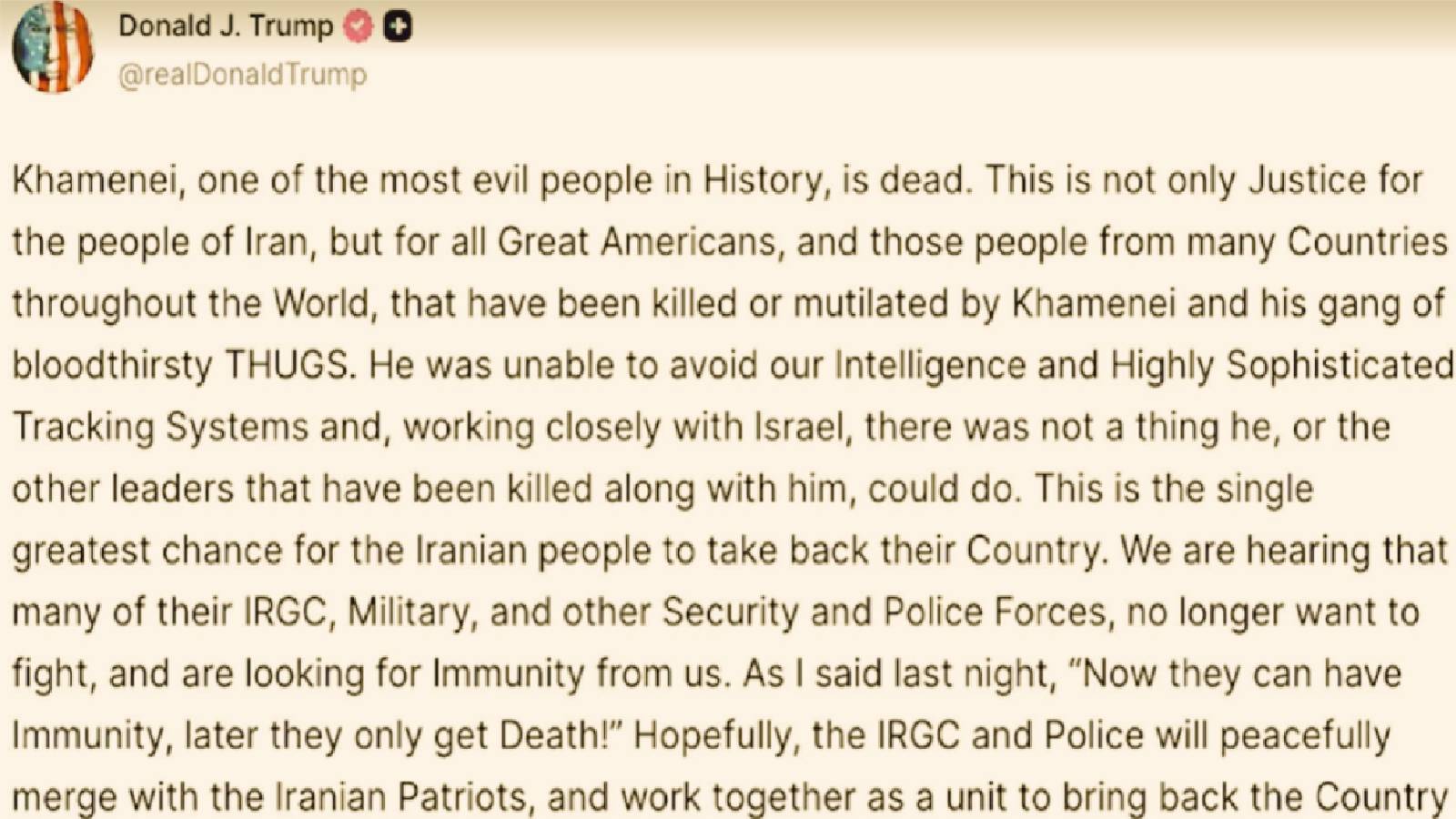
Within hours, the president declared Iranian Supreme Leader Ayatollah Ali Khamenei dead and hailed it as a turning point.
"Khamenei, one of the most evil people in History, is dead," Trump wrote on Truth Social, while promising continued bombing campaigns.
The message throughout March was clear: maximum pressure.
Trump repeatedly argued Iran was racing toward a nuclear weapon and insisted military action had come just in time.
"If we didn't hit within two weeks, they would have had a nuclear weapon," he said.
As US and Israeli strikes intensified, Trump's rhetoric became increasingly combative.
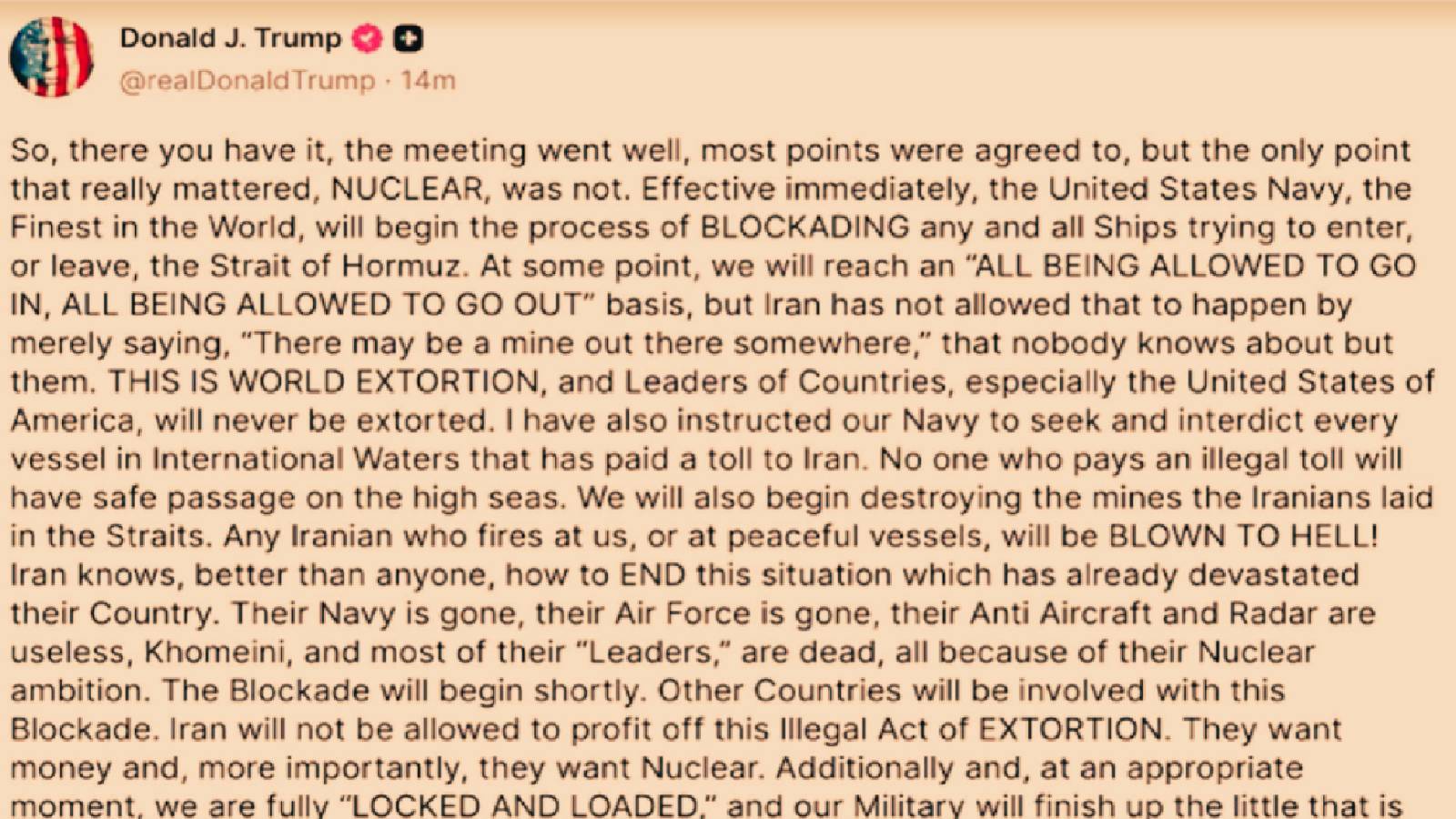
"Their Navy's gone; their Air Force is gone. Their anti-aircraft is all gone," he declared in March, adding that multiple layers of Iran's leadership had been wiped out.
At the same time, Trump insisted Tehran was already looking for a way out.
"They want to make a deal," he said. "The reason they want to make a deal is they have been just beat to sh*t."
The Strait of Hormuz soon became the conflict's central battleground.
Demanding the reopening of the crucial oil route, Trump joked that Iran needed to reopen the "Strait of Trump, I mean, Hormuz."
But the humour was quickly followed by threats.
"We're going to bring them back to the Stone Ages where they belong," Trump warned on April 1.
Days later, he escalated further.
"The entire country could be taken out in one night. And that night might be tomorrow night."
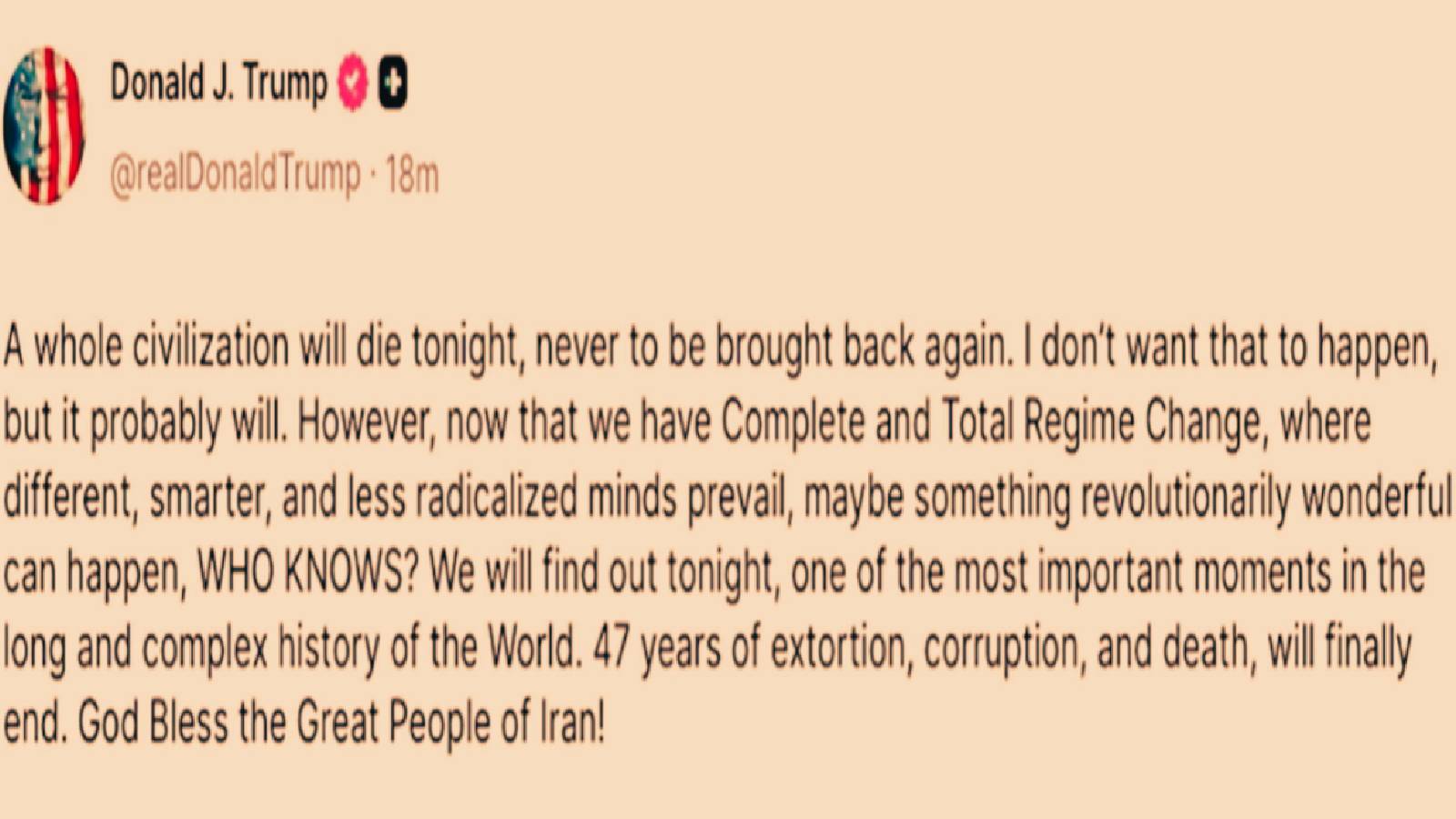
In another social media warning, Trump claimed "a whole civilization will die tonight" unless Iran accepted terms to end the conflict.
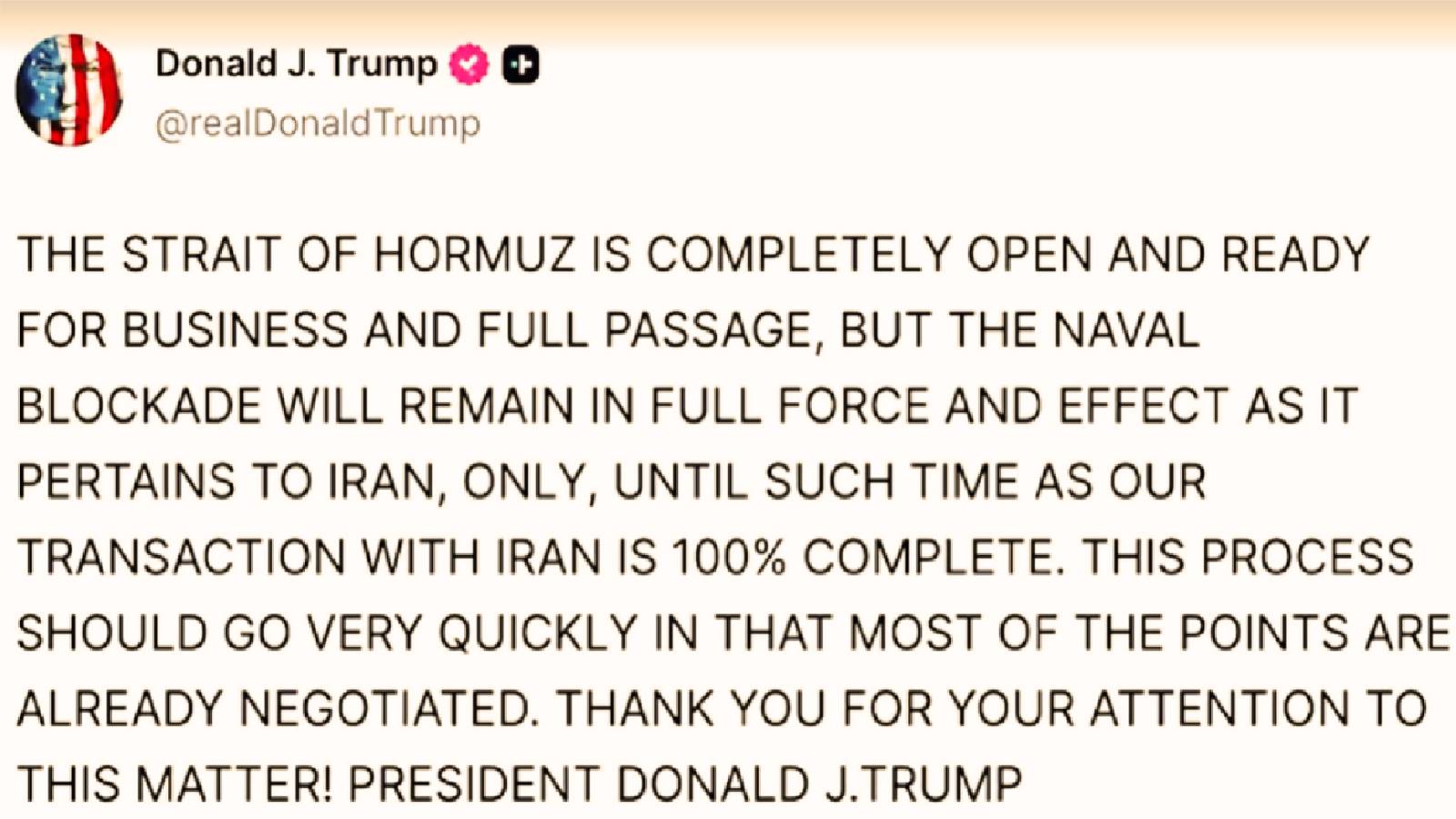
Washington then imposed a naval blockade targeting Iranian-linked shipping, while Trump vowed that anyone interfering with maritime traffic would be "blown to hell."
Yet even at the height of the confrontation, the president kept returning to negotiations.
"We're doing extremely well in that negotiation," he said in late March, before adding one of the conflict's most memorable lines:
"We negotiate with them and then we always have to blow them up."
By May, Trump's message began to evolve.
While still dismissing Iran's military capabilities and urging Tehran to effectively wave the "white flag of surrender," he also floated possible compromises.
"Twenty years is enough," he said when discussing a potential suspension of Iran's nuclear programme.
The turning point came in June.
On June 15, Trump announced that an agreement with Iran had been signed.
"I'm very happy to say it's signed. The deal's all signed."
Days later, he continued to warn Tehran against violating the accord.
"They will not acquire a nuclear weapon. If they do, all hell will rain down on them."
But the emphasis had shifted from destruction to enforcement.
By June 23, Trump was defending the agreement, insisting international inspectors would eventually enter Iran's nuclear facilities.
"They're wrong," he said after Iranian officials denied inspection plans. "We have it down 100% inspections."
The same president who had threatened to send Iran into the Stone Ages was now talking about verification mechanisms and compliance.
"We're trying to work out a deal that's fair," Trump said. "And we're getting along well."
The contrast captured the entire campaign.
Over four months, Trump moved from announcing military operations and celebrating the deaths of Iranian leaders to defending a negotiated settlement and discussing future cooperation.
Whether the agreement ultimately survives remains to be seen. But the path to it followed a familiar Trump formula: threaten overwhelming force, dominate the headlines, then pivot to deal-making once negotiations are within reach.