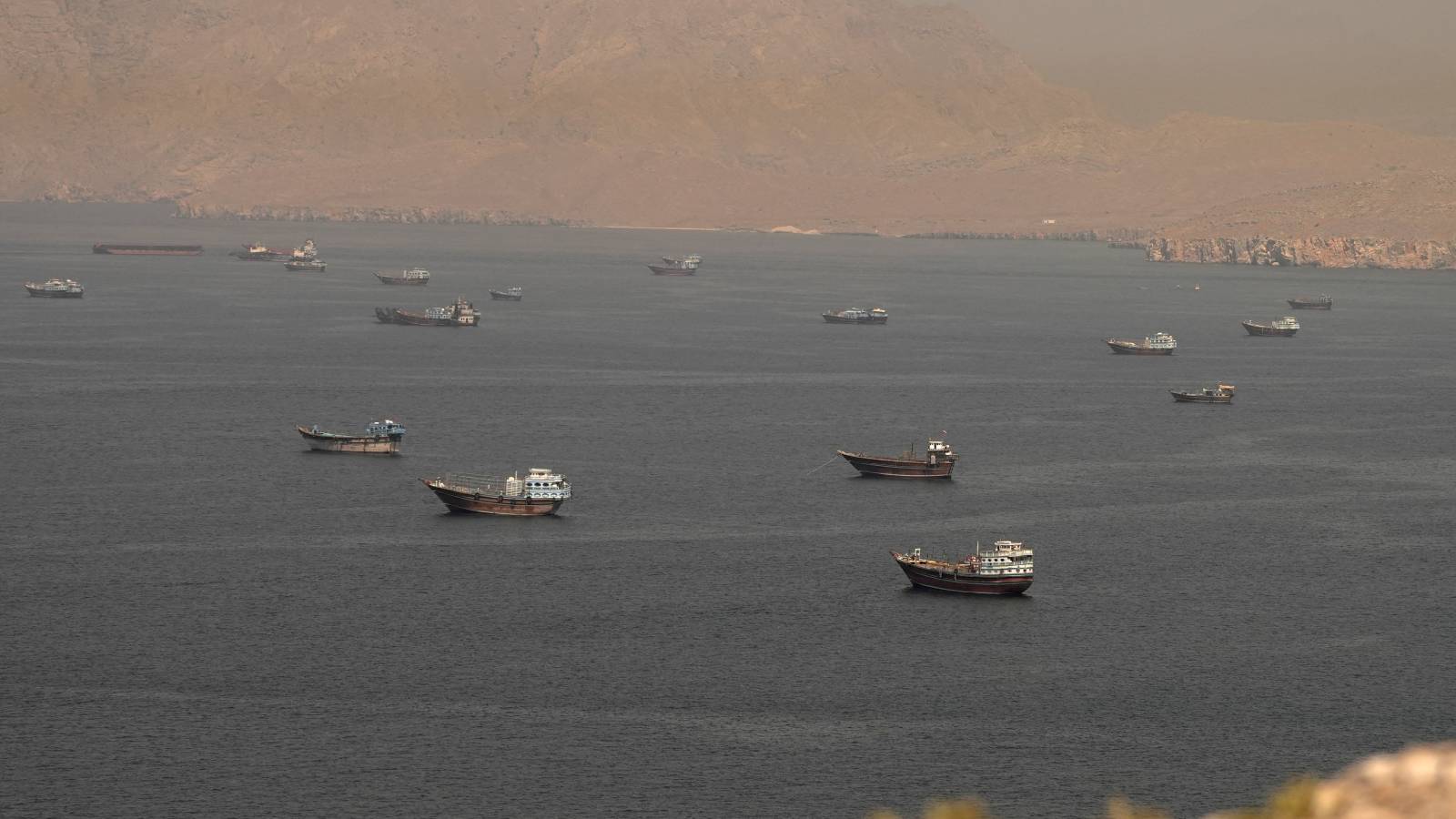


Singapore: Two stranded supertankers passed through the Strait of Hormuz on Tuesday, while seven empty Qatar-linked liquefied natural gas (LNG) tankers have entered the Gulf in recent weeks, an early sign that Gulf gas shipping may be resuming, ship-tracking data showed.
Iranian-linked tankers also continued to transit the vital waterway, with traffic picking up on Monday as US-Iran talks progressed. Flows had weakened ahead of the talks amid threats by US President Donald Trump to restart the war and Tehran's announcement that it had once again closed the strait.
The first round of talks, which began on Sunday, concluded a day later, with both sides agreeing on a roadmap toward a permanent deal within 60 days. The US also announced a waiver on sanctions until August 21, easing concerns over global oil and LNG supplies and pushing prices lower.
More crude oil cargoes stranded in the Gulf since the start of the war are expected to make their way out now, analysts say, while a growing number of sanctioned tankers have been plying the strait to load and export Iranian oil after the US waived sanctions.
The Very Large Crude Carrier (VLCC) Dubai Energy, chartered by Taiwanese state energy firm CPC and carrying 2 million barrels of Abu Dhabi and Saudi crude, exited the strait overnight and is now sailing towards Kaohsiung, Taiwan, according to LSEG and Kpler data. CPC did not respond to a request for comment.
Another VLCC, Universal Glory, chartered by South Korean refiner GS Caltex, exited the strait on Tuesday with 2 million barrels of Saudi crude on board, the data showed.
GS Caltex declined to comment.
Two sanctioned Suezmax tankers — Sobar and Sarak — were heading into the strait on Tuesday, the data showed. Each can carry up to 1 million barrels of oil.
Qatar-linked LNG tankers
Seven ballast QatarEnergy-controlled tankers moved west into the Gulf to reload between June 11 and June 22, according to ship-tracking data from Vortexa and Kpler. These were the first such voyages since the US and Israel launched airstrikes on Iran on February 28.
The first three tankers to make inbound transits — Al Hamla, Al Areesh and Al Khuwair — did so with their automatic tracking systems switched off, a Vortexa report showed.
According to Kpler data, the three tankers were last seen outside the strait in mid-June and reappeared on ship-tracking systems between June 19 and June 23.
The other four — Wadi Al Sail, Mekaines, Al Sadd and Mesaimeer — entered the strait on Monday via the Iranian route.
QatarEnergy did not immediately respond to a request for comment outside business hours.
This also marks the largest volume of empty LNG ships transiting through the strait since the war began, Commonwealth Bank of Australia analyst Vivek Dhar said.
"Other empty LNG tankers are also on their way to Qatar. The ship-tracking data reinforces expectations that QatarEnergy will meet their LNG ramp-up schedule," he said.
There was an explosion at a gas-processing facility inside the Ras Laffan Industrial City complex on Monday, but Qatar's energy minister said the country's LNG facilities were not impacted.
In terms of QatarEnergy-controlled tankers exiting the strait, Al Ghashamiya was last seen inside the waterway on June 9 carrying a cargo from Ras Laffan that had been loaded on March 1, Kpler data showed. It then reappeared outside the strait on June 22.
Widespread movement of ballast Qatari and ADNOC vessels towards the Gulf has yet to be seen, reflecting a cautious and phased restart strategy, S&P Global Energy analyst Ayush Agarwal said.
The key risk is whether sustained safe passage, insurer confidence and the implementation of the memorandum of understanding signed between the US and Iran can support a durable ramp-up in Gulf LNG exports, S&P Global Energy said.