

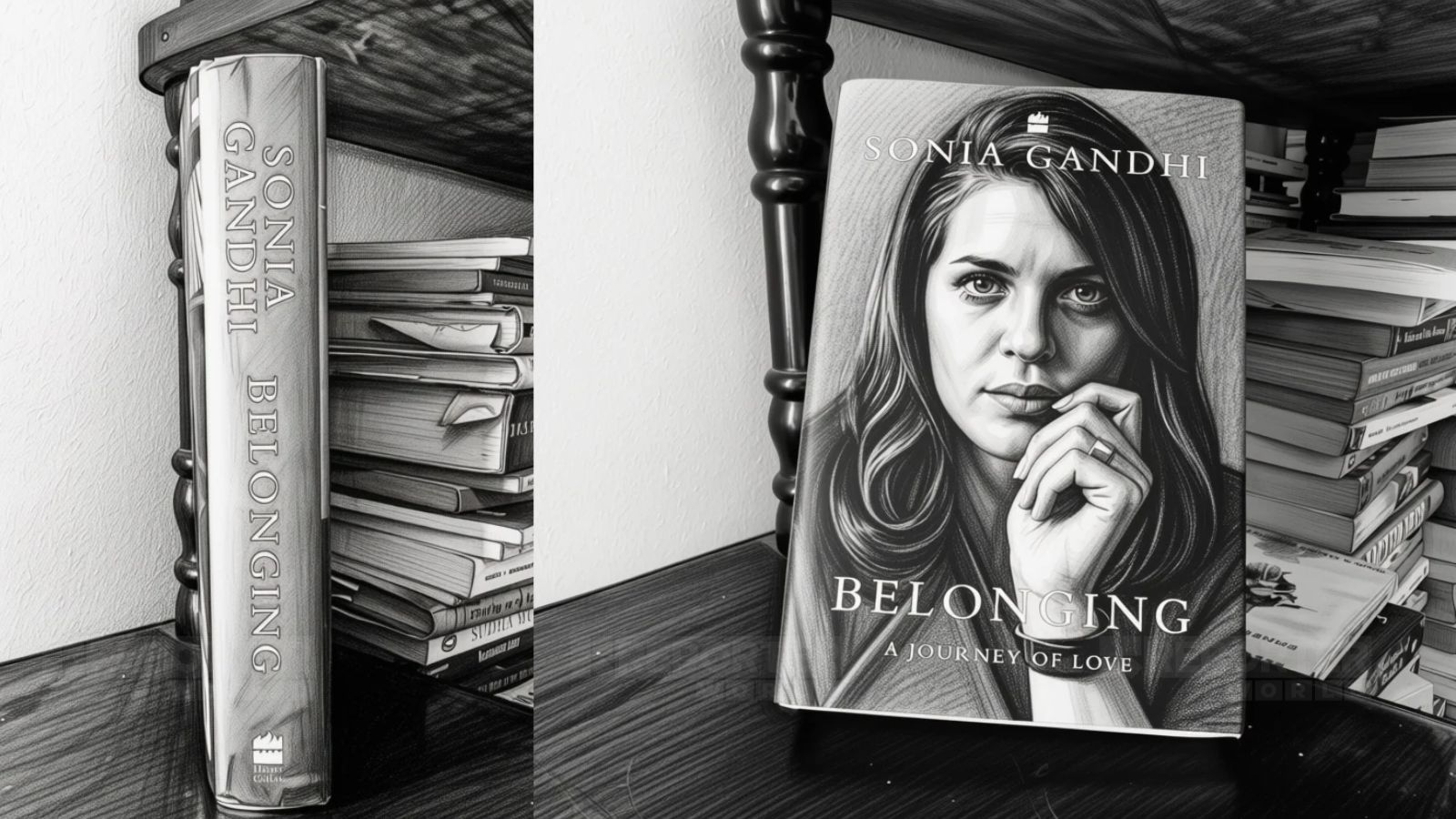


Of the 544 pages in Sonia Gandhi's memoir, Belonging: A Journey of Love, two have landed her a legal notice from the family of Vinayak Damodar Savarkar. On pages 201 and 443, she writes that while Congress freedom fighters were being beaten and jailed by the British, Savarkar was writing mercy petitions to his colonial rulers. She describes the Hindutva ideology he founded as one that sees India primarily as a nation in which Hindus are supreme. These passages prompted Satyaki Savarkar, VD Savarkar's grandnephew, to demand an apology. The question is how well they stand up to the historical record. On the mercy petitions, history is on her side. Savarkar wrote them, and even his defenders do not dispute that. Where the book is less precise is in the claims around them.
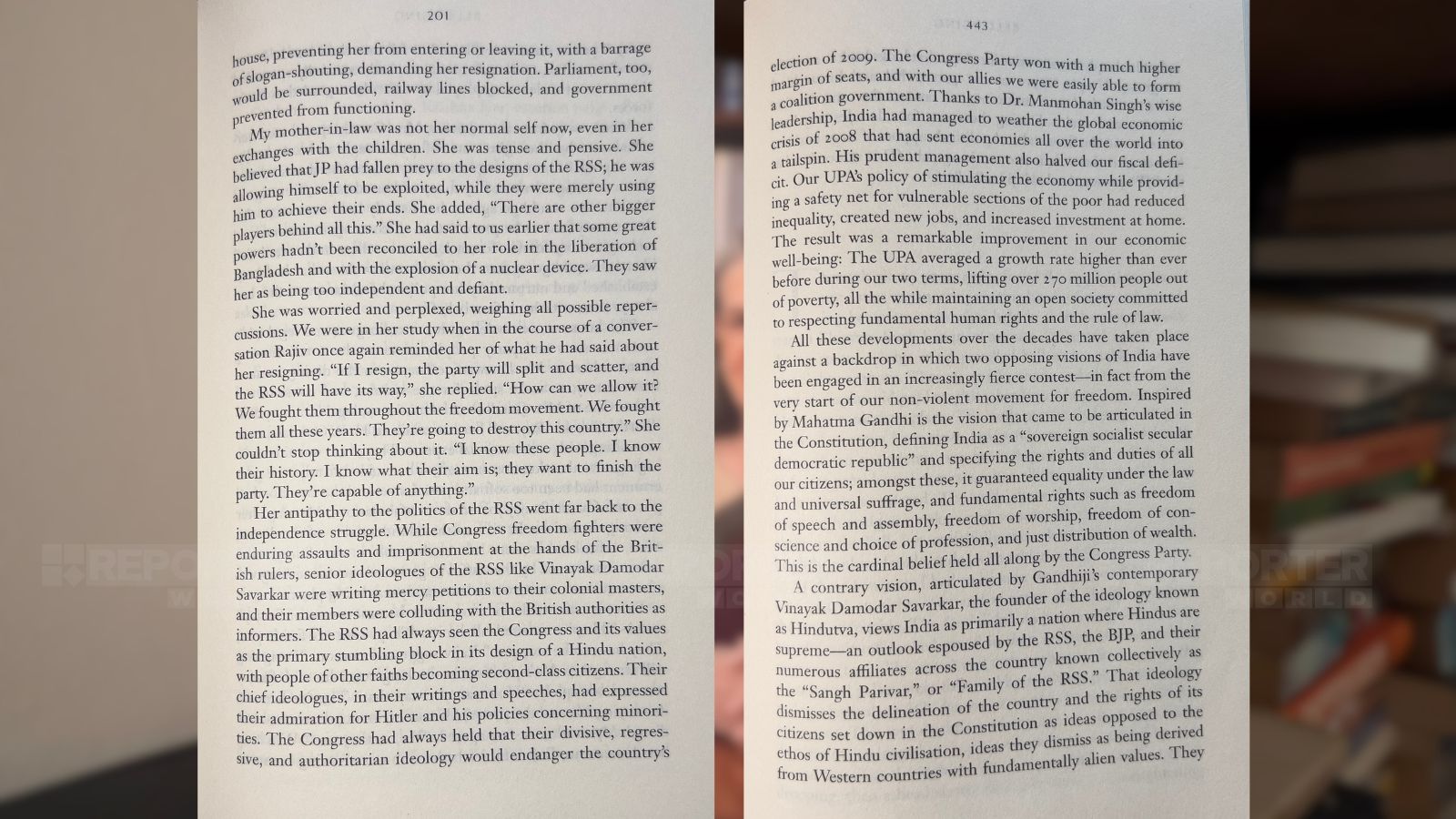
The passage on page 201 appears in Sonia Gandhi's account of Indira Gandhi in 1975, when the then Prime Minister believed Jayaprakash Narayan had "fallen prey to the designs of the RSS". "Her antipathy to the politics of the RSS went far back to the independence struggle," Sonia Gandhi writes, before continuing in her own voice: "Senior ideologues of the RSS like Vinayak Damodar Savarkar were writing mercy petitions to their colonial masters, and their members were colluding with the British authorities as informers." The organisation's "chief ideologues", she adds, "had expressed their admiration for Hitler and his policies concerning minorities". On page 443, she contrasts Savarkar's vision with Gandhi's, describing the former as one that views India "as primarily a nation where Hindus are supreme".
The notice, sent by Satyaki Savarkar through advocate Sangram Kolhatkar, objects to both passages. It argues that page 201 refers to the mercy petitions without accounting for the circumstances of Savarkar's long imprisonment in the Andamans, and suggests that the passage portrays him as having collaborated with the British. It also calls the description on page 443 an oversimplification of his thought. Satyaki Savarkar is already pursuing a defamation case against Rahul Gandhi in a Pune court over a speech he made in London in 2023.
Both disputes turn on what the historical record says about Savarkar. He arrived at the Cellular Jail on July 4, 1911, according to a Quint article. His first petition for clemency was received eight weeks later, on August 30, a date recorded by his biographer Vikram Sampath. In November 1913, when Home Member Reginald Craddock visited the jail, Savarkar wrote that he was "ready to serve the Government in any capacity they like". The petition is reproduced in historian RC Majumdar's Penal Settlements in Andamans (Government of India, 1975) and quoted by historians Mridula Mukherjee, Aditya Mukherjee and Sucheta Mahajan.
His defenders dispute what the petitions mean, not whether he wrote them. In 2021, Defence Minister Rajnath Singh argued that Savarkar had exercised a prisoner's right to seek clemency. His claim that Gandhi had advised Savarkar to submit the petitions, however, does not fit the dates. Savarkar spent a decade in the Andamans, where his brother Ganesh was also imprisoned. The notice argues that quoting the petitions without this context distorts their significance.
But the passage's more serious weakness lies elsewhere. Describing Savarkar as an ideologue of the RSS is defensible in hindsight, although he never joined the organisation, which was founded only in 1925. The broader point about the treatment of Congress figures under British rule also has a historical basis. In June 1917, Annie Besant was interned along with her Home Rule associates George Arundale and BP Wadia, months before she became Congress president. In April 1919, Gandhi was arrested on his way to Punjab, while Amritsar leaders Saifuddin Kitchlew and Satyapal were arrested and deported. Their arrests helped trigger the gathering at Jallianwala Bagh.
The problem is the second half of Sonia Gandhi's sentence, which says RSS members "were colluding with the British authorities as informers". The notice reads this as an accusation against Savarkar himself, although the sentence refers to RSS members more broadly. Even so, the historical record cited here is thin. British government records describe the RSS as having stayed out of the Quit India movement. A Bombay government memo noted that it had "scrupulously kept itself within the law". But this doesn't account for acting as an informer. Sonia's memoir offers no specific example. The closest documented case, examined by Frontline in 1998, concerned one individual; the magazine found that he was neither an informer nor an approver.
The claim about the admiration of RSS ideologues for Hitler and his policies has firmer historical backing. In We or Our Nationhood Defined (1939), Madhav Sadashivrao Golwalkar, who became RSS chief the following year, wrote that Germany had "shocked the world by her purging the country of the Semitic Races—the Jews", calling it "a good lesson for us in Hindusthan to learn and profit by". The RSS formally denied his authorship in 2006. Savarkar's own words are also on record. In an August 1938 speech in Pune, documented in Marzia Casolari's archival research, he said: "Surely Hitler knows better than Pandit Nehru does what suits Germany best." She documented the same quote later in her book In the Shadow of the Swastika. In December 1939, he compared Indian Muslims to "Jews in Germany". Savarkar's followers point to his support for Zionism as a defence against claims that he backed Hitler. Scholars, however, interpret that support as consistent with the same idea: a nation defined by faith and ancestry.
The phrase "Hindus are supreme" is Sonia Gandhi's characterisation, not Savarkar's own wording. But it draws on his writings. In Hindutva (1923), he defined a Hindu as someone for whom India was both fatherland and holy land, a definition that excluded Muslims and Christians. In his 1937 presidential address at the 19th Session of the Akhil Bharatiya Hindu Mahasabha, later collected in Hindu Rashtra Darshan, he said there were "two nations in the main" in India. A year later, he put it more plainly: "the Hindus are the Nation in India and the Moslem minority a community." Yet the same addresses also called for no "invidious distinctions whatsoever as regards the franchise".
A memoir is entitled to its point of view, and this one was always going to be read through a political lens. But Sonia Gandhi is not just another memoirist. She led the Congress for longer than anyone else in its history, giving her account an added political weight. Most of the claims examined here can be traced to a petition, a book or a speech from the period. The assertion about RSS members acting as informers cannot be substantiated as broadly as she puts it. If the legal notice becomes a case in Pune, that is likely to be the point on which the argument turns.
(In Makes Sense, Sajesh Mohan explores the politics, ideas and cultural forces that shape the stories and conversations around us — from public affairs to popular culture. Opinions expressed are personal.)