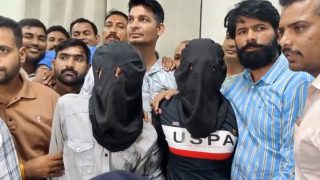


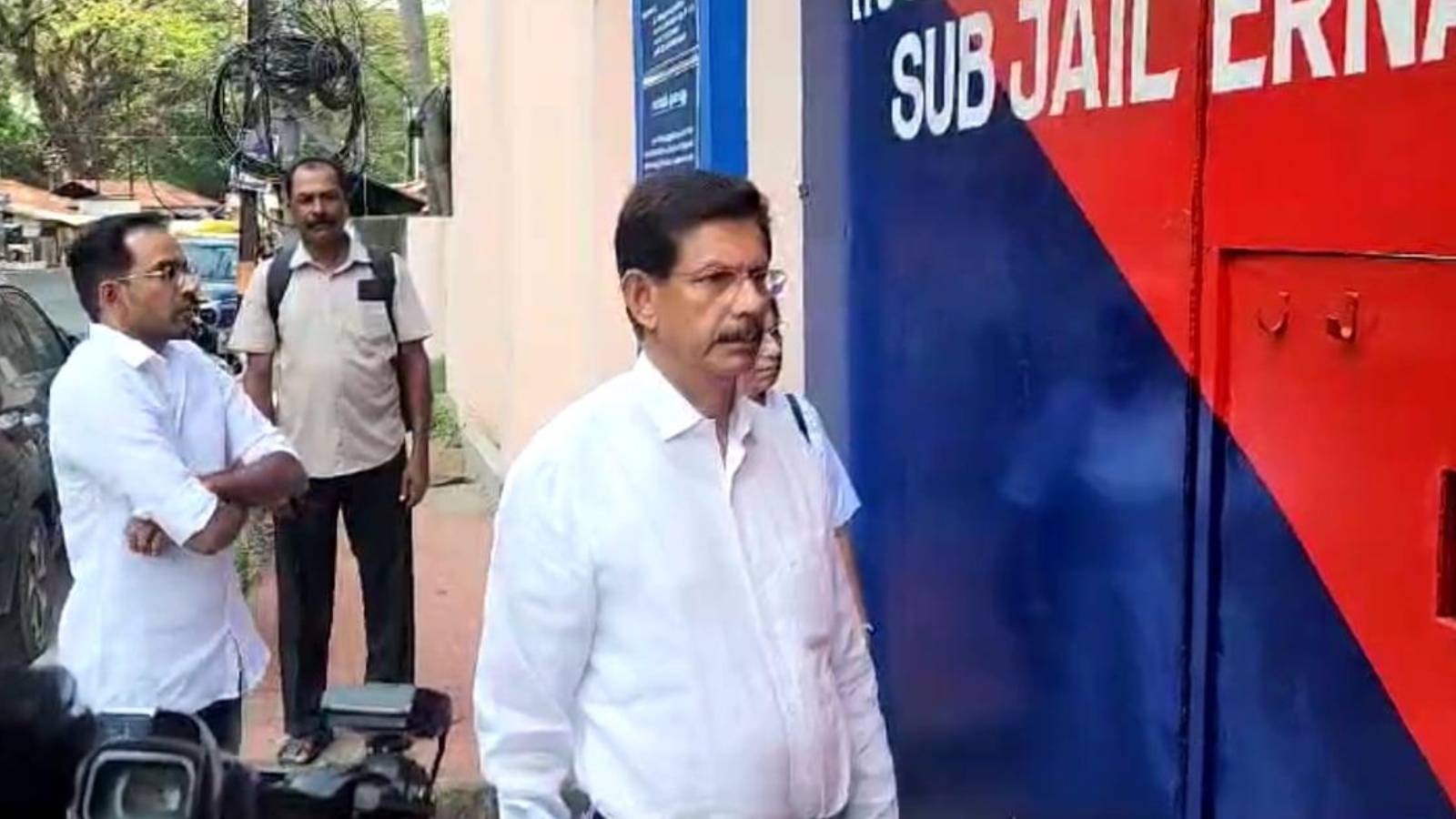


After 16 years, Savad, the prime accused in the 2010 hand chopping attack on college professor T J Joseph in Keralam, is set to face trial before the Special NIA Court in Ernakulam.
Savad, who remained absconding for more than 13 years, was arrested by the National Investigation Agency (NIA) in Kannur on January 10, 2024. Shaffer C, who allegedly helped Savad evade arrest by arranging shelter and providing logistical support at Chakkad and Mattannur in Kannur, was also arrested.
The NIA court began the trial against the two accused on October 12. A total of 50 witnesses will be examined during the initial stage of the proceedings.
On July 4, 2010, a group linked to the now-banned Popular Front of India (PFI) attacked Joseph, then a Malayalam professor at Newman College in Thodupuzha, and chopped off his right hand. The attack was allegedly carried out in retaliation for a question in an examination paper that the group considered blasphemous.
The case was investigated by the Kerala Police before the NIA took over the probe in March 2011. In two phases of the trial, the NIA court convicted a total of 19 accused. Savad, who had been absconding, is now set to face trial along with Shaffer C.
How did Professor Joseph land in trouble?
In March 2010, a question in a Malayalam examination paper set by Joseph for second-year degree students triggered allegations of blasphemy.
The question contained a dialogue between God and a character named Muhammad, adapted from a work by filmmaker and writer P.T. Kunju Muhammed. The controversy erupted after some newspapers reportedly interpreted the passage as a dialogue between God and Prophet Muhammad.
Student groups associated with the Indian National Congress and the Indian Union Muslim League (IUML) launched protests. The controversy intensified after copies of the question paper circulated widely among Muslim organisations, escalating communal tensions.
Following an all-party meeting chaired by the district collector, the Kerala Police registered a case against Joseph under Section 295 of the Indian Penal Code. He was arrested and later released on bail.
Newman College subsequently suspended him from service.
Joseph maintained that the controversial passage had been taken from a university-approved book and that he had used the character’s name, Muhammad, as a tribute to the author.
In November 2013, a court acquitted Joseph of the blasphemy-related charges.
July 4, 2010: The attack day
On July 4, 2010, a group of assailants armed with axe, swords and knives intercepted Joseph’s vehicle near his house in Muvattupuzha.
The attackers smashed the vehicle’s windscreen, dragged him out and chopped off his right hand. He was also stabbed in the left thigh.
According to witness accounts, the assailants continued attacking him even as he pleaded with them not to kill him.
Joseph was rushed to a nearby hospital with his severed hand and later shifted to a private hospital in Kochi. He underwent a 16-hour operation to reattach the hand and was discharged after 35 days.
The PFI link
The local police uncovered the alleged PFI connection after arresting Ashraf and Jaffer in the hours following the attack. Police alleged that the duo had conspired to carry out the operation and arranged the vehicle used by the assailants.
Subsequent raids at the houses of PFI leaders led to the seizure of weapons, explosives and other materials that investigators considered relevant to the case.
The NIA later investigated the alleged conspiracy and the roles of PFI members and supporters.
Timeline of key events
July 2010: A PFI-linked group attacked Joseph and chopped off his right hand. During the initial investigation, PFI leader Yunus was arrested and named as the fourth accused. Newman College dismissed Joseph amid the controversy.
August 2010: The Special Investigation Team arrested more PFI activists, including Shamsuddin, who was accused of involvement in the attack.
January 2011: Police filed a chargesheet against 27 PFI activists. The accused faced charges including attempted murder, causing disappearance of evidence, harbouring an offender, unlawful assembly, rioting with deadly weapons and criminal conspiracy.
March 9, 2011: The NIA took over the investigation. It examined the alleged conspiracy and the roles of PFI activists before filing a chargesheet against 31 accused, including Savad.
November 2013: A court acquitted Joseph of the blasphemy-related charges arising from the examination question.
May 2015: The NIA Special Court in Ernakulam convicted 13 PFI activists in the first phase of the trial. Ten were sentenced to eight years in prison and three to two years. Eighteen others were acquitted.
September 2022: The Union government banned the PFI under the Unlawful Activities (Prevention) Act.
July 2023: In the second phase of the trial, the NIA court convicted six of the 11 accused. Sajil, M.K. Nasar and Najeeb K.A. were sentenced to life imprisonment. P.P. Moideen Kunju, M.K. Naushad and P.M. Ayoob were sentenced to three years of rigorous imprisonment.
January 10, 2024: The NIA arrested Savad in Mattannur, Kannur, after more than 13 years on the run. He had allegedly been living under the assumed name Shajahan.
November 2025: The NIA obtained court permission to conduct further investigation into the alleged network of people who provided shelter and other assistance to Savad while he was absconding.
October 2026: The NIA court began trial proceedings against Savad and Shaffer C, with 50 witnesses expected to be examined during the initial stage.
(This copy is compiled by Ranju Raj)