

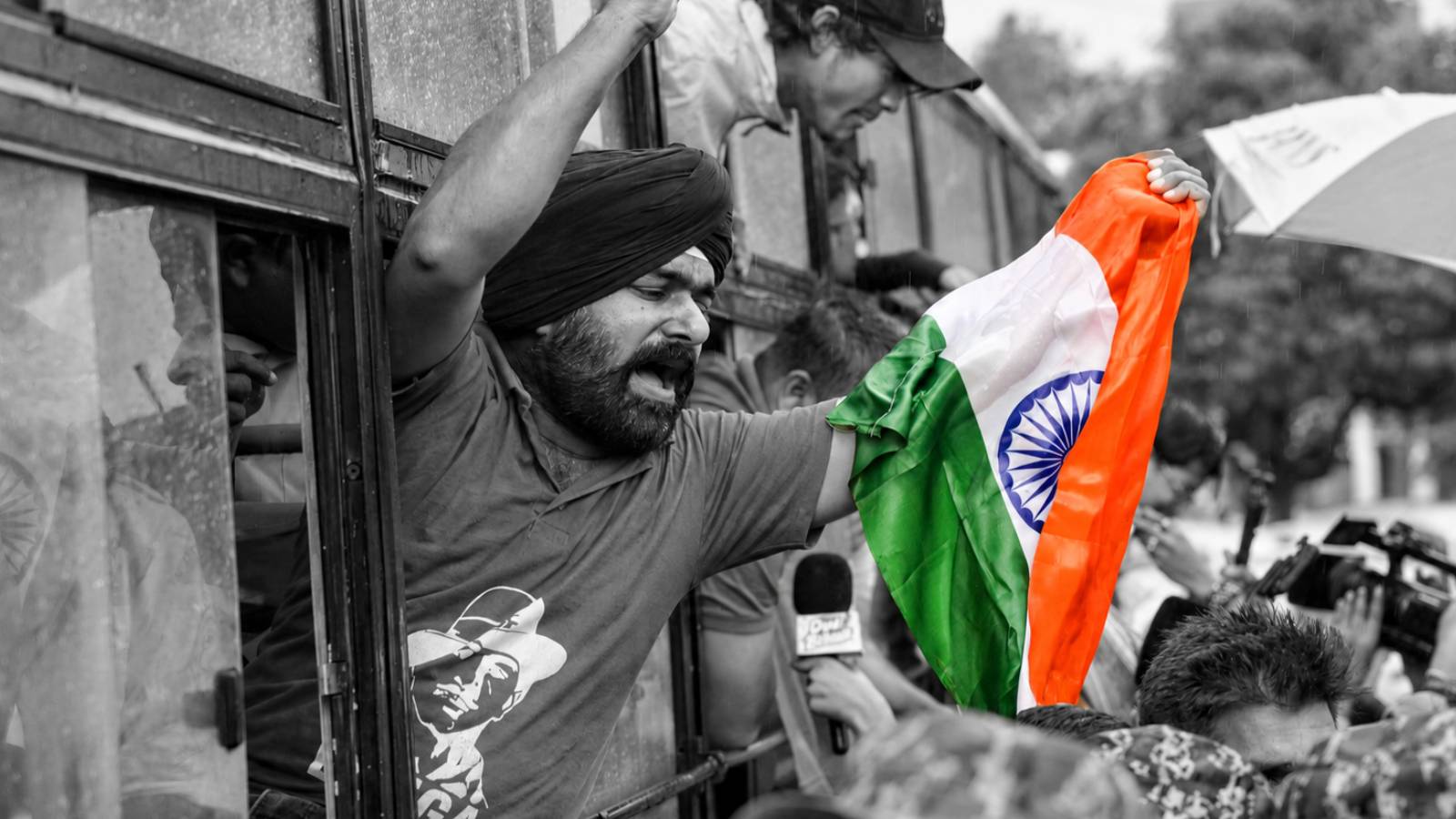


“The Indian National Flag represents the hopes and aspirations of the people of India. It is the symbol of our national pride,” reads the introduction to the Flag Code of India, 2002.
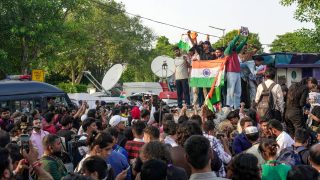
The national flag has once again become the centre of a public debate in India, this time amid a protest by the Cockroach Janata Party (CJP). The party called for a ‘Tiranga rally’ on October 16, urging people to carry the national flag and march towards Central Park in Connaught Place, Delhi.
The rally was announced to condemn a Delhi court's decision to remand CJP leaders Saurav Das and Ashutosh Ranka to 5 days of judicial custody. The two were arrested along with others after they allegedly entered Jantar Mantar without permission and waved the national flag to protest the government's decision to de-notify the site as a protest venue.
The action against the activists came amid a wider agitation seeking the removal of Chief Election Commissioner Gyanesh Kumar over alleged irregularities in the Special Intensive Revision (SIR) of electoral rolls. The arrests triggered criticism from sections of the youth, students and opposition parties involved in the protests.
Ahead of the CJP's Tiranga rally in solidarity with the jailed leaders, Delhi Police issued a post listing the rules governing the display of the national flag and urged people to follow them.
The debates have raised several questions. Is carrying or waving the national flag during a protest prohibited in India? Can a person be arrested simply for displaying the Tricolour? And are Das and Ranka facing charges for disrespecting the national flag?
Here is what the law says:
Flag Code of India and rules on displaying the Tricolour
The Flag Code of India, 2002, governs the display of the national flag by members of the public, private organisations, educational institutions and government bodies. It does not impose a general ban on citizens carrying or waving the national flag during protests. However, the flag must be displayed in accordance with the prescribed rules.
The Code also operates alongside two laws: the Emblems and Names (Prevention of Improper Use) Act, 1950, and the Prevention of Insults to National Honour Act, 1971.
The 1950 Act restricts the use of specified national emblems and names for commercial and other purposes without prior government permission. The 1971 Act deals with acts that insult or show disrespect to the national flag and certain other national symbols.
Therefore, while citizens can display the Tricolour, they must ensure that their use of the flag complies with the applicable rules and does not amount to a legally punishable act.
Dos and don'ts for displaying the national flag
The Flag Code lays down several rules to ensure that the national flag is displayed with dignity and respect. Some of the key requirements include:
- The national flag must be flown at half-mast on official occasions as instructed by the Government of India.
- Don't use as drapery in any form whatsoever, including private funerals.
- It must not be used as part of a costume or uniform, or embroidered or printed on items such as cushions, handkerchiefs, napkins, or dress material in the manner prohibited by law.
- No lettering of any kind shall be placed on the national flag.
- Don't use it as a receptacle for receiving, delivering, holding, or carrying anything except flower petals placed inside before it is unfurled on special occasions and national days.
- The flag must be displayed distinctly and separately during statue unveilings. Using it for covering statues or monuments is strictly prohibited.
- Don't use it to cover the speaker's desk or drape it over the speaker's platform.
- Don't intentionally leave the flag to touch the ground or floor or trail in water.
- Draping it over the hood, top, sides or back of any vehicle, train, boat or aircraft is also prohibited.
- Don't use the tricolour to cover any building.
- While displaying the national flag, it must occupy the position of honour and be distinctively placed.
- Never display a damaged or dishevelled flag.
- The flag shall not be dipped in salute to any person or thing.
- Don't place other flags or bunting higher than the national flag and place any objects, including flowers or emblems, on or above the flag mast.
- Never use it as a festoon, rosette or bunting for decoration.
- Don't display it with the saffron colour down.
- Don't display or fasten the flag in any manner that may damage it.
- Only government dignitaries like the President, Prime Minister, governors, and ministers are allowed to fly national flag on their vehicles
These rules regulate how the national flag is displayed. They do not establish a blanket prohibition on carrying or waving it at a protest.
Did waving the national flag lead to the CJP leaders' arrest?
The answer is no. According to the Delhi police, they are facing charges including tresspassing, breach of peace bond, criminal conspiracy, obstructing public servant from discharge of public functions, volountarily causing simple hurt to public servant and disoedience to order duly promulgated by public servant. Among these offences- tresspassing, assault or criminal force to deter public servant from discharge of his duty and volountarily causing hurt to public servant under section 332, 132 and 12 (1) of Bharatiya Nyaya Sanhita (BNS) are non-bailable charges.
The two leaders, along with 12 others, were detained on October 13 after allegedly entering Jantar Mantar by jumping over a gate. They were protesting the government's decision to de-notify the site as a designated protest venue. After entering the premises, they waved the Tricolour and raised slogans, including “Inquilab Zindabad”.
According to the police, Das and Ranka had also violated the peace bond they signed before being released from preventive detention on October 11.
Why were participants in the Tiranga rally detained?
On October 16, nearly 150 people, including CJP leader Abhijeet Dipke and All India Students' Association (AISA) leader Neha Bora, were detained during the ‘Lehra Do Tiranga’ demonstrations in Delhi, according to reports.
Delhi Police said prohibitory orders under Section 163 of the Bharatiya Nagarik Suraksha Sanhita (BNSS) were in force in the New Delhi district. The police also said that permission had not been granted to any group to hold the proposed march to Central Park in Connaught Place.
The detentions came amid heightened security in central Delhi ahead of the planned demonstration. The rally had been called in solidarity with the jailed CJP leaders and against the restrictions on protests.
The police action has brought the question of the right to assemble and protest back into focus. While authorities can impose lawful restrictions on public gatherings to address security and public-order concerns, the circumstances and legal grounds for any detention remain relevant to assessing whether the action was justified.
Protests against the Chief Election Commissioner
The Tiranga rally was part of a wider series of demonstrations seeking the removal of Chief Election Commissioner Gyanesh Kumar over alleged irregularities in the SIR of electoral rolls.
The protests intensified after The Indian Express reported alleged irregularities relating to the Election Commission of India and differences between the Chief Election Commissioner and the other election commissioners, Vivek Joshi and Sukhvinder Singh Sandhu. The allegations and the reported differences have become part of the political debate surrounding the electoral-roll revision.
Critics of the government's response have alleged that the restrictions on demonstrations are an attempt to suppress dissent and shield the Chief Election Commissioner from scrutiny. The BJP government and the authorities' stated public-order concerns must be distinguished from these political allegations, which require evidence and attribution.
The protest against Kumar has emerged as a mass youth movement after CJP called for a nationwide agitation.
The Congress-led INDIA Bloc has filed a petition in the Supreme Court seeking a probe into the alleged irregularities in the SIR and removal of Gyanesh Kumar. The opposition MPs also vowed that they would produce evidence to prove allegations against Kumar.
For India, the protest against the CEC has become the biggest political movement against the Narendra Modi government, which is in power for a third consecutive term. Hence, attempts to silence the protest are being interpreted as a dictatorial move against democracy and a violation of fundamental rights.