



New Delhi: Asserting that Ladakh is an "integral and inalienable" part of the country, India on Tuesday rejected Beijing's objection to New Delhi announcing standardised names for 28 places and features in the Union Territory (UT).
Last week, the Union home ministry assigned the standard names to the places and geographical features in Ladakh, including certain key border friction points along the Line of Actual Control (LAC) such as Gogra and Hot Spring.
Ladakh an integral part of India: MEA
India's reaction came hours after China strongly opposed New Delhi assigning the standardised names.
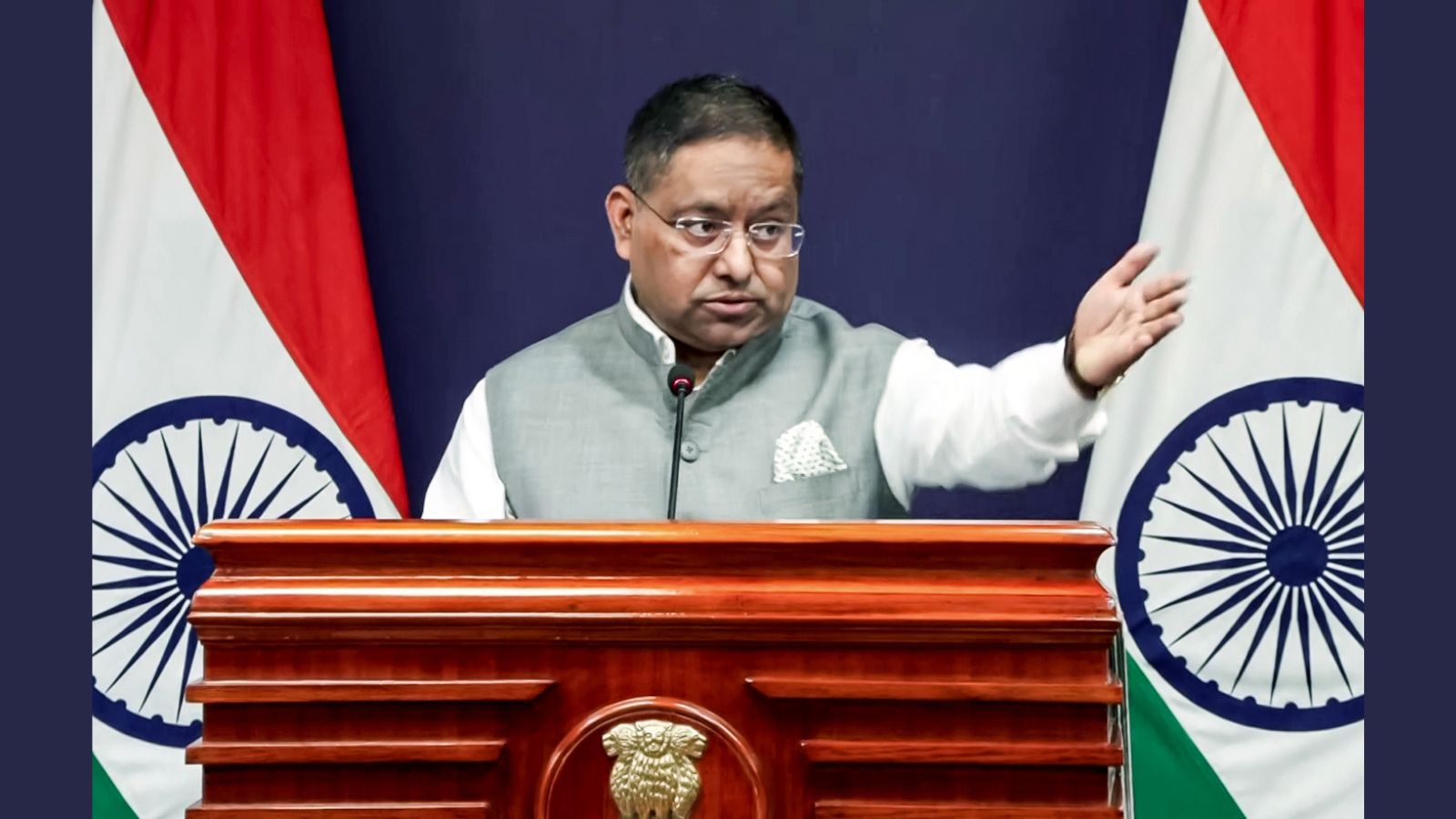
"It is reiterated that the UT (Union Territory) of Ladakh is an integral and inalienable part of India. No amount of denial by the Chinese side can change this established fact," External Affairs Ministry (EAM) spokesperson Randhir Jaiswal said.
He said the press release by the Ministry of Home Affairs dated October 2 that China referred to, is "self-explanatory".
Jaiswal clarified that the initiative encompasses 28 distinct sites and physical features situated within the Union Territory of Ladakh, which now bear standard designations on the official Survey of India maps.
According to the spokesperson, these geographical names were settled following close consultations with the local administration of the Union Territory of Ladakh and regional stakeholders.
"The announcement mentions that the 28 places/features located in the UT of Ladakh have been identified with standard place and feature names on the official map of Survey of India, and it has been done in consultation with the Union Territory of Ladakh and local stakeholders," Jaiswal said.
"Identifying these places formally on the Survey of India map of UT of Ladakh is aimed at facilitating their accurate recognition and better awareness among the public at large," he said.
The updated cartography, formally adopted on October 2, includes vital frontier friction points along the Line of Actual Control (LAC), such as Gogra and Hot Spring, both significant sites from the 2020 military standoff that began following clashes near Pangong Lake, alongside other prominent landmarks.
These include Alisha Giri, Brangsa, Chapchingal Pass, Kanishka Peak, Karun Pir mountain, Kuksel, Martand Giri, Parpik Glacier, Skamri Glacier, Shachmirik Pass, Shkorga Valley, Zorawar Peak, Dehra Compass, Drak Karpo, Jolmori, Kumarayana Point, Panglung, Rinchen Zangpo, Sakyasri Giri, Guru Rinpoche, Shamal Lungpa, Yangpa River, Marpa Lotsava Ri, Milarepa Kangri, Shiva Ri and Maheshwara Ri.
China's objection
Chinese Foreign Ministry spokesperson Mao Ning said in Beijing that China strongly opposed India's decision to assign standardised names to the locations and geographical features in Ladakh.
"China has never recognised the so-called 'Union Territory of Ladakh' unilaterally and illegally established by India, and firmly opposes the so-called 'standardised names' publicised by India," she said.
"This move by India is illegal and void and does not change the fact that the western sector of the China-India boundary belongs to China," Mao said.
(With inputs from PTI & ANI)