



New Delhi: The Delhi Police registered 27 First Information Reports (FIRs) over a seven-day protest targeting Chief Election Commissioner (CEC) Gyanesh Kumar, invoking provisions of the Bharatiya Nyaya Sanhita (BNS) relating to joint criminal liability, disobedience of public orders and obstruction of public servants.
Section 3(5) of the BNS, which deals with joint criminal liability when an offence is committed by multiple people in furtherance of a common intention, was invoked in 22 of the 27 FIRs, according to the data provided.
Section 223(a), which concerns disobedience of an order promulgated by a public servant, was cited in 18 FIRs. Sections 221 and 132 were each invoked in 17 cases. These provisions relate to obstructing a public servant in the discharge of official duties and assault or criminal force used to deter a public servant from performing their duty, respectively.
Section 3 of the Prevention of Damage to Public Property Act was invoked in nine FIRs. Other provisions listed in the cases include BNS Sections 121/121(1), 115(2), 126(2), 127(2), 74/75 and 118(1), covering offences including causing hurt, wrongful restraint or confinement, assault against women and causing hurt using dangerous weapons or means.
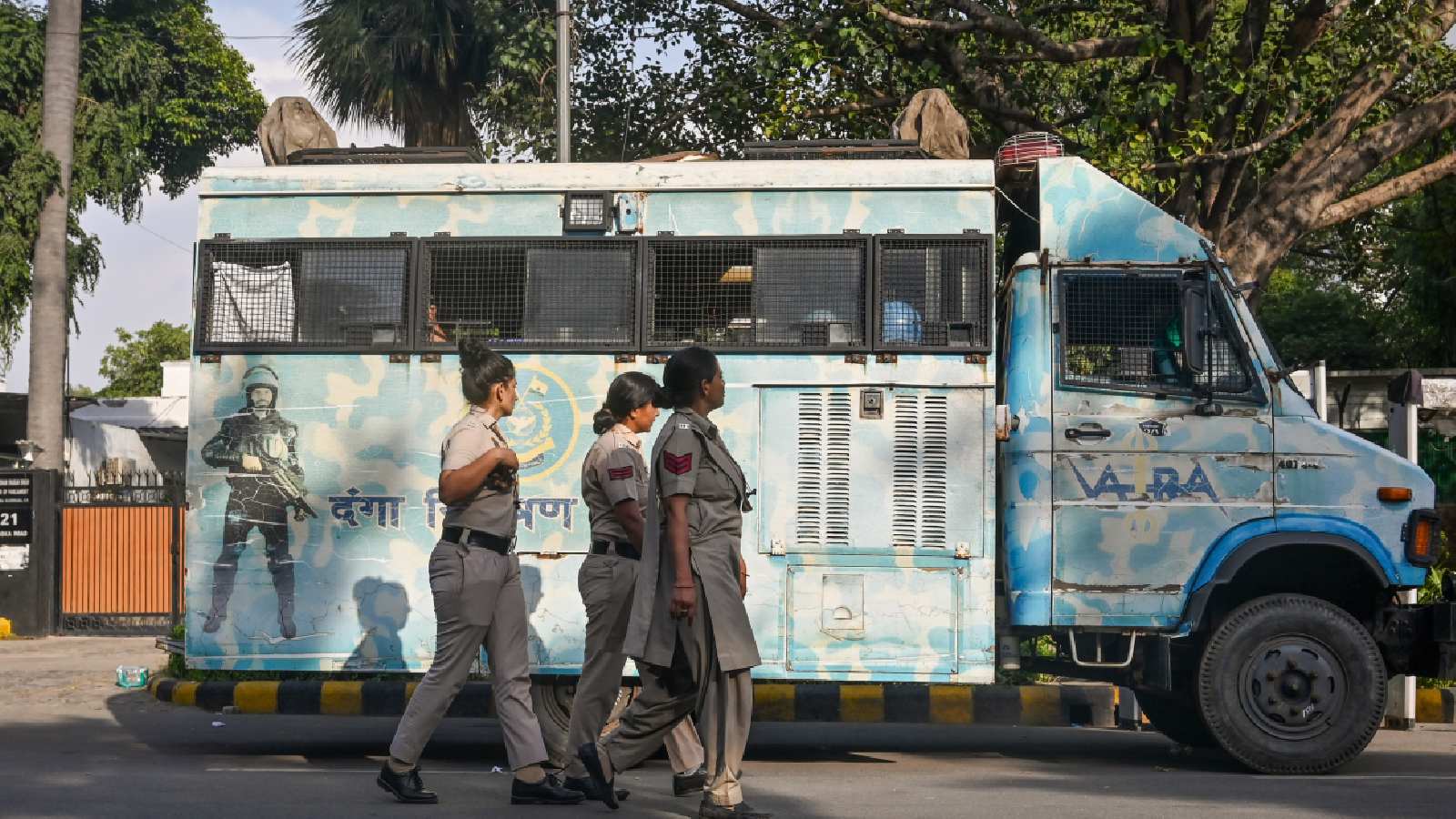
The cases were registered amid heightened security in Delhi, with barricades erected and roads around Jantar Mantar and Parliament Street sealed off. Prohibitory orders were also enforced in high-security areas.
The crackdown coincided with the Cockroach Janta Party’s (CJP) planned demonstration at Jantar Mantar against alleged irregularities in the Election Commission’s Special Intensive Revision (SIR) of electoral rolls. The party is demanding Kumar’s resignation and has called for the SIR exercise to be scrapped.
CJP founder Abhijeet Dipke accused the Centre of restricting public movement to prevent demonstrators from reaching Delhi, saying the government was “afraid of Gen Z”. “Shut down the entire country if you are so scared of the youth,” Dipke said.
Questioning the restrictions on public transport and roads, he said, “Delhi is not the private property of Narendra Modi and Amit Shah. On one hand, you say protests lead to inconvenience. On the other hand, you have shut down the Metro stations, railways and blocked roads. Will this not lead to inconvenience?”
Dipke also questioned why security personnel were being moved from Kashmir and Naxal-affected areas to Delhi, asking why the government was treating young people “like Pakistanis”.
CJP leader Saurav Das described the situation as an Emergency, alleging that party volunteers were being detained in BJP-ruled states and that some had been placed under house arrest. Another party leader, Ashutosh Ranka, questioned the denial of permission for the demonstration at Jantar Mantar, a designated protest site.
Ahead of the planned demonstration, 38 trains scheduled to arrive at New Delhi and Hazrat Nizamuddin stations between 4 am and 2 pm on October 10 were cancelled. Entry and exit gates at 57 Delhi Metro stations were also scheduled to remain closed from 9 pm on Friday until further notice.
The Supreme Court on Friday directed the Centre and authorities to ensure that train and Metro services were not completely halted because of the protest. A bench led by Chief Justice of India Surya Kant, along with Justices Joymalya Bagchi and V Mohana, asked authorities to allow the services to operate in a regulated manner.
The court clarified that the proceedings primarily concerned restrictions affecting public movement and transport, including the daily lives of residents who were not participating in the protest.