



India is set to script history with its first-ever digital Census in 2027, backed by robust data protection measures. The national census of the country is regarded as the largest administrative and statistical exercise in the world, said Union Minister Ashvini Vaishnav while announcing the national census, which is conducted after nearly 15 years.
Though the exercise is conducted every 10 years, it was interrupted in 2021 due to the COVID pandemic.
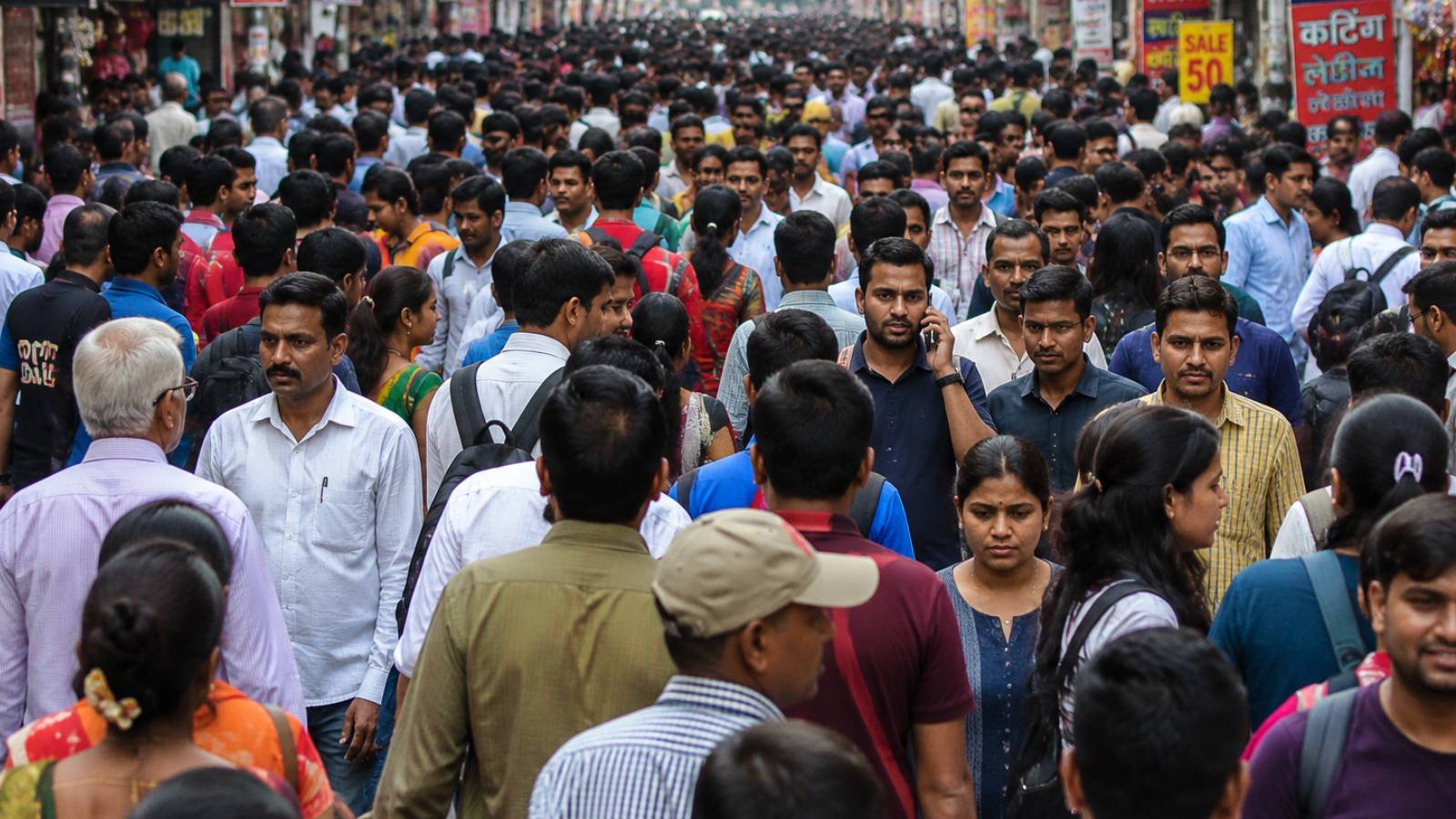
As per the last census conducted in 2011, the population of India is 1,210,854,977 (1.21 billion), with 623.7 million males (51.54%) and 586.5 million females (48.46%).
The Union Government has estimated ₹11,718 crore for the 2027 national census, which will be the eighth since independence.
Why does India conduct Census?
The Census provides vital information about India’s population and its characteristics at a particular point in time. It is essential for the accurate assessment of population trends and effective planning across sectors such as food, water, energy, and infrastructure. The exercise also helps the government in the targeted delivery of government
schemes and optimal resource allocation.
Census is defined as the process of collecting, compiling, analysing, and disseminating demographic, social, cultural, and economic data related to all persons in the country or a designated area.
Two phases
Census 2027 will be conducted in a structured two- phase format to ensure comprehensive and systematic data collection across the country.
Phase I: Houselisting and Housing Census
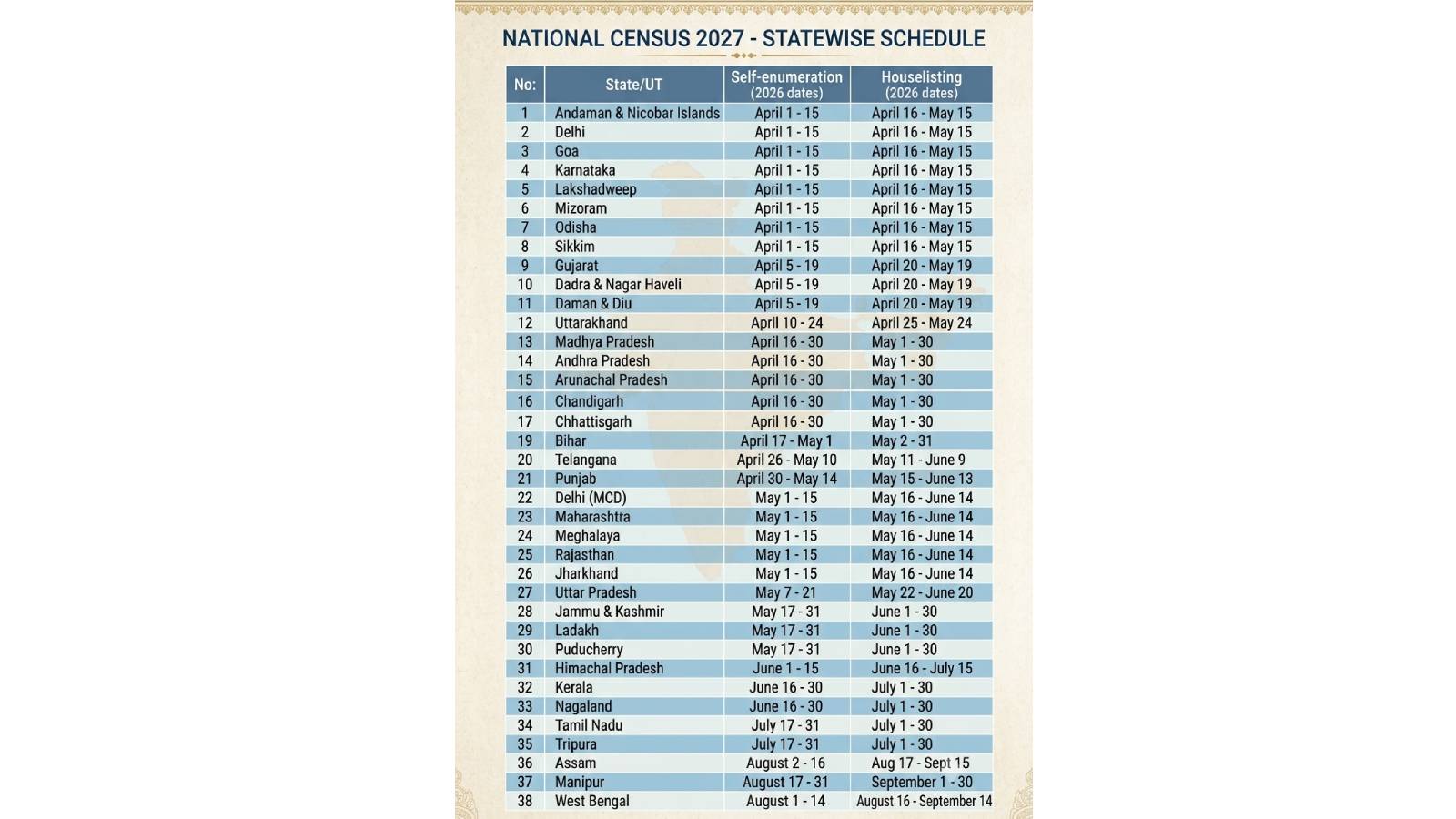
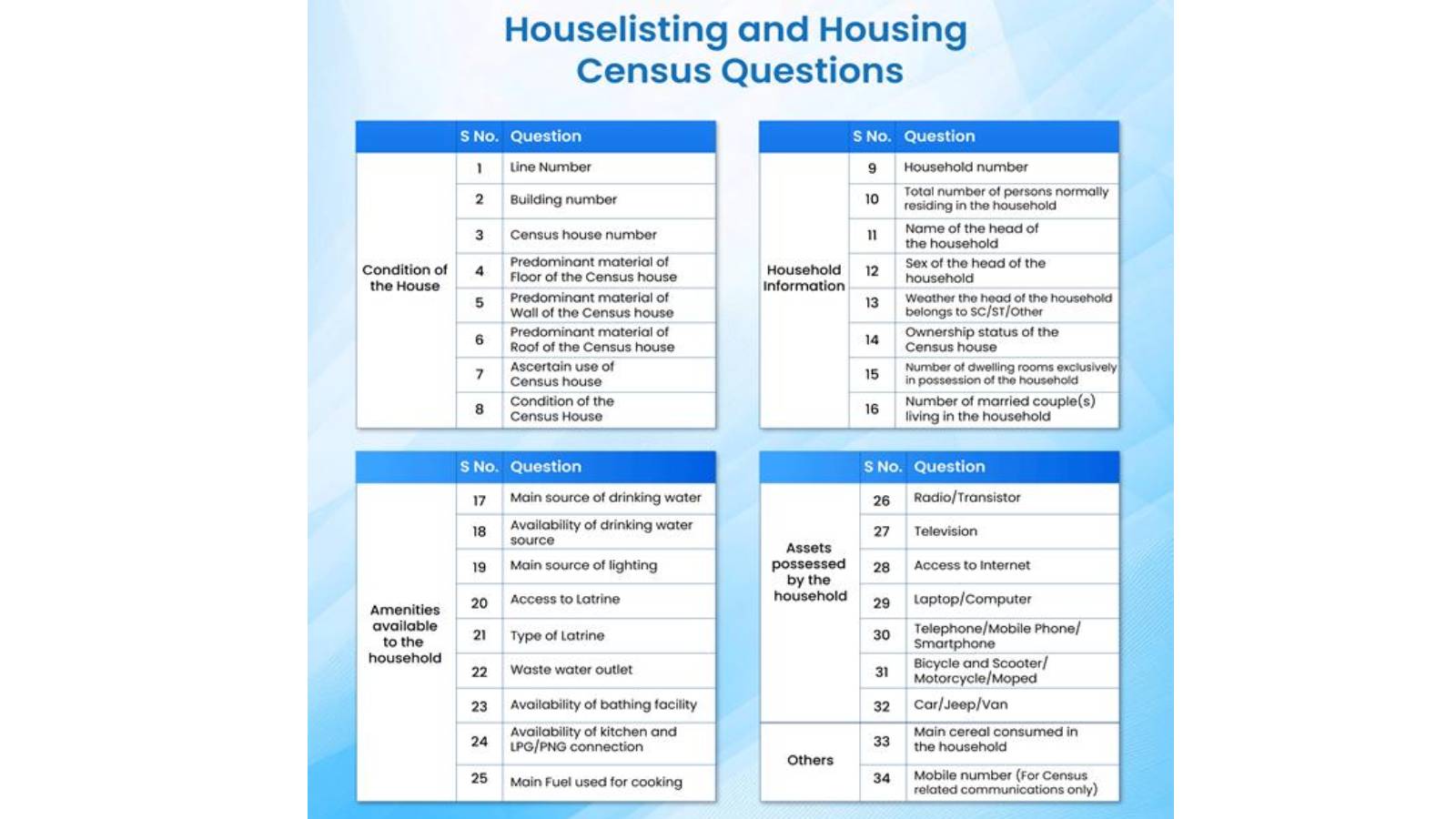
(HLO) is scheduled between April and September 2026. It will be conducted over a period of 30 days in each State/UT, as per the convenience of the State/UT Governments. There will also be an option of self-enumeration during a 15-day period just before the 30-day period of house-to-house HLO work. This phase will gather detailed information on housing conditions, availability of amenities, and assets possessed by households, while also creating the essential frame for the subsequent phase.
Phase II: Population Enumeration
Population Enumeration (PE) is scheduled for February 2027 and will focus on capturing detailed demographic, socio-economic, cultural, migration, and fertility-related information of individuals across households. Details including age, gender, educational status, religion, mother tongue, languages, disability, social status, caste, occupation, migration, fertility, etc., will be collected.
For the UT of Ladakh and snow-bound non-synchronous areas of the UT of Jammu and Kashmir and the States of Uttarakhand and Himachal Pradesh, Phase II will be conducted during September 2026.
Features of digital census
As the exercise is digital, data will be collected through mobile applications in Hindi, English, and regional languages, with an aim to ensure better-quality data. A designated portal called the Census Monitoring and Management System (CMMS) has been developed for managing and monitoring the entire Census process on a near real-time basis.
Officers at sub-district, district, state, and national levels can track enumeration progress, field performance, and operational readiness through an integrated dashboard.
The Houselisting and Housing Census (HLO) mobile application and the Houselisting Block Creator (HLBC) web mapping application are two other digital tools that will be employed in the drive. HLO is a secure offline app that helps enumerators collect and upload houselisting data, accessible only to those registered on the CMMS portal.
This digital platform will avoid paperwork by enabling direct field-to-server data transmission.
HLBC, developed for census charge officers, will facilitate the digital creation of Houselisting Blocks using satellite imagery, ensuring geographic coverage across India without omission or duplication.
How does self-enumeration work?
Self-enumeration is an optional facility by which citizens can provide necessary information via a dedicated portal before the door-to-door visit of officials.
- Visit se.census.gov.in
- Register using a mobile number and basic details
- Select the district
- Mark the house location on the map
- Submit the information at your convenience
- A 16-digit unique Self-Enumeration ID will be generated and must be shared with the enumerator during the field visit for verification.
Dates to remember
Phase 1 (House Listing and Housing Census): April 1-September 30, 2026
Phase 2 (Population Enumeration): February 2027