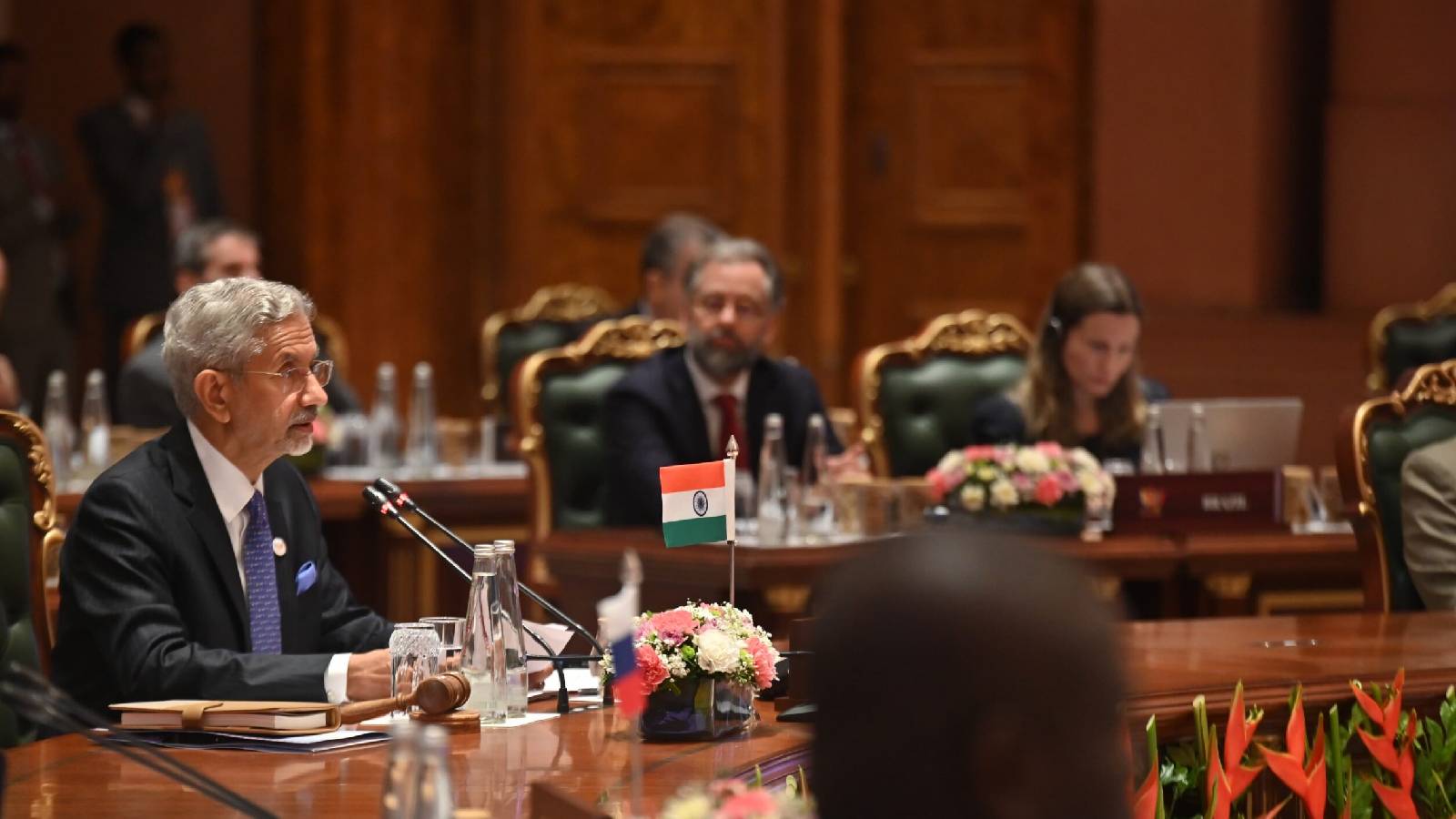


New Delhi: Chinese Foreign Minister Wang Yi, Russian National Security Adviser Sergei Shoigu and other top BRICS security officials will converge in New Delhi on Monday for a two-day conclave that will focus on pressing geopolitical and regional security challenges.
The conclave of BRICS National Security Advisers will be chaired by National Security Adviser Ajit Doval.
China has already announced that Wang will attend the deliberations. The Chinese foreign minister is also expected to hold a bilateral meeting with Doval.
It is learnt that Iranian Supreme National Security Council Deputy Secretary Nezamipour is also expected to join the conclave, which is set to prepare the ground for the BRICS summit to be held in September in India.
The top BRICS security officials are expected to deliberate extensively on the overall regional security situation, including developments in West Asia and the Russia-Ukraine conflict.
The Indian side is likely to raise its concerns over terrorism, including cross-border terrorist activities targeting Jammu and Kashmir by terror groups based in Pakistan.
The Pakistan-Afghanistan hostilities may also figure in the deliberations, people familiar with the matter said.
"During the meeting, the National Security Advisers/Heads of Delegation of BRICS member countries will exchange views on the theme 'Non-traditional security challenges confronting the world today'," the Ministry of External Affairs (MEA) said.
The officials will also discuss the rapidly evolving nature of national security challenges, as well as the role of new technologies in emerging security threats.
"The National Security Advisers/Heads of Delegation will also review the outcomes of the recently held BRICS joint working groups on counter-terrorism, and on security in the use of information and communication technologies," the MEA said in a statement.
New Delhi is hosting the summit in its capacity as the current chair of the influential grouping.
BRICS, originally comprising Brazil, Russia, India, China and South Africa, expanded in 2024 to include Egypt, Ethiopia, Iran and the United Arab Emirates, with Indonesia joining in 2025.
The grouping has emerged as an influential bloc, bringing together 11 major emerging economies that represent around 49.5 per cent of the global population, around 40 per cent of global GDP and around 26 per cent of global trade.
The BRICS foreign ministers' meeting in May ended without a joint statement as sharp differences between Iran and the UAE over the West Asia conflict came to the fore.
BRICS operates under a framework of consensus, and India issued a chair's statement and outcome document featuring two specific paragraphs where unanimity could not be reached.