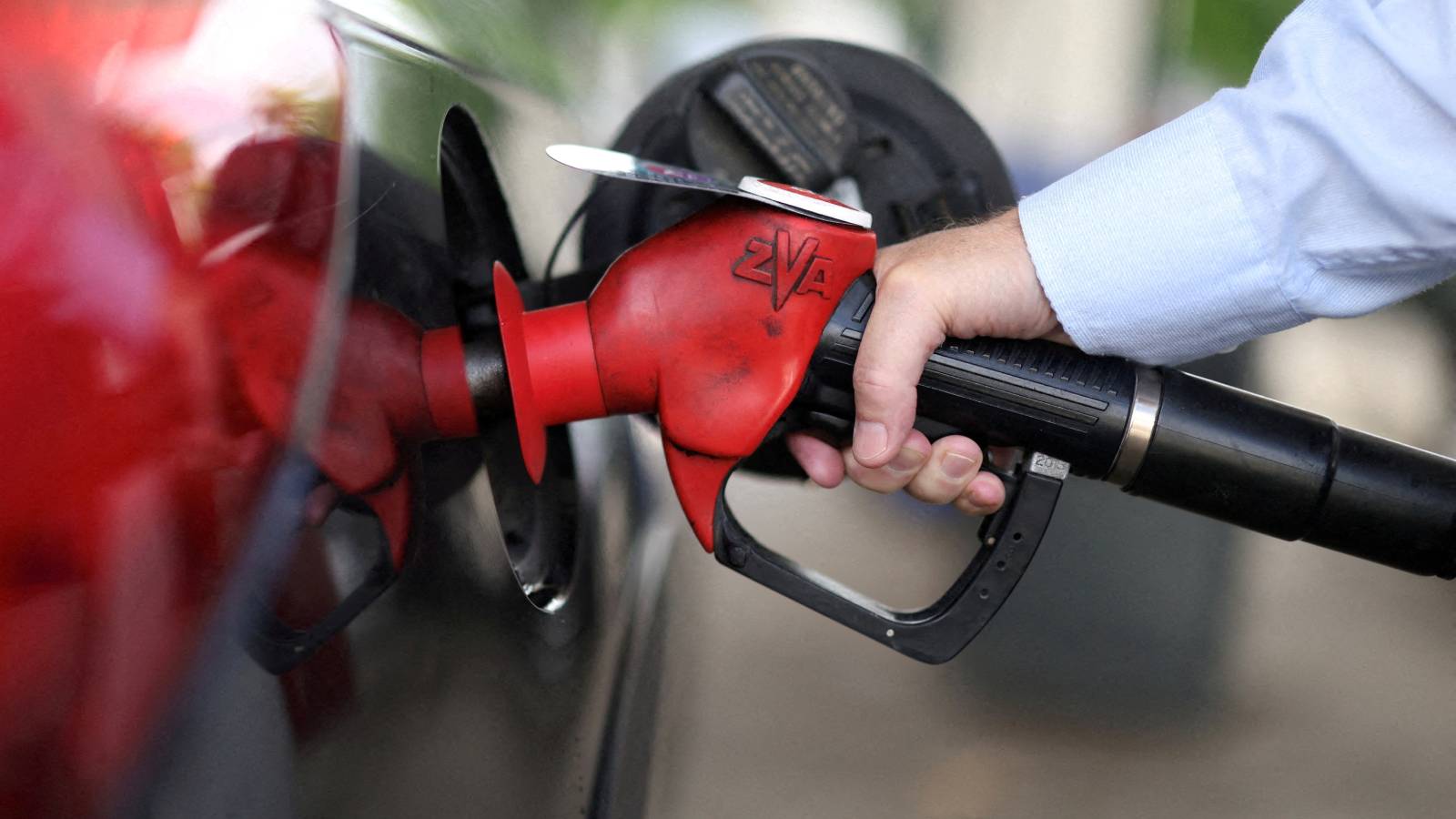


New Delhi: Amid the growing concerns of fuel shortage linked to the West Asia crisis, the government of India took action to limit the usage of diesel. As per the official order issued on June 11, diesel sales to a vehicle in a day are capped at 200 litres. The government also restricted industrial, commercial, and institutional users from buying petrol and diesel from petrol pumps in a bid to prevent local shortages. These restrictions will be in place for up to 90 days from June 11.
Retail outlets can sell diesel only into a vehicle tank or PESO-approved container, and not more than 200 litres per customer or vehicle per day, reads the order.
As industrial, commercial and institutional consumers are no longer allowed to buy petrol or diesel from retail outlets, they must source their fuel from their own consumer pumps.
The union government imposed the restrictions in view of the abnormal demand growth, particularly that of diesel, in some pockets after bulk users started buying fuel from petrol pumps due to the pricing difference, reported PTI. While diesel at petrol pumps costs ₹95.20 a litre in Delhi, bulk sales are priced at ₹134.50.
The differential arose as state-owned oil companies modulated retail prices to insulate common users from the spike in cost that followed the West Asia crisis in late February. While bulk users such as telecom towers and industries using diesel for power generation and other feedstock needs are charged market price, the retail pump rates are way lower than the cost.
Commercial customers like trucking companies and state road transport buses, too, had been tapping pumps for their needs, resulting in an abnormal rise in demand in some pockets.
The price differential has also led to a shift in sales patterns, with volumes shifting to PSU petrol pumps from private sector outlets that priced petrol and diesel at higher rates.
In May, three state-owned firms - IOC, BPCL, and HPCL saw a 4.8 per cent jump in petrol sales and 6.4 per cent surge in diesel.
The Ministry of Petroleum and Natural Gas on June 11 issued the Motor Spirit and High Speed Diesel (Temporary Regulation of Supply through Retail Outlets) Order, 2026, directing fuel retailers and oil marketing companies to curb bulk purchases from retail outlets for periods of up to 90 days at a time.
The government said the move was necessitated by the "current prevailing geopolitical situation affecting certain regions of the world" that has adversely impacted international petroleum supply chains, shipping logistics and the availability of petroleum products.
"It has been observed in current situation that abnormal increases in sales of Motor Spirit (petrol) and High Speed Diesel (diesel) through Retail Outlets in certain parts of the country are driven by shifting of industrial, commercial and institutional consumers to Retail Outlets owing to the price difference between retail and bulk sale prices," the notification said.
According to the order, institutional, industrial and commercial consumers may be barred from procuring petrol and diesel from retail fuel stations and would instead be required to source supplies through their own consumer pumps.
The notification also restricts diesel sales at retail outlets to vehicle fuel tanks or Petroleum and Explosives Safety Organisation (PESO)-approved containers, with purchases capped at 200 litres per customer or vehicle per day. Such diesel "cannot be resold", the order said.
The government said bulk procurement through retail stations could divert supplies intended for ordinary consumers and "create the potential for localised shortages and disruption of essential services to the common man".
The order empowers public-sector oil marketing companies and other authorised fuel retailers to enforce the restrictions and requires state governments and Union
Territories to take action against hoarding, black marketing, unauthorised procurement and diversion of fuel supplies.
Any restrictions imposed under the new framework can remain in force for an initial period of up to 90 days and may be extended through a fresh government order.
The government said the measures were aimed at ensuring the "equitable availability" of petrol and diesel, preventing hoarding and diversion, and maintaining uninterrupted supplies across the country.
"The government may, by a special order, exempt any consumer, class of consumers, area, transaction, or category of transactions from all or any of the provisions of this Order," the notification said, adding that any violation shall be punishable in accordance with the provisions of the Essential Commodities Act.
It also directed state governments and Union Territory Administrations to take "all necessary measures to implement" the order, including "action against hoarding, black marketing, unauthorised procurement, diversion and other malpractices."