


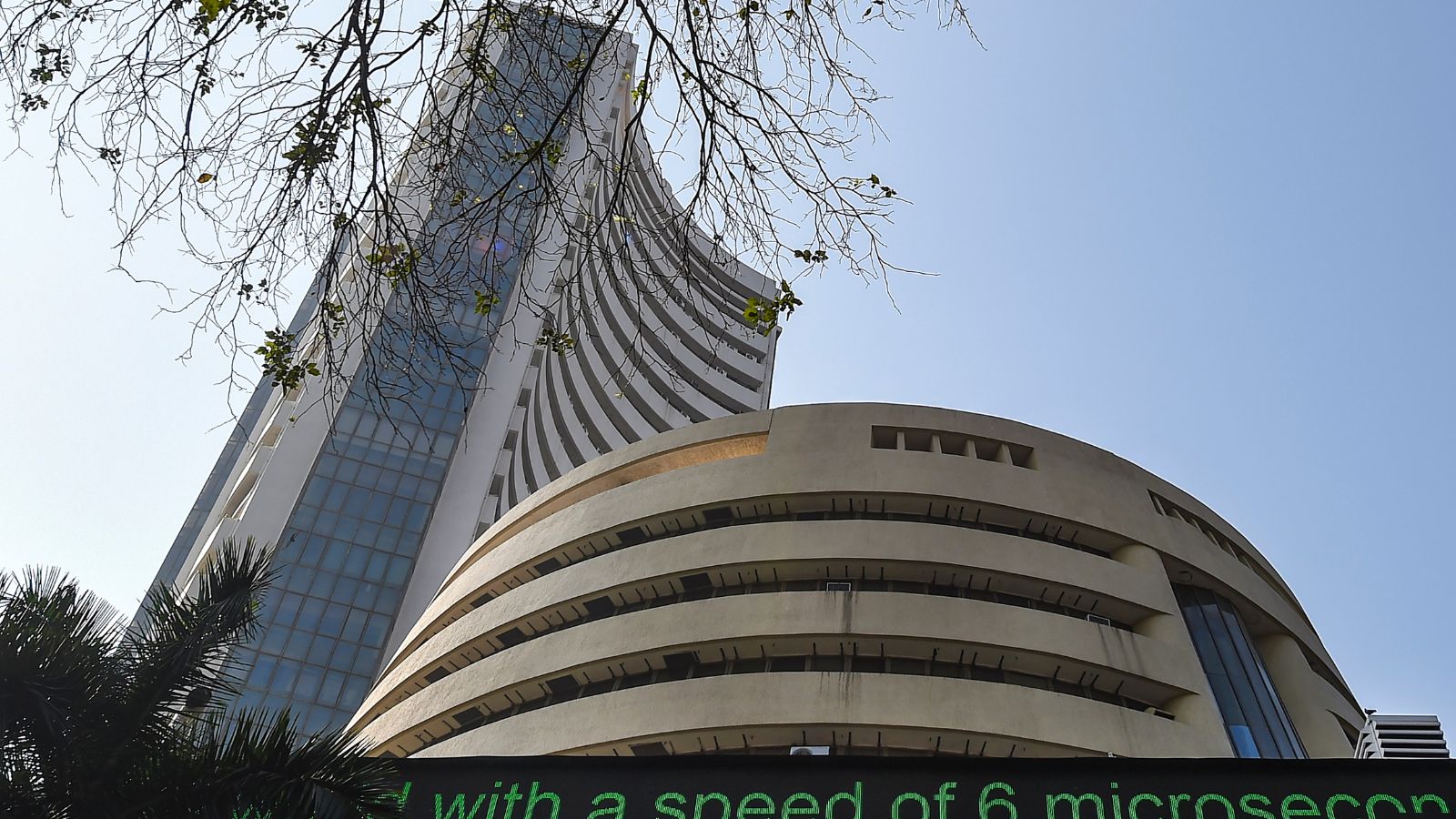


Mumbai: India benchmark indices Sensex and Nifty ended marginally lower in the special Diwali Muhurat trading session on Sunday amid profit-taking by investors after a seven-day rally.
After starting the special trading session to mark the beginning of Hindu calendar Samvat 2083 on a bullish note, the 30-share BSE Sensex failed to sustain the rally. The barometer dipped 28.62 points, or 0.04 per cent, to settle at 80,999.40, with 16 of its constituents ending higher and 14 lower. During the special session, it hit a high of 81,442.11, surging 414.09 points, or 0.51 per cent.
The 50-share NSE Nifty declined 43.95 points, or 0.18 per cent, to end at 24,986.40 after a positive beginning.
Investors' wealth surged by Rs 2.60 lakh crore to Rs 5,05,67,743.40 crore ($5.37 trillion).
Meanwhile, Foreign Institutional Investors (FIIs) bought equities worth Rs 13,749.82 crore on Friday, according to exchange data
Laggars and gainers
Among Nifty 50 stocks, Sun Pharmaceutical Industries was the top gainer, rising 2.96 per cent, followed by Tata Steel, which advanced 2.09 per cent. ONGC gained 1.31 per cent.
Adani Ports, Power Grid, Maruti Suzuki, Bharat Electronics, UltraTech Cement and Eternal also ended higher.
On the losing side, SBI Life Insurance declined 1.11 per cent, followed by IndiGo, which fell 1.07 per cent. Bharti Airtel dropped 1.03 per cent, while Max Healthcare and Infosys declined 0.86 per cent and 0.83 per cent, respectively.
In the 30 Sensex firms, Mahindra & Mahindra, InterGlobe Aviation, Trent, Infosys, Bharti Airtel and Axis Bank were among the biggest laggards.
Sun Pharma, Tata Steel, Maruti and Power Grid were among the gainers.
Muhurat trading session
Muhurat trading is a symbolic market session held on Diwali, which also marks the beginning of the new Hindu calendar year. It is believed that trading during the 'Muhurat' or auspicious hour brings prosperity and financial growth for the stakeholders.
Unlike regular trading days, when equity markets operate from 9:15 am to 3:30 pm, Muhurat trading runs for a shorter period.
Market performance during last calendar year
In the last Samvat Year 2082, the BSE benchmark has tumbled 3,398.32 points, or 4 per cent, and the Nifty declined 838.25 points or 3.24 per cent.
On Friday -- the last trading session of Samvat 2082 -- the Sensex jumped 1,718.01 points, or 2.17 per cent, to settle at the day's high of 81,028.02. The Nifty rallied 493.75 points, or 2.01 per cent, to end at the day's high of 25,030.35.
In the past seven consecutive sessions, the Sensex surged 7,781.99 points, or 10.62 per cent, and the Nifty rallied 2,331.5 points, or 10.27 per cent.
Market could deliver strong returns by next Diwali: Expert
"After two years of stagnation, market has the potential to give investors bumper returns by next Diwali, because of confluence of low valuation and high earnings growth. Potential crash in oil prices, stable currency, return of foreign investors, moderation of AI hype and broad-based earnings growth will support higher valuation multiples," Raamdeo Agrawal, Chairman and Co-Founder of Motilal Oswal Financial Services, said.
The US equity markets ended mostly higher on Friday.
The BSE SmallCap Select index jumped 1.18 per cent, while MidCap Select index was up 0.22 per cent.
Mixed perfromance of sectoral indices
The sectoral performance was mixed, with Nifty Media rising 1.84 per cent and Nifty Pharma gaining 1.70 per cent. Nifty Metal advanced 0.36 per cent and Nifty Auto edged up 0.11 per cent.
Nifty Realty declined 0.66 per cent, while Nifty IT fell 0.33 per cent.
Among BSE sectoral indices, Realty, Focused IT, Top 10 Banks, Consumer Durables, PSU Bank, Bankex Private Banks index and IT were the laggards.
Healthcare, Industrials, Capital Goods, Hospitals and Housing Finance were among the winners.
"As the new Samvat year begins, market direction will depend on corporate earnings, domestic growth, foreign fund flows, global developments and crude oil movements," Gaurav Garg, Head - Research, Lemonn, said.
(With inputs from PTI & ANI)