


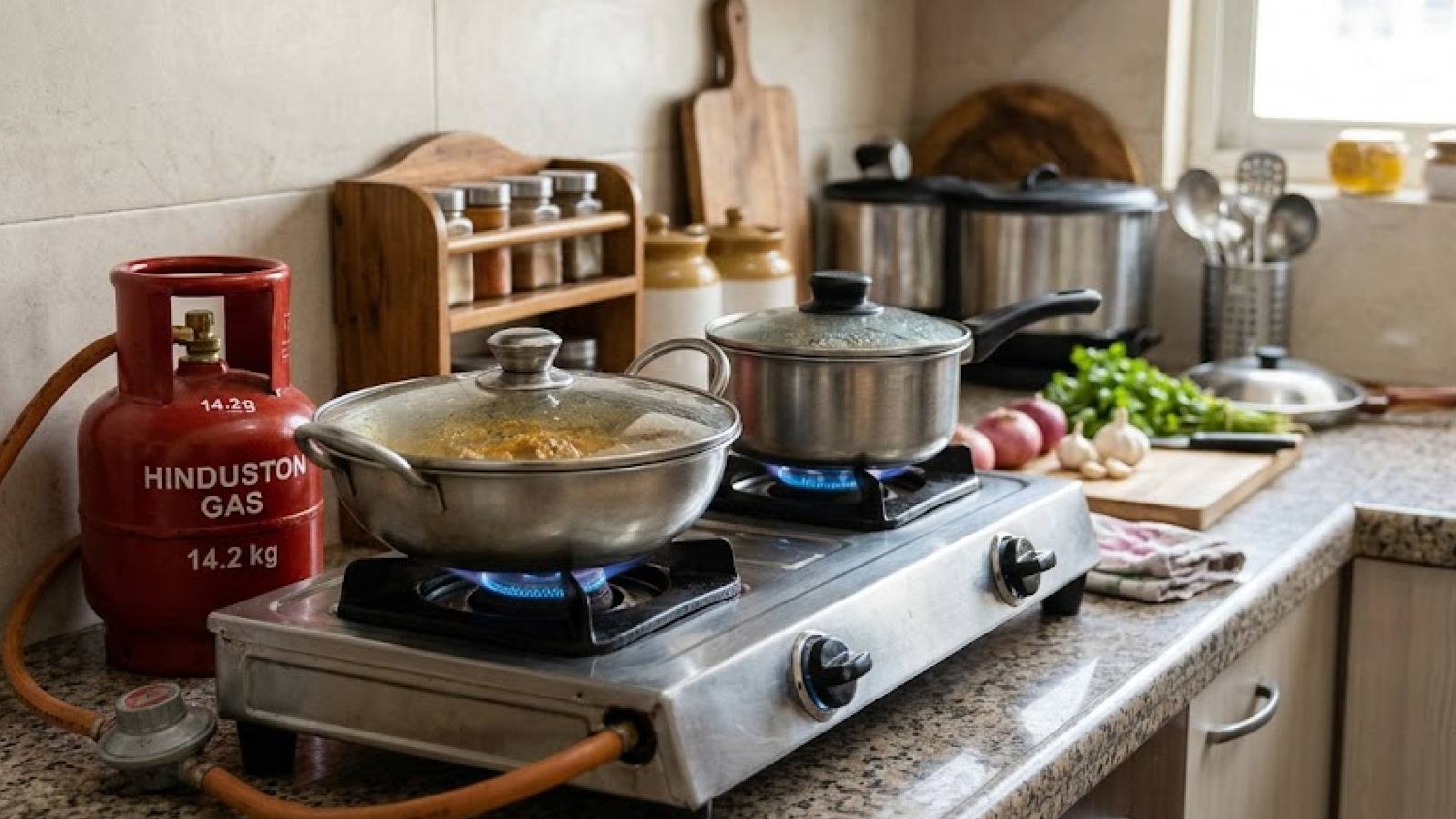


The impact of the war in West Asia has extended far beyond the conflict zone, reaching Indian households in the form of an LPG supply crisis. Disruptions to shipments through the Strait of Hormuz, a crucial passage for more than 90 per cent of India's LPG imports, strained cooking gas supplies across the country.
With LPG cylinders remaining essential to millions of Indian kitchens, the instability in West Asia exposed India's dependence on imported cooking fuel and the vulnerability of its supply chain to geopolitical conflicts.
What is LPG?
LPG stands for Liquefied Petroleum Gas, a mixture of hydrocarbons, namely Propane and Butane. A widely useful fuel, LPG is prominently used for a variety of purposes from cooking to heating to industrial energy generation.
As a gas, LPG is converted to liquid through the application of pressure and then stored in cylinders. When the valve of the cylinder is opened, the liquid gets converted back to gas and then burns, serving as a highly efficient fuel.
Although the LPG crisis has largely eased following government intervention and efforts to diversify global supplies, households can still adopt simple measures to make their LPG cylinders last longer and reduce cooking gas consumption.
Making an LPG cylinder last longer does not require major changes to everyday cooking routines. Simple adjustments to cooking methods, along with regular stove and burner maintenance, can help reduce gas consumption and improve fuel efficiency. From preparing ingredients before cooking to using the stove efficiently and keeping burners clean, several practical measures can help households conserve LPG. Here is a comprehensive guide to making cooking gas last longer.
1.Preparatory stage
- Clean vessels & burners well: Keeping cooking vessels and stove burners clean can also help conserve LPG. Food residue and deposits on the bottom of utensils can hinder heat transfer, increasing the amount of gas needed for cooking. Similarly, clogged burners can affect flame efficiency and lead to unnecessary fuel consumption. Regular cleaning and maintenance can improve heat distribution and reduce LPG wastage.
- Prep food well in advance: Before lighting the stove, ensure that, as far as possible, all the preparatory work is done. This includes everything from chopping vegetables, measuring ingredients, and arranging utensils. This ensures that the flame does not go to waste.
- Soaking: Soaking softens food items and saves cooking time. Lentils and other such food grains can be ideally soaked before cooking, both to save fuel and make them more nutritious.
2. Cooking stage
- Cover utensils properly with lids: Covering pots and pans with lids traps heat inside and speeds up the cooking process, thus reducing LPG wastage.
- Avoid excess water: Use only optimum levels of water while cooking. The more the water content, the more time and gas it takes to bring it to a boil.
- Use a pressure cooker: A pressure cooker cuts down cooking time significantly, almost by 40 per cent-70 per cent. Therefore, it is also very energy efficient, relying on less LPG than other methods to get the same job done. It is highly suitable for cooking rice, lentils, stews and a variety of other food items. Since rice is the staple diet, a pressure cooker is a highly practical solution against the backdrop of the unfolding LPG crisis.
- Use flat, wide vessels: Wide-bottomed vessels allow less heat to escape due to their larger surface area. This in turn conserves more fuel.
3. Bonus tips
- Check for leaks: Aside from wasting fuel, even a small gas leak is a safety hazard. Periodically check the hose and regulator for cracks or loose connections. If you ever smell gas when the stove is off, it needs immediate attention.
- Check the colour of the flame: A proper flame is steady and blue. Yellow or orange flame indicate inefficient combustion, which means you are using more gas for less heat. Regular cleaning helps keep the stove prim and proper, turning flames blue and which in-turn saves fuel.
Together, these simple measures can help households reduce LPG consumption and make their cylinders last longer.
Conserving cooking gas does not require drastic lifestyle changes, but rather greater awareness and more efficient cooking practices. Adopting these habits can also help households minimise the impact of future LPG shortages and supply disruptions.