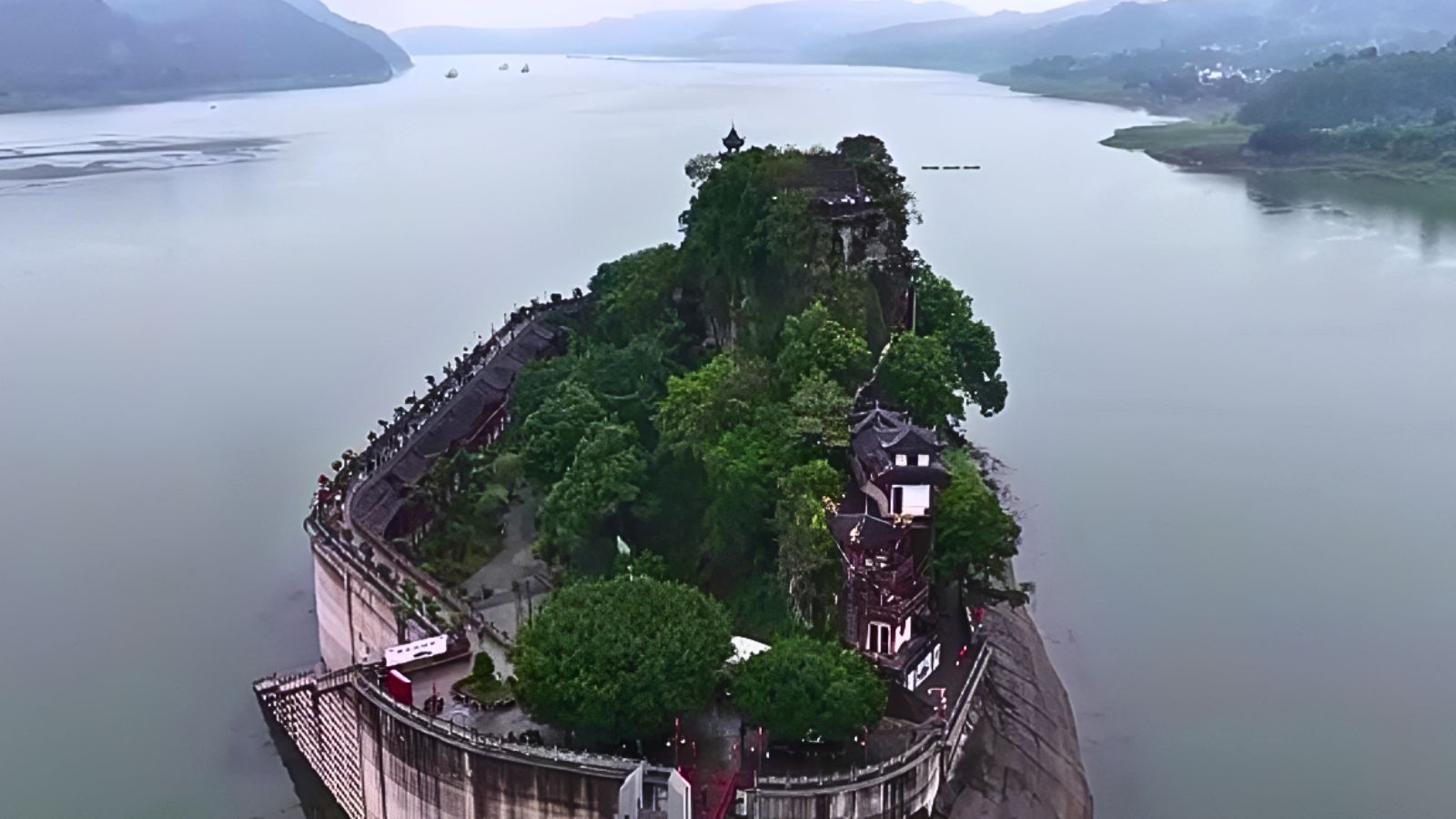


More than 170 guests, including cultural scholars from China and visitors from nearly 20 countries along the world's major river basins, such as the Nile in Egypt, the Mississippi in the United States and the Thames in the United Kingdom, visited Shibaozhai, a scenic spot in Zhongxian County, southwest China's Chongqing municipality.
Also Read:

Shibaozhai looks like a heart-shaped bonsai sitting in the middle of the Three Gorges section of the Yangtze River. It is home to a 12-story, 56-metre wooden pagoda that stands on 20 pillars and leans against the cliff. This structure, dating back to the Ming Dynasty (1368-1644), serves as a leading tourist attraction of Shibaozhai.
The name Shibaozhai means "precious stone fortress"; a myth attributes the massive hill to a colourful rock dropped by the goddess Nüwa while she was repairing the sky.
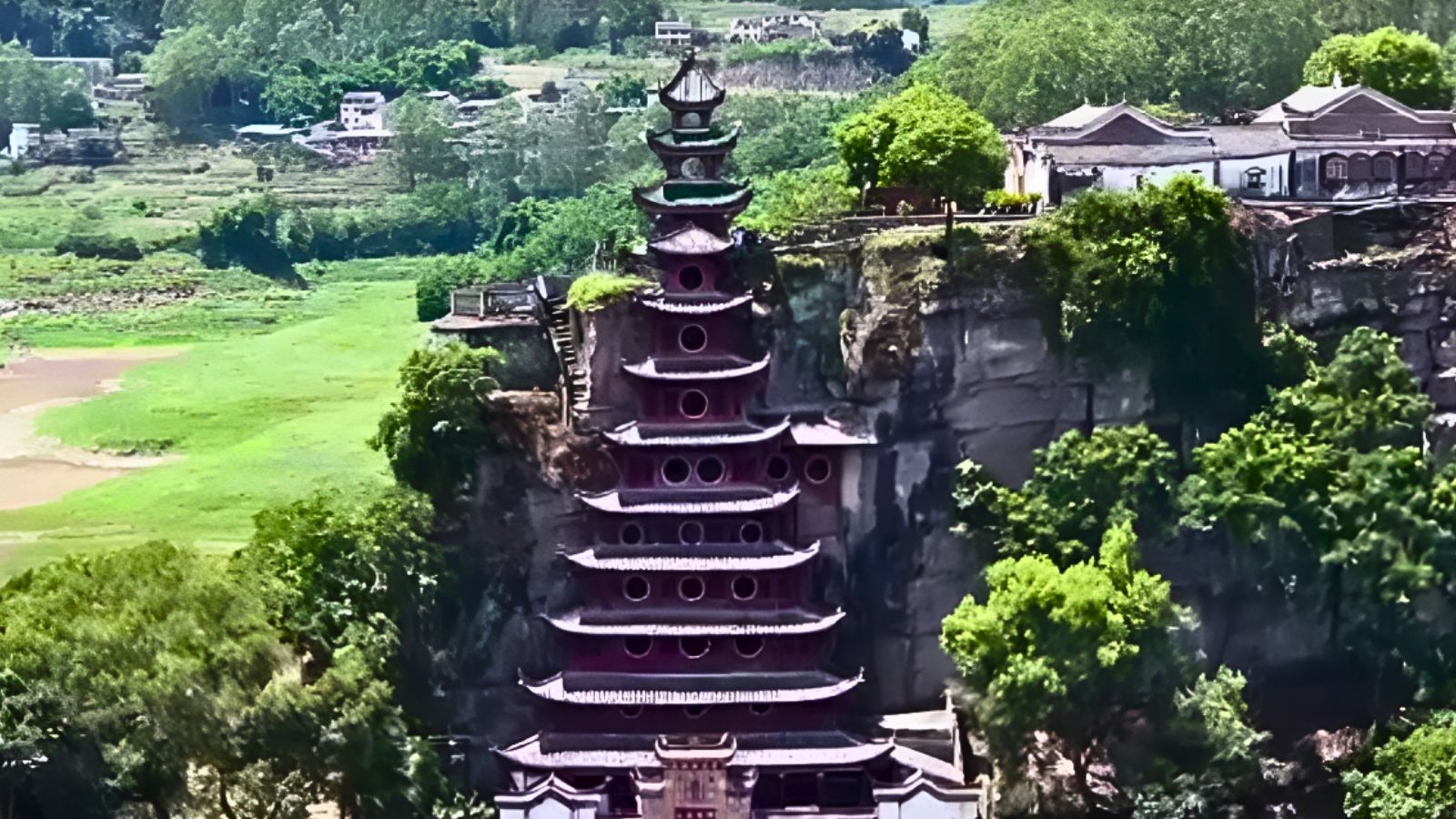
On the river side is a red pavilion which leans against the side of the hill providing a walkway to the temple at the top. The red pavilion built against the rock face is one of the largest wooden temples with nine floors.