



Tehran; Baghdad; Washington: The United States has stepped up pressure on Iran with a new task force targeting its supply routes, while diplomatic efforts to end the ongoing conflict remain stalled amid escalating rhetoric from Washington and Tehran.
US President Donald Trump has announced that "Task Force Iron Gate" is now active against Iran, claiming that the operation, combined with an expansive US naval blockade, has virtually choked off incoming and outgoing trade for the Islamic Republic.
Taking to his social media platform, Truth Social, on Sunday, Trump said, "Task Force Iron Gate is in full force and effect in the Islamic Republic of Iran. Coupled with history’s greatest Naval Blockade, very little gets into, or out of, Iran! President DJT".
According to a statement issued by the US Central Command (CENTCOM), Task Force Iron Gate was established on Saturday under the direction of CENTCOM Commander Admiral Brad Cooper. The team will comprise approximately 20 civilian and military personnel based in Tampa, Florida.

The newly established task force will coordinate with other US government agencies to prevent the movement of advanced weapons systems, dual-use technologies, sanctioned materials and illegal revenue streams across Iran's land borders and the Caspian Sea.
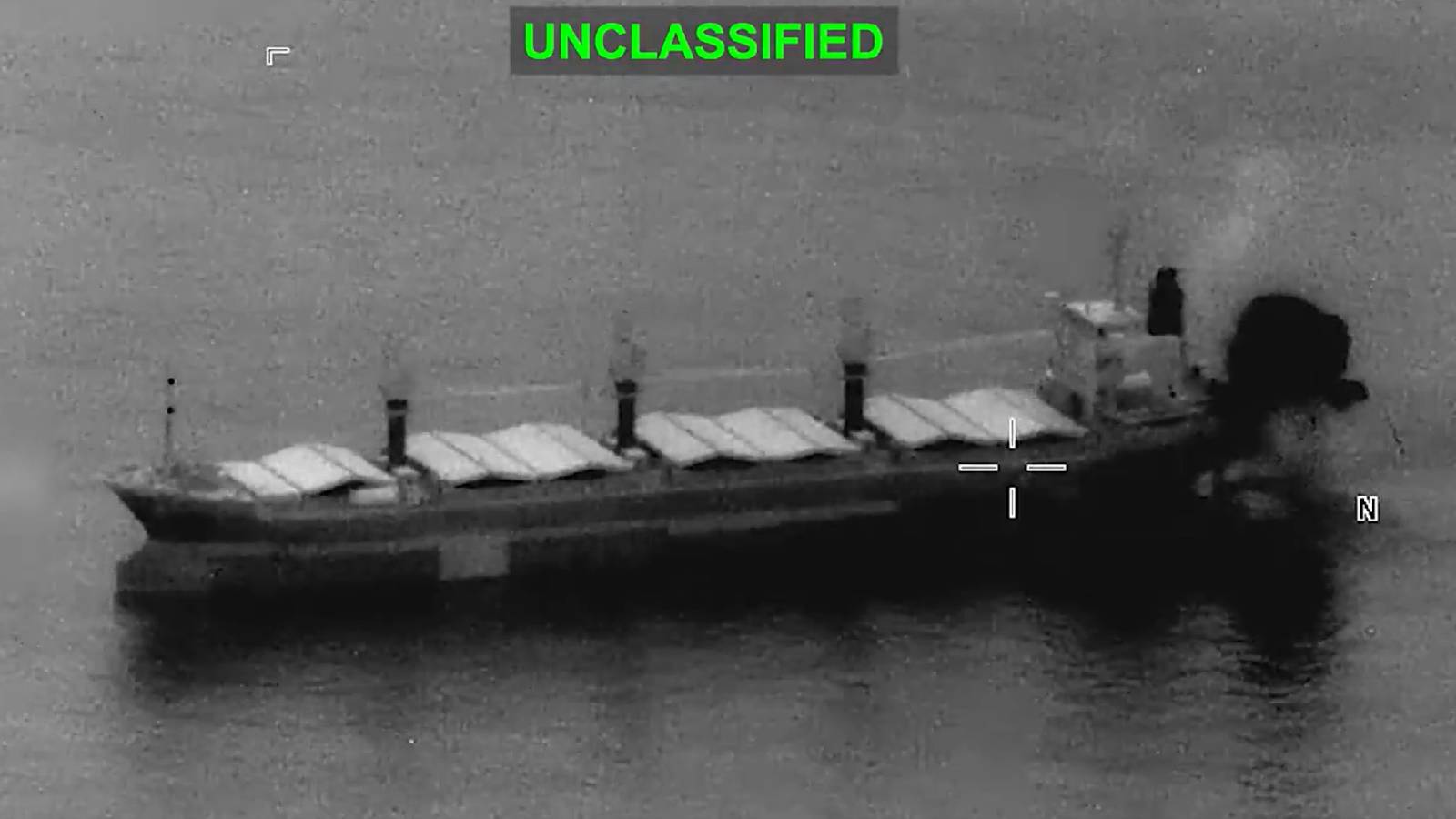
CENTCOM further stated that the US naval blockade had prevented Iran from exporting more than $25 billion in crude oil in recent months. It said strict enforcement at sea continued against all ships entering or departing Iranian ports.
The announcement outlined two parallel US measures targeting Iranian trade and supply routes. While Task Force Iron Gate will focus on Iran's land borders and the Caspian Sea, the existing naval blockade, announced in July, covers Iranian ports along the Arabian Gulf and the Gulf of Oman.
According to CENTCOM, the naval blockade aims to prevent imports and exports to and from Iran, with the exception of humanitarian aid. The newly announced task force, meanwhile, will focus on monitoring, detecting and disrupting illicit movements of weapons systems, dual-use technologies and sanctioned materials.
The announcement comes amid statements from Iran's Islamic Revolutionary Guard Corps (IRGC) Aerospace Force highlighting its domestic defence manufacturing capabilities, technological developments and military self-reliance.
Also Read:

Speaking during a commemorative event, IRGC Aerospace Force spokesperson Brigadier General Hossein Mohebbi outlined three strategic pillars driving the force's expansion: indigenous scientific localisation, domestic industrial mass-production and absolute self-sufficiency.
Mohebbi asserted that domestic technological breakthroughs had allowed Tehran to meet its internal military requirements while supplying international markets with advanced equipment. He cited the domestically developed Arman missile, the 358 loitering drone and the Khordad-3 surface-to-air missile defence system.
"This development served as the catalyst for sweeping changes… transforming us from an importer of military weaponry into an exporter in the aerospace sector," Mohebbi was quoted as saying by Mehr News Agency.
The developments highlight contrasting positions, with CENTCOM announcing measures to restrict the movement of Iranian military-related materials and the IRGC Aerospace Force publicly emphasising its domestic production capabilities and defence exports.
Iran warns of retaliation as diplomatic efforts stall
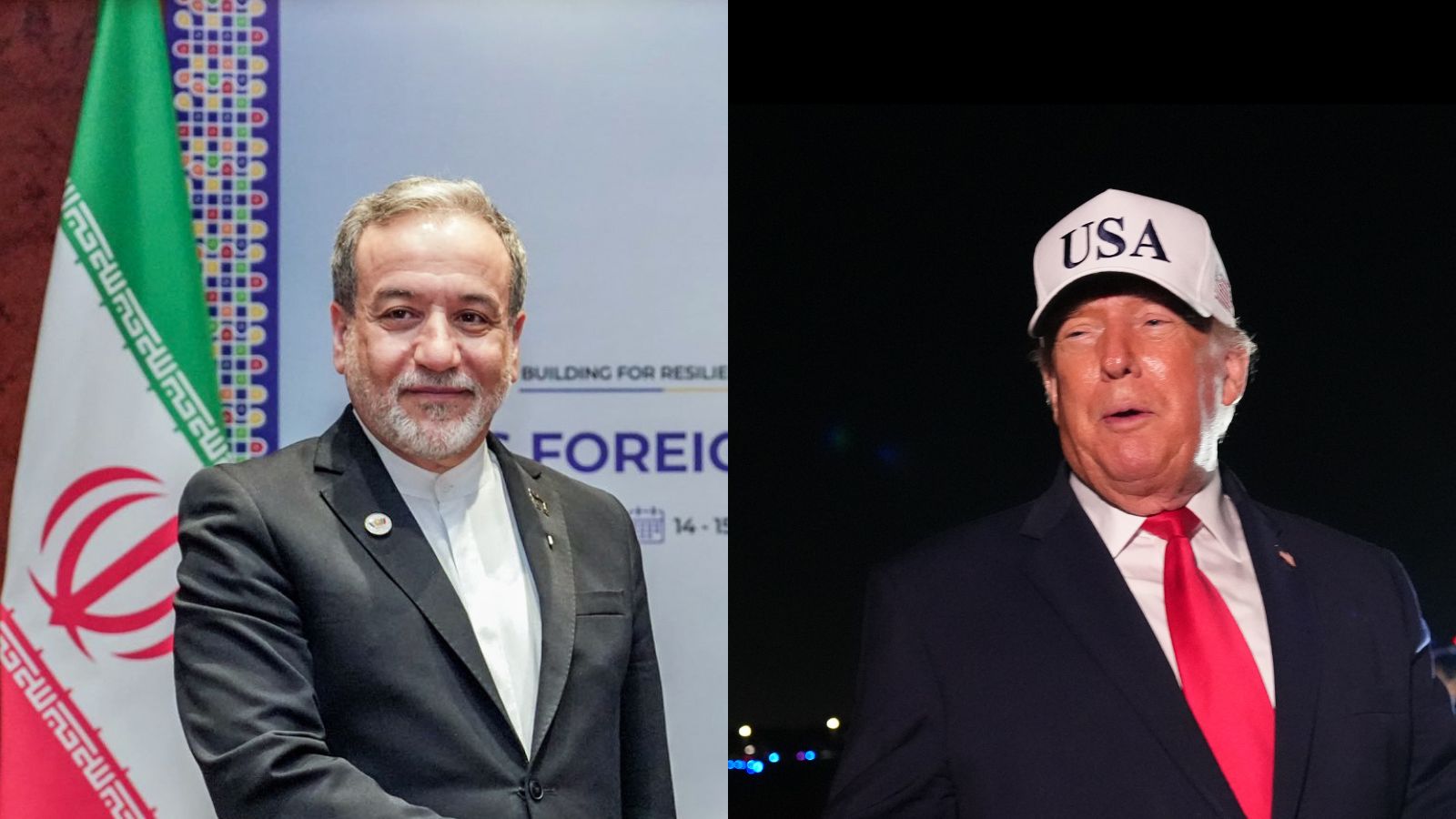
Meanwhile, Iranian Foreign Minister Seyed Abbas Araghchi has warned the United States to either accept Tehran's proposal to end hostilities on all fronts or face severe military retaliation.
Taking to social media platform X on Sunday, Araghchi said the decision now rested with Washington, presenting a negotiated de-escalation and further military confrontation as the two possible outcomes.
"American voters have made their choice. Time for the White House to make its own," Araghchi posted.
American voters have made their choice. Time for the White House to make its own. Our 2-day proposal stands: meet the requirements, including end to war on all fronts, and you will see results. Or choose war, and see our alert and battle-hardened Warriors rain down hell.
— Seyed Abbas Araghchi (@araghchi) November 8, 2026
Issuing a direct warning to the Trump administration, he added, "Our 2-day proposal stands: meet the requirements, including end to war on all fronts, and you will see results. Or choose war, and see our alert and battle-hardened Warriors rain down hell."
Speaking to reporters in Tehran, Araghchi disclosed that diplomatic efforts to broker a cessation of hostilities had reached an impasse. He directly linked the standstill to political developments in Washington, according to Al Jazeera.
"The main reason is the US election results, which have obviously come as a shock to everyone," Araghchi was quoted as saying.
"It will take some time for things to settle down and for the atmosphere to become conducive to the mediators resuming their visits. We have to wait," he added.
US Secretary of State Marco Rubio also acknowledged the lack of progress in diplomatic efforts, blaming Tehran's demands for the absence of a breakthrough.
Speaking to reporters at Homestead Air Reserve Base in Florida before departing for Paris to attend the G7 Foreign Ministers' meeting, Rubio said several third-party countries continued to mediate between Washington and Tehran.
However, he dismissed suggestions that an agreement was imminent.
"You have a number of countries that continue to engage them with different ideas, but I wouldn’t say we’re at the verge of a breakthrough," Rubio was quoted as saying by Al Jazeera.
Rubio said President Trump remained interested in resolving international disputes through diplomacy but maintained that negotiations could not proceed under what Washington considered unrealistic conditions.
"If there’s a chance to do it, we’ll explore it. Right now, it hasn’t been very productive because the Iranian demands are simply not just unacceptable, but in some cases outrageous and ridiculous and really not realistic," Rubio stated, according to Al Jazeera.
Trump says further military action against Iran is unlikely
Amid the diplomatic deadlock, Trump said on Sunday that it was "highly unlikely" he would order American forces back into conflict with Iran, provided tangible progress was achieved in negotiations surrounding Tehran's nuclear programme and the reopening of the strategic Strait of Hormuz.
However, the US President also revealed that Washington had identified 38 Iranian bridges and key infrastructure sites for potential destruction, CNN reported.
During a 20-minute telephone interview with a CNN anchor, Trump repeated his assessment five times, indicating that further military escalation could be avoided if Tehran agreed to comprehensive diplomatic concessions.
"It depends on whether or not they sign a very strong agreement," Trump told CNN.
"The answer is highly unlikely it’s going to be necessary. They’re a failing nation. It just came out, you saw this year, 301 per cent inflation. Highly unlikely it will be necessary. I would if necessary, but we hit them really hard. I hit them so hard. You don’t know how hard I hit them."
Trump asserted that economic sanctions and previous military strikes had severely weakened Tehran's capabilities.
"So it’s highly unlikely I’ll have to," Trump continued. "They’re withering away financially. We’ve hit them militarily. We could finish them off."
He further disclosed, "We have 38 bridges in our site that we can knock down in literally one hour. They’ll all be down," according to CNN.
Explaining his hesitation to destroy the infrastructure, Trump added, "I don’t want to do that because, essentially, it’ll take 10 years to rebuild them. I don’t like ripping down bridges. And the hardest thing to build is a bridge. It takes years, and I’m a good builder."
US asks Iraq to restrict border trade with Iran
The pressure on Tehran has also extended to Iraq, with the US Department of the Treasury asking Baghdad to close almost all its commercial border crossings with Iran, leaving only two operational, Iraqi Foreign Minister Fuad Hussein revealed in an interview with Al Jazeera.
Speaking to the network, Hussein said Washington had requested that Iraq restrict bilateral overland trade and passenger traffic to just two transit points, including one crossing in the autonomous Kurdistan region.
Hussein also highlighted the challenges Iraq faces in managing its critical energy transit routes amid escalating military tensions.
According to the Iraqi Foreign Minister, backchannel agreements with both Washington and Tehran had previously allowed Iraq to continue transporting its crude oil through the strategic Strait of Hormuz using a designated southerly maritime corridor.
However, the blockade imposed on the vital waterway has dealt a significant economic blow to Iraq's oil-dependent economy.
Hussein said continued disruptions and maritime blockades in the Strait of Hormuz had caused financial losses amounting to $60 billion for Iraq, Al Jazeera reported.
The developments underline the widening economic and diplomatic consequences of the US-Iran confrontation, with Washington pursuing restrictions on Iranian trade and military-related supplies, Tehran emphasising its domestic defence capabilities, and both sides yet to make progress towards a negotiated end to hostilities.