



Baku, Azerbaijan: Chinese Foreign Minister Wang Yi has urged Israel to cease and withdraw its actions to forcibly establish settlements in the West Bank and called for the full reopening of access to the Gaza Strip. He stressed the need to prevent a worsening humanitarian crisis and advance a two-state solution to the Palestinian question.
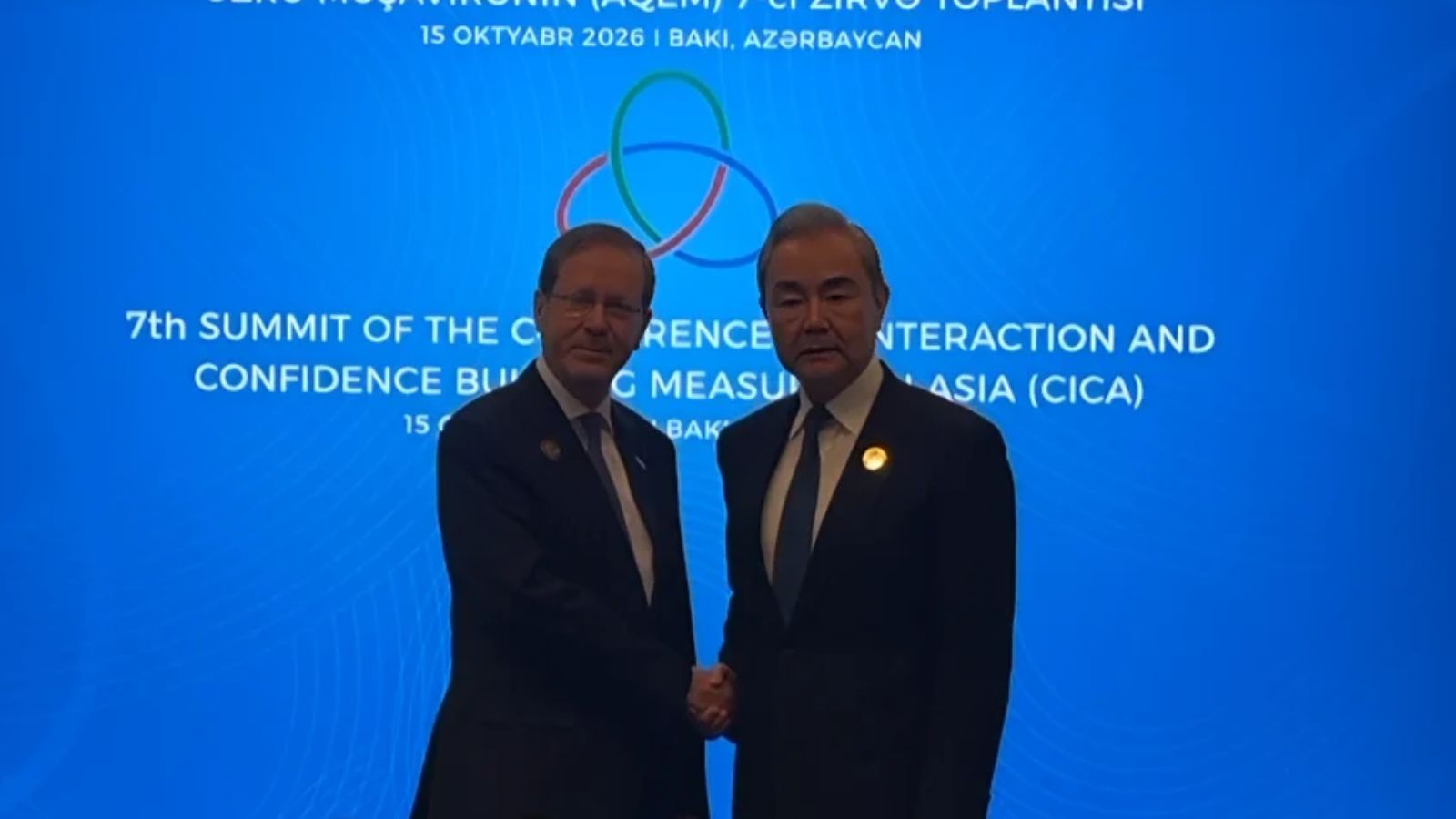
Wang made the remarks during a meeting with Israeli President Isaac Herzog on Thursday on the sidelines of the seventh Conference on Interaction and Confidence Building Measures in Asia (CICA) summit in Baku, Azerbaijan.
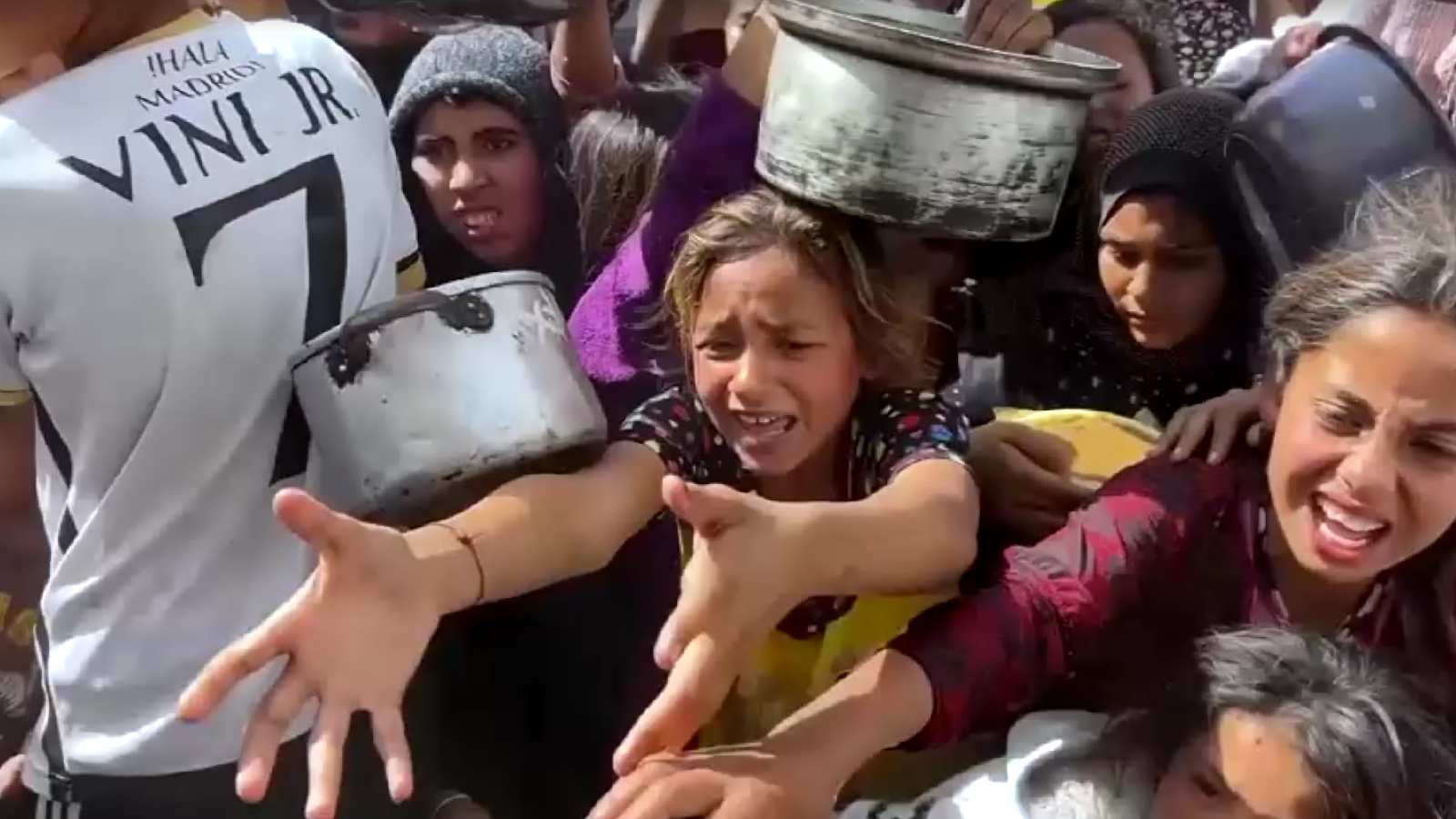
According to a statement issued by the Chinese side, Wang said the immediate priority was to restore access to the territory and prevent civilians from being pushed further into a crisis, highlighting the urgency of addressing the humanitarian situation in Gaza.
"The urgent task is to fully reopen access to the Gaza Strip, to prevent two million civilians from continuing to struggle on the brink of survival, and to prevent the continued spread of a humanitarian catastrophe," the statement read.
He also called on Israel to halt its settlement activities in the West Bank, reiterating China's position that the Palestinian question remains central to achieving lasting peace in West Asia.
"At the same time, Israel should also cease and withdraw its actions of forcibly establishing settlements in the West Bank," the statement added.
The Chinese foreign minister emphasised that the two-state solution remained the appropriate path towards resolving the Palestinian question, describing it as a long-standing historical injustice requiring a political resolution.
"China has always maintained that the Palestinian question is the greatest historical injustice of this century, and the 'two-state solution' is the correct path to resolving it," the statement read.
Wang further said the regional situation remained tense and that lasting peace could not be achieved without dialogue, consultation and efforts towards reconciliation.
"Promoting peace and reconciliation in the region is the cornerstone of China's Middle East policy," he said, adding that Beijing was willing to work with the international community to encourage all parties to return to dialogue and pursue a political solution to the conflict.
During the meeting, Wang also highlighted China's initiatives to promote peace and security in West Asia, stating that Chinese President Xi Jinping had put forward a series of proposals since the beginning of the year.
China, he said, was prepared to work with the international community to promote a common, comprehensive, cooperative and sustainable security framework for the region.
Wang also underscored the rights of both Israelis and Palestinians to live peacefully and establish independent states, reiterating Beijing's support for a negotiated settlement based on the two-state solution.
"The Palestinian question is the root of the Middle East problem. Both the Jewish and Palestinian people have the right to peaceful survival and the right to establish independent states," Wang said.
He added that peace could eventually be achieved if all parties remained committed to dialogue and followed the path towards a two-state solution.
China-Israel ties discussed
The meeting also addressed bilateral relations between China and Israel. Herzog highlighted the historical ties between the two countries and expressed Israel's interest in expanding cooperation in science and technology, investment and people-to-people exchanges.
According to the Chinese readout, Herzog said the Chinese and Jewish peoples shared a history of exchanges and had helped each other during the anti-fascist war. He also reaffirmed Israel's adherence to the one-China policy and its commitment to promoting friendly relations with Beijing.
Herzog outlined Israel's position on the situation in West Asia, saying his country desired peace but faced national security threats and challenges that required a strong response. He also acknowledged China's role in promoting regional peace and stability and expressed Israel's willingness to maintain communication with Beijing.