

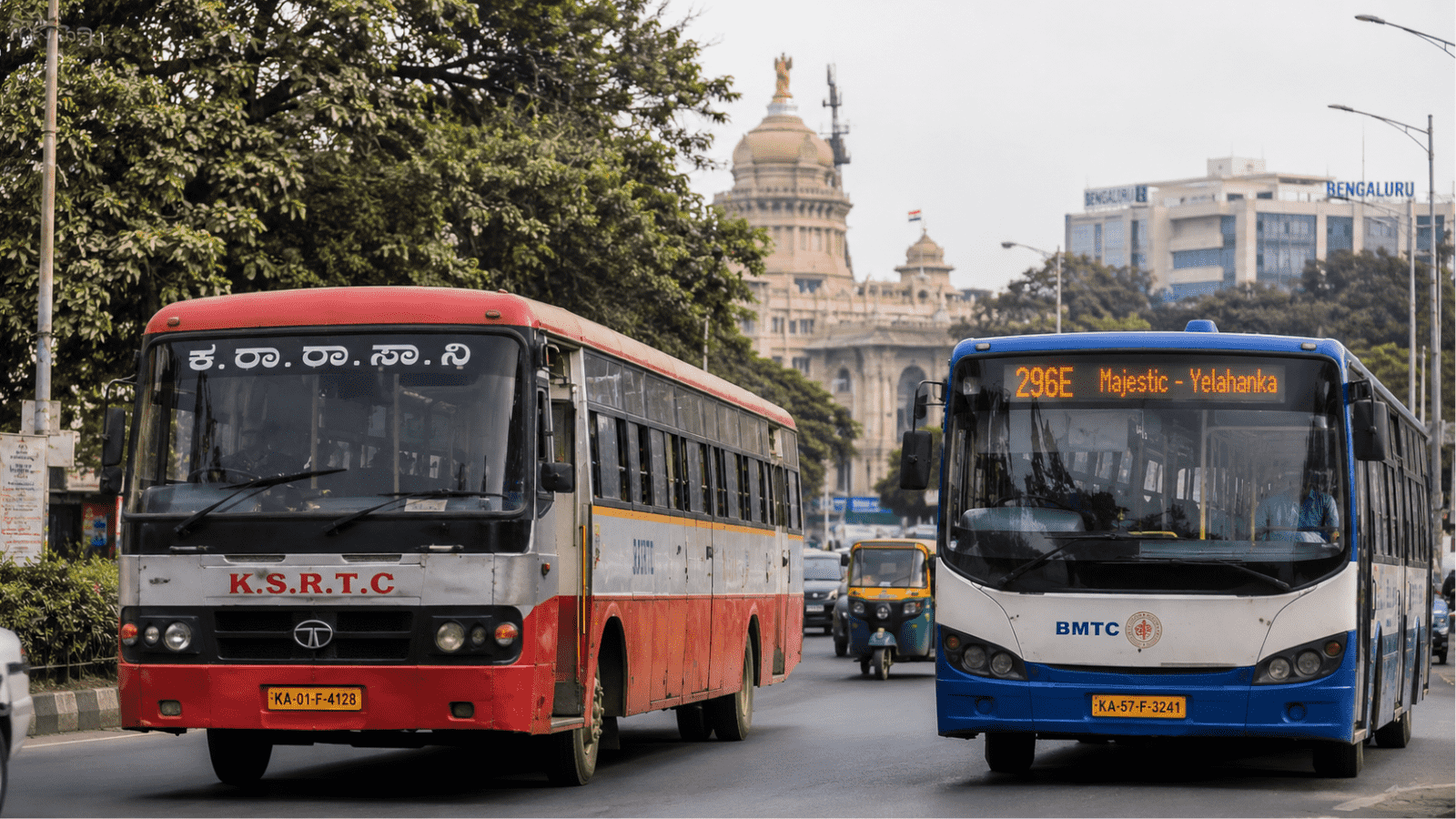


Bengaluru: The Karnataka Government’s decision to increase bus fares across all its transport corporations has come under severe criticism from workers’ unions and Opposition parties in the state. The government on November 4, hiked the ticket prices of the Bangalore Metropolitan Transport Corporation (BMTC) by an average of a whopping 35%, which is the steepest hike witnessed since 2009. The Karnataka State Road Transport Corporation (KSRTC) has increased fares karnaby an average of 23%.
Opposing this move, the Karnataka State IT/ITeS Employees Union (KITU) said that the hike adds a further financial burden on millions of working people, students and ordinary commuters who depend on public buses every day to reach workplaces, educational institutions and other essential destinations.
“Public transport must remain affordable and accessible to all. Moreover, increasing bus fares runs contrary to the government's stated objective of reducing traffic congestion and encouraging greater use of public transport. Higher fares risk discouraging bus travel and pushing more people towards private vehicles,” says KITU, in a statement.
Condemning the bus fare hike, the Bangalore Bus Prayanikara Vedike (BBPV), a public transport advocacy group in the city, pointed out some of the possible consequences and the impact this move could have on the quality of life of the people. “People may be forced to walk long distances, sometimes in the scorching heat, rain, dust and unsafe road conditions, simply to avoid spending money on bus fares. This affects their health, safety, dignity and ability to work. Some may abandon buses altogether and shift to two-wheelers or other modes of transport. Others may be pushed towards the Metro, where fares can be considerably higher for longer journeys. A fare hike therefore does not merely increase the cost of travel; it directly affects people's livelihoods and quality of life,” BBPV said.
Observing that cities across the world are moving towards affordable and accessible public transport in order to tackle traffic congestion and pollution, BBPV questioned as to why the Karnataka Government is moving in the opposite direction.
On Wednesday, while addressing a press conference regarding the bus fare hike, Karnataka’s Transport Minister Byrathi Suresh cited reasons such as high diesel prices (hiked by Rs 10.47 since May 2026), employee salaries (Rs 6,418 crore since 2016) and other existing liabilities of the four transport corporations for the hike in bus fares.
“Both the Union and State Governments must take responsibility for the financial crisis facing public transport corporations. Despite fluctuations and reductions in international crude oil prices, diesel prices in India remain high, placing a substantial burden on transport corporations. When the Union Government can commit thousands of crores in subsidies and financial support for Metro projects, why can it not provide subsidised diesel or direct financial assistance to public bus services, which millions of ordinary people depend on every day?,” questioned BBPV.