


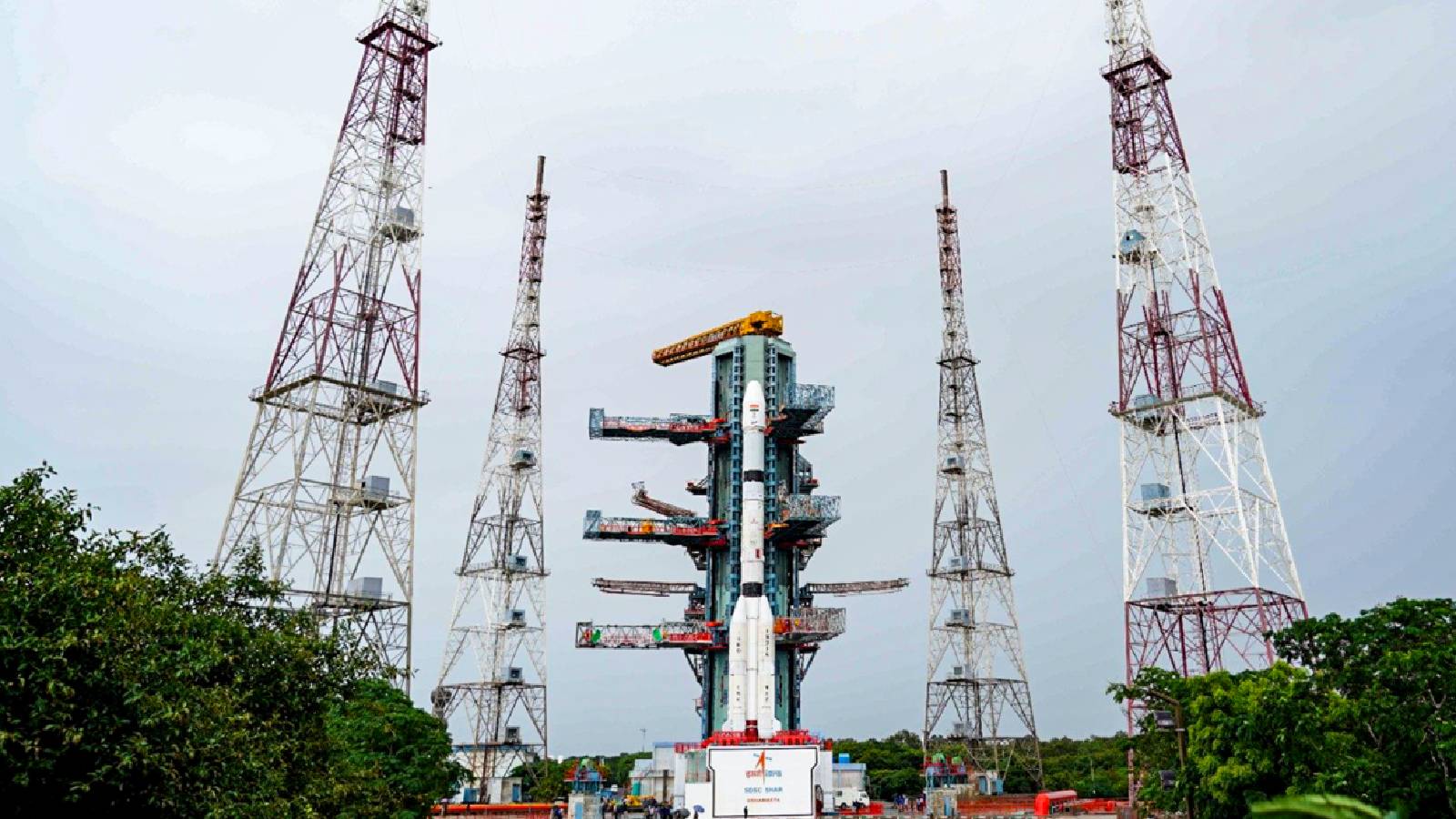


Sriharikota: The Indian Space Research Organisation (ISRO) is set to launch navigation satellite NVS-03 aboard a Geosynchronous Satellite Launch Vehicle (GSLV) rocket on October 30, the premier space agency said on Wednesday.
The move comes as part of efforts to strengthen India's independent satellite navigation network.
The NVS-03 satellite
NVS-03 is the third satellite in the next generation navigation satellite system envisaged for providing continuity of navigation services for Indian Regional Navigation Satellite System (IRNSS) series.
The satellite carries an indigenous atomic clock, along with the procured atomic clocks.
It also includes band L1 in addition to existing L5/S signals (which provides information including location) with coverage over Indian land mass and a region extending 1500 km around Indian geopolitical boundary.
The GSLV-F18/NVS-03 Mission is scheduled for launch on 30 October 2026, at 11:51 pm from Satish Dhawan Space Centre at Sriharikota in Andhra Pradesh.
The NVS series of satellites
According to ISRO, five second-generation Navigation with Indian Constellation (NavIC) satellites--NVS-01/02/03/04/05 are envisaged to augment NavIC base layer constellation with enhanced features for ensuring continuity of services. The NVS series of satellites incorporates L1 band signals additionally to widen the services.
NVS-01, the first of the second-generation satellites was launched onboard GSLV-F12 on 29 May 29 2023. For the first time, an indigenous atomic clock was flown in NVS-01.
NavIC - India's indigenous navigation system
NavIC is India’s independent regional navigation satellite system designed to provide accurate Position, Velocity and Timing (PVT) service to users in India as well as the region extending about 1500 km beyond the Indian landmass, which is its primary service area.
NavIC is providing two types of services, namely, Standard Positioning Service (SPS) and Restricted Service (RS), ISRO has said.