

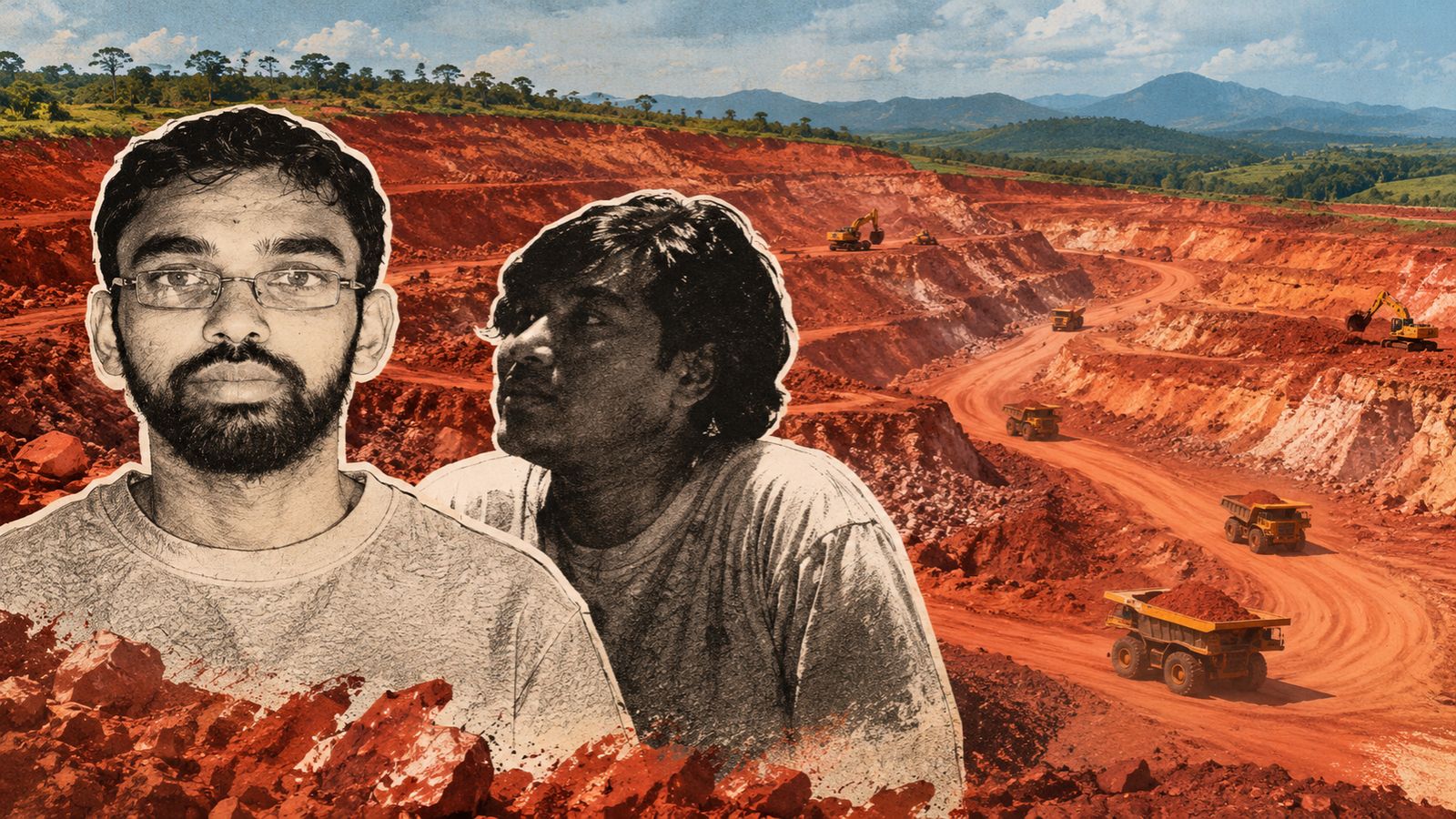


Two human rights activists, Dr Randall Sequeira and Laxman Naik, have been arrested in Odisha for supporting the tribal population in their fight against mines in rural Odisha, run by the Vedanta Group.
According to Wire, Dr Randall Sequeira, a medical doctor who spent his life in the service of the poor, and Laxman Naik, a Dalit activist, were picked up from Sequeira’s home in Kalahandi on the night of October 16.
They were allegedly not given access to their lawyers or family members to inform them about the arrest.
What was the arrest for?
For allegedly instigating protests amongst villagers in Kantamal village against bauxite mining.
The human rights activist duo is currently in the Rayagada sub-jail, and the police have accused them of several charges, from dacoity to attempted murder.
According to the BBC, there have been almost 50 arrests since 2023 against the protesters for rioting, damage to property, unlawful assembly, etc.
- Randall Sequeira
- An MBBS graduate, Sequeira emerged as a community health organiser by living in Kalahandi, a mineral-rich district in Odisha, where Adivasi people have been struggling with the insurgency of Vedanta Group in Sijimali forests and Adani Group in Kutrumalli for one goal: ‘bauxite mining '.
He has spent many years living in the region, giving medical support for the marginalised community in the region, as a welfare scheme.
- Laxman Naik
- Naik is a native of Odisha himself, who has vouched for the rights of the Dalits and Adivasi communities for many years. He was actively involved in mobilising Adivasi communities against bauxite mining in the Sijimali hills. He is also associated with the Ma Mati Mali Suraksha Manch, a people's movement for conserving the region's hills, forests and other natural resources.
What is bauxite?
Bauxite is an aluminium-rich red sedimentary rock used for the manufacturing of aluminium and gallium.
India ranks as the fifth-largest global producer of bauxite and the second-largest producer of primary aluminium, with major deposits found in Odisha and Jharkhand, according to reports.
What are the consequences of the mines?
The Adivasi people, their identity and culture are under threat due to these mines.
They live and depend on the hills and surrounding forests for their livelihood, and the mining, alongside other infrastructural changes, is going to bring them down.
According to a report by Down To Earth, mining can also cause many health problems and poisoning for the nearby communities due to its extreme pollution.
A relocation is strictly opposed by the villagers, as they claim it will eradicate their entire existence and force them to move from their ancestral villages.
What did Vedanta reply?
Speaking to a BBC interview, Prateek Kumar, Project Head of Sijimali Bauxite Mine, Vedanta, denied all the allegations of environmental degradation at the mine. He affirmed that the mining operations are not going to affect the nine surface water bodies within the 10 km radius of the mine. He also said the bauxite areas have low vegetation.
Where did it all begin?
In 2010, Vedanta sought to mine bauxite in the nearby Niyamgiri hills, but the then Union government refused clearance for that project. Subsequently, after many legal battles, the Supreme Court ruled that Gram Sabhas must be the final authority to decide on their rights, giving them the autonomy- a great step for tribal consent and rights. And naturally, all 12 Gram Sabhas rejected the mining proposal.
The 2023 comeback
Circling back to 2023, the Odisha government selected Vedanta as the preferred bidder for the Sijimali bauxite block through an auction.
The proposed project covering almost 1,548 hectares of land across 18 villages in Rayagada and Kalahandi districts estimated about 311 million tonnes of bauxite.
As resistance arose, a public hearing was held where the villagers raised their concerns over the issue. But in December 2023, the district administration says Gram Sabhas in the affected villages gave unanimous consent for the project, to which the villagers alleged that the signatures on the agreement were forged and not done through proper channels, according to a report from Al Jazeera.
Vedanta again submitted a proposal in 2024, which was unanimously rejected by the villagers, creating a deeper conflict amongst the two parties.
Against all odds, the Forest Advisory Committee recommends Stage-I forest clearance for the main mining project.
In January 2026, a separate proposal for a 2.98 km road for transporting bauxite also gets its clearance.
In April 2026, the fight gets physical after locals and police clash over the proposed road, with injuries reported on both sides. The opposition parties, including BJD and Congress, alleged that stringent police action was taken against protestors, with senior Congress MP Jairam Ramesh calling the bauxite mining project and infrastructure development in the region a violation of the Panchayat (Extension to Scheduled Areas) Act (PESA) and the Forest Rights Act, 2006.
He also called for an independent inquiry into the projects in Sijimali.
In May, the Union Environment Ministry granted the final Stage-II clearance for the road, even though the first approval was being challenged in the National Green Tribunal.
The Orissa High Court directs a spot verification exercise to look into the incident, finally leading to the arrest of Dr Sequeira and Naik.
The Adani entry
The Adani Group also has its separate bauxite mine in the nearby region of Kutrumali and Ballada.
Considering the corporate interest and future mining project, both Vedanta and Adani jointly proposed a railway line from Tikiri towards the Sijimali and Kutrumali bauxite mines, for easier transportation, with reports suggesting both the companies were also expected to invest in the project.
Arrest and way forward
Many communities have raised their concerns over the arrests of Dr Sequeria and Naik.
People's Union for Civil Liberties (PUCL) condemns the arrests, with many more opposition parties coming forward.
Indian vocalist and writer T M Krishna took to his Instagram to condemn the incident. He urged netizens to come forward to resist the land grabbing of the Adivasis as he pointed fingers at Vedanta and Adani, saying, “This should be stopped.”
Similarly, renowned doctor, scientist and author, Dr Cyriac Abby Philips, also known as The Liver Dr, who was also the senior of Dr Sequeira at St. John's Medical College, Bangalore, called the incident a ‘state repression’.
Dr Sequeira’s mother penned an emotional note for her son, calling him brave for standing up for the rights of minorities. “We are your parents, and we will continue to stand by you with all the strength that God gives us,” read the note as she pleaded with the government for her son’s innocence, requesting a fair trial.