

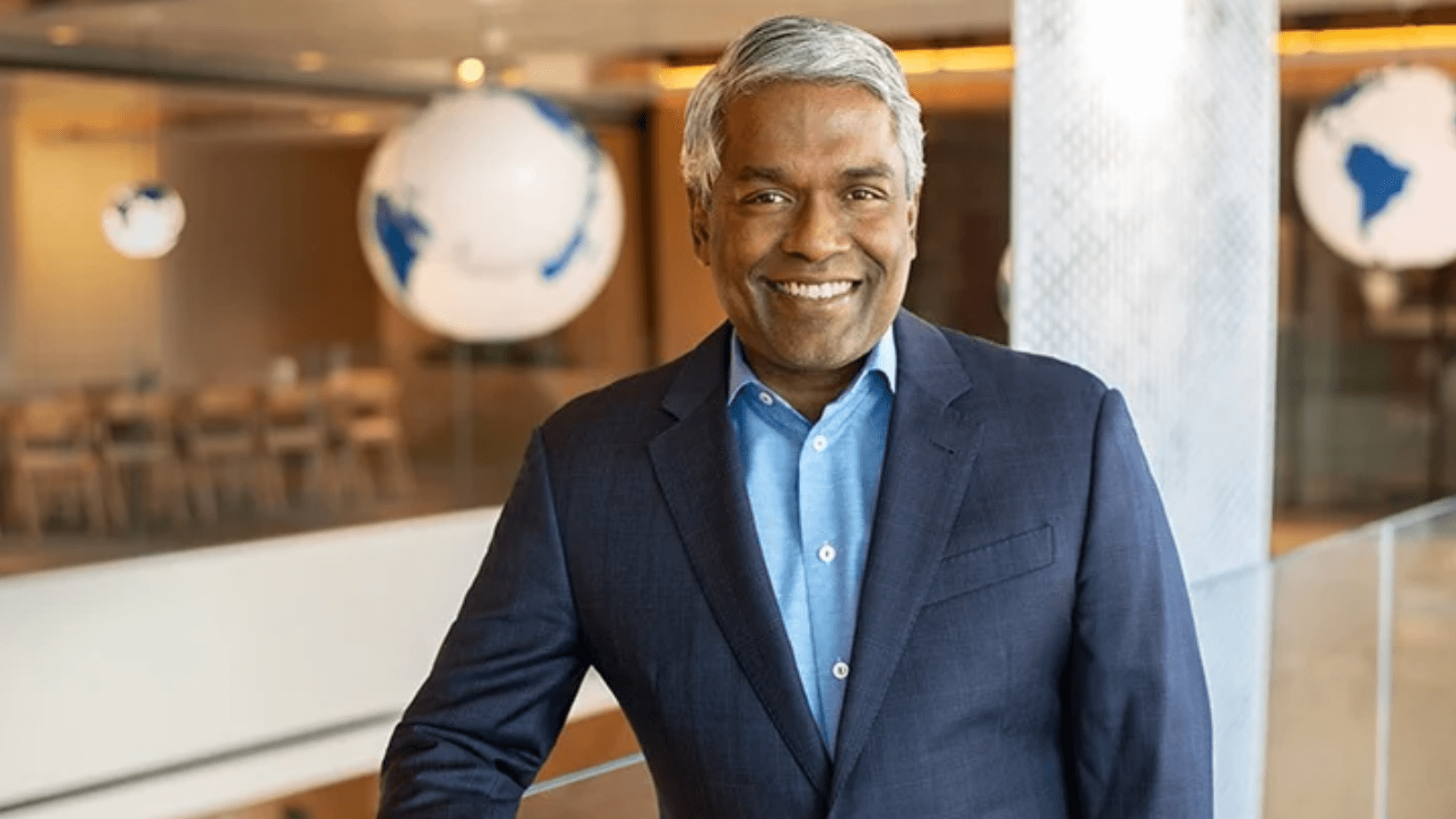


When Thomas Kurian left India for the United States at the age of 17, he was embarking on a journey that would eventually take him to the highest levels of the global technology industry. Nearly four decades later, the boy from Pampady, a small town in Keralam's Kottayam district, finds himself in the conversation surrounding one of the most consequential leadership positions in Silicon Valley.
Kurian, who heads Google Cloud, is among the executives whose names have surfaced in discussions about who could lead NVIDIA, the American semiconductor giant that has become central to the worldwide artificial intelligence boom.
The prospect of a Malayali-born executive taking charge of a company at the heart of the AI revolution has naturally attracted attention in Keralam and across India. But Kurian's rise is not a recent development, nor is it simply a story of an Indian-origin professional making it big in the United States. It is the culmination of a career spanning management consulting, enterprise software, cloud computing and, increasingly, artificial intelligence.
A childhood in Keralam, an education in the US
Thomas Kurian was born in 1966 in Pampady. He was one of four children born to PC Kurian, a chemical engineer who worked as the general manager of Graphite India, and Molly Kurian.
His identical twin brother, George Kurian, would eventually go on to become the CEO of American technology company NetApp. The two brothers would take remarkably similar paths, moving to the United States together and building careers in the technology industry.
According to a 2018 report published by The Economic Times, the brothers attended St Joseph's Boys' High School in Bengaluru. Both were accepted into IIT Madras after school but moved to the US in 1986, when they were 17, to pursue higher education at Princeton University.
At Princeton, Kurian studied electrical engineering and computer science. He later earned an MBA from Stanford University's Graduate School of Business, where he was an Arjay Miller Scholar.
From management consulting to Oracle's inner circle
Kurian's first professional stint was at McKinsey & Company, the global management consulting firm, where he worked as a business analyst and engagement manager.
In 1996, he joined Oracle, the American enterprise software company co-founded by billionaire businessman Larry Ellison. It was here that Kurian would spend the next 22 years of his professional life, gradually establishing himself as one of the most influential executives in the organisation.
He began in product management and development, taking up responsibilities across different divisions of the company. Over the years, he rose through the ranks, eventually becoming the president of product development.
His responsibilities were considerable. He was involved in overseeing Oracle's product development operations and played a key role in the company's efforts to expand its enterprise software and cloud computing businesses.
Kurian also became a trusted executive of Ellison, one of the most powerful figures in the global technology industry.
However, his time at the company would eventually end over disagreements concerning its future direction.
The Oracle exit that brought him to Google
By 2018, cloud computing had become one of the biggest battlegrounds in the technology industry.
Companies were increasingly moving their software, data storage and computing infrastructure away from traditional on-premises systems towards cloud-based services. Amazon Web Services (AWS) and Microsoft's Azure were establishing themselves as major players, while Google was attempting to strengthen its position in the enterprise cloud market.
Oracle, too, was investing heavily in cloud computing.
But Kurian and Ellison reportedly disagreed over how the company should approach this changing market.
According to reporting by The Economic Times in November 2018, Kurian favoured making more of Oracle's software available on competing public cloud platforms, including those operated by Amazon and Microsoft. Ellison, however, was opposed to this approach and preferred Oracle's own cloud infrastructure.
The differences reportedly contributed to Kurian taking a leave of absence in September 2018. He subsequently resigned from Oracle after 22 years with the company.
His departure was significant, given his seniority and his close association with Ellison.
But another technology giant was already looking at him.
In November 2018, Google announced that Kurian would take over as the CEO of Google Cloud, succeeding Diane Greene. He assumed the position on November 26, 2018.
Building Google Cloud into a major AI player
When Kurian took charge of Google Cloud, it was the third-largest player in a market dominated by AWS and Microsoft Azure.
Over the years, Google Cloud expanded its enterprise offerings, investing in data analytics, cybersecurity, cloud infrastructure and artificial intelligence.
Kurian's leadership also coincided with the growing importance of generative AI and the increasing demand for computing infrastructure capable of running sophisticated AI models.
The importance of Google Cloud has also changed with the emergence of artificial intelligence as a major commercial technology.
Why NVIDIA and why Thomas Kurian?
It is this experience that makes Kurian an interesting name in the conversation surrounding NVIDIA.
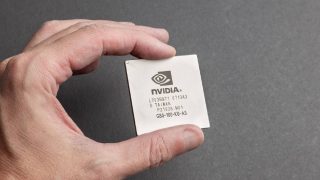
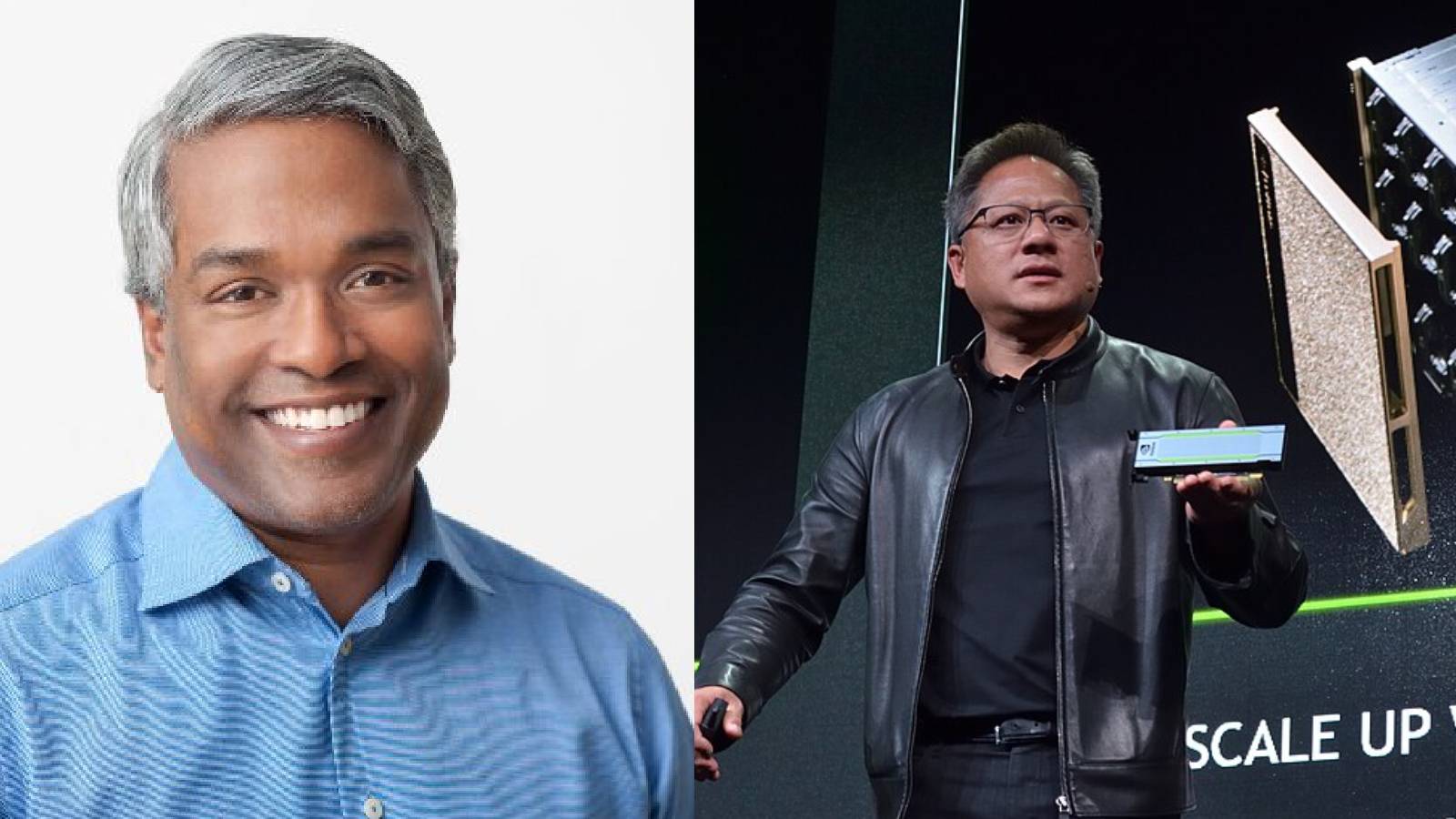
The California-based company, co-founded by Jensen Huang in 1993, has become one of the most important players in the global AI industry. Its graphics processing units (GPUs), originally developed for graphics and gaming applications, have become essential to training and running many of the world's advanced AI systems.
NVIDIA's position in the AI ecosystem has made its leadership particularly consequential.
Following Huang's resignation on November 12, 2026, NVIDIA announced that its chief financial officer, Colette Kress, would serve as interim CEO while the board looked for a permanent successor. The company said it would consider both internal and external candidates.
An Axios report published on November 12 identified 11 possible names in the succession discussion, including Kurian.
He is among the external candidates being discussed alongside executives such as Lisa Su of AMD, Tim Cook, Nikesh Arora of Palo Alto Networks and Pat Gelsinger, the former Intel CEO.
The report points to Kurian's experience overseeing cloud infrastructure, enterprise software and AI services as relevant to NVIDIA's business.
There has been no public announcement that NVIDIA has formally shortlisted him or that he is in negotiations for the position.