




Fashion has always been a salient part of politics, even though it has been looked down upon as something that lacks importance in a societal structure.
From Mahatma Gandhi, who revolutionised ‘khadi’ against colonial oppression, to new-age politicians like Alexandria Ocasio-Cortez wearing a ‘Tax the Rich’ white gown at the annual Met Gala 2023, there are many examples in political history.
Matières Fécales, which translates to ‘fecal matter’ in French, an avant-garde fashion house founded by Hannah Rose Dalton and Steven Raj Bhaskaran in 2014, now shares a part in the same history.
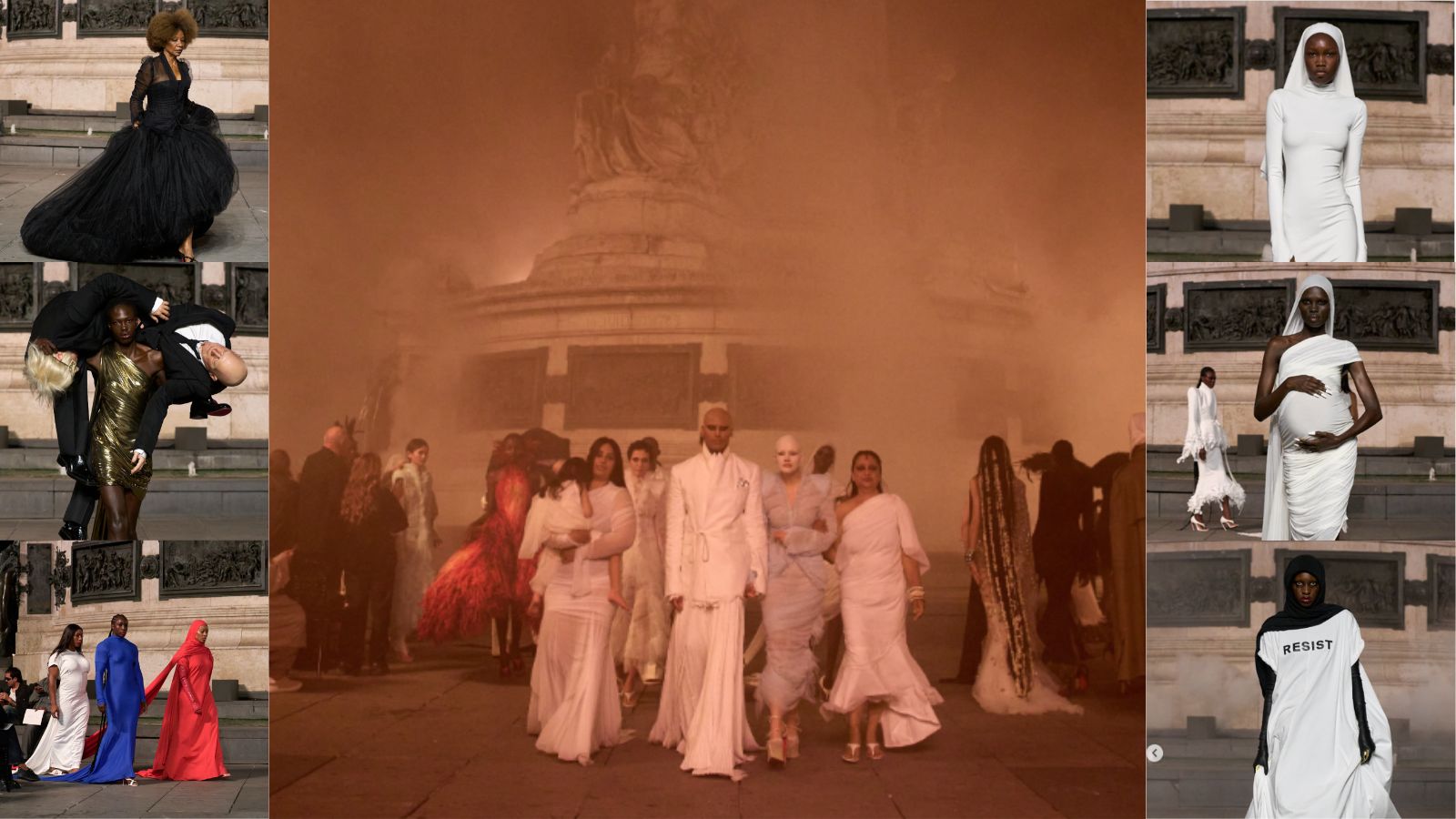
Its designs spread a strong message at the Paris Fashion Week Spring/Summer 27 collection at the Place de la République, the first-ever fashion show held at the historic venue known for its protests and political demonstrations.
The Ninety-Nine Percent
The collection called ‘The Ninety-Nine Percent’ was an ode to Bhaskaran’s upbringing, highlighting the struggles of marginalised communities in society. The models who walked the ramp were people of colour, and the creator duo chose precisely 99 coloured models for the show. Most of the models came from humble backgrounds. The show redefined the common outlook of fashion shows from their glamorous, high-class image to a more accessible and powerful tool for the common voice of the people.
In March, the duo organised the first part of their series for the Fall/Winter collection called ‘The One Percent ’, or the wealthy population, which portrayed the life of Dalton, who, like the idea, grew up in a privileged lifestyle.
Their latest show, ‘The Ninety-Nine Percent’, which was held last week, had three parts to it: Family, Tribe, and the Gods.
Family
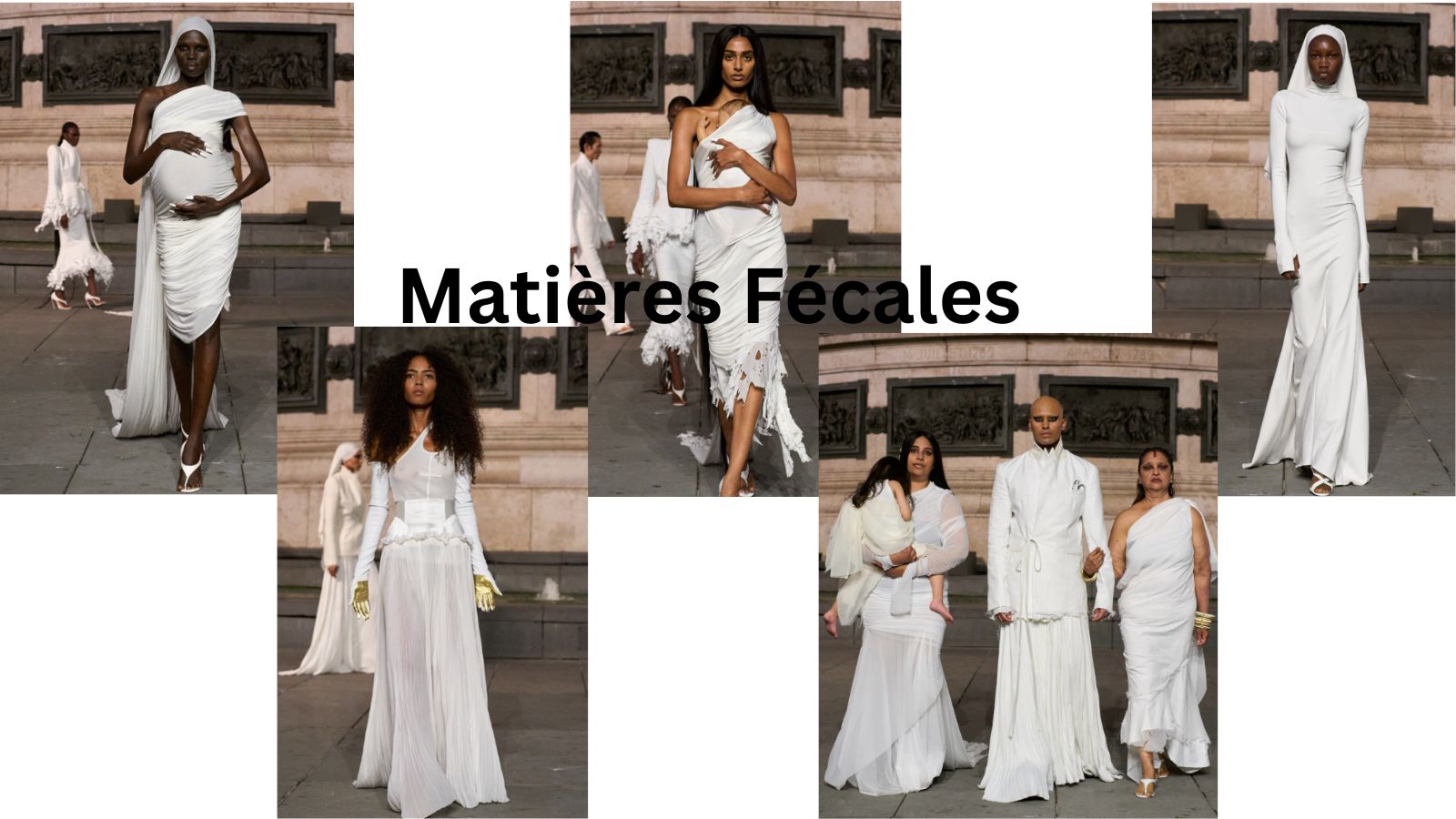
The family section opened up with white silhouettes; the first model was shown as pregnant, walking in a white shawl wrapped around her, followed by the next person holding an infant in a white body-con dress with frilled ends. Nuns’ veils were also adorned in a few collections. It ended with Bhaskaran himself walking the ramp alongside his mother Grace, whom he described as a strong pillar in his life, and his sister Shandeal and niece Vihanna. The section offered inclusivity, oneness and togetherness.
Tribe
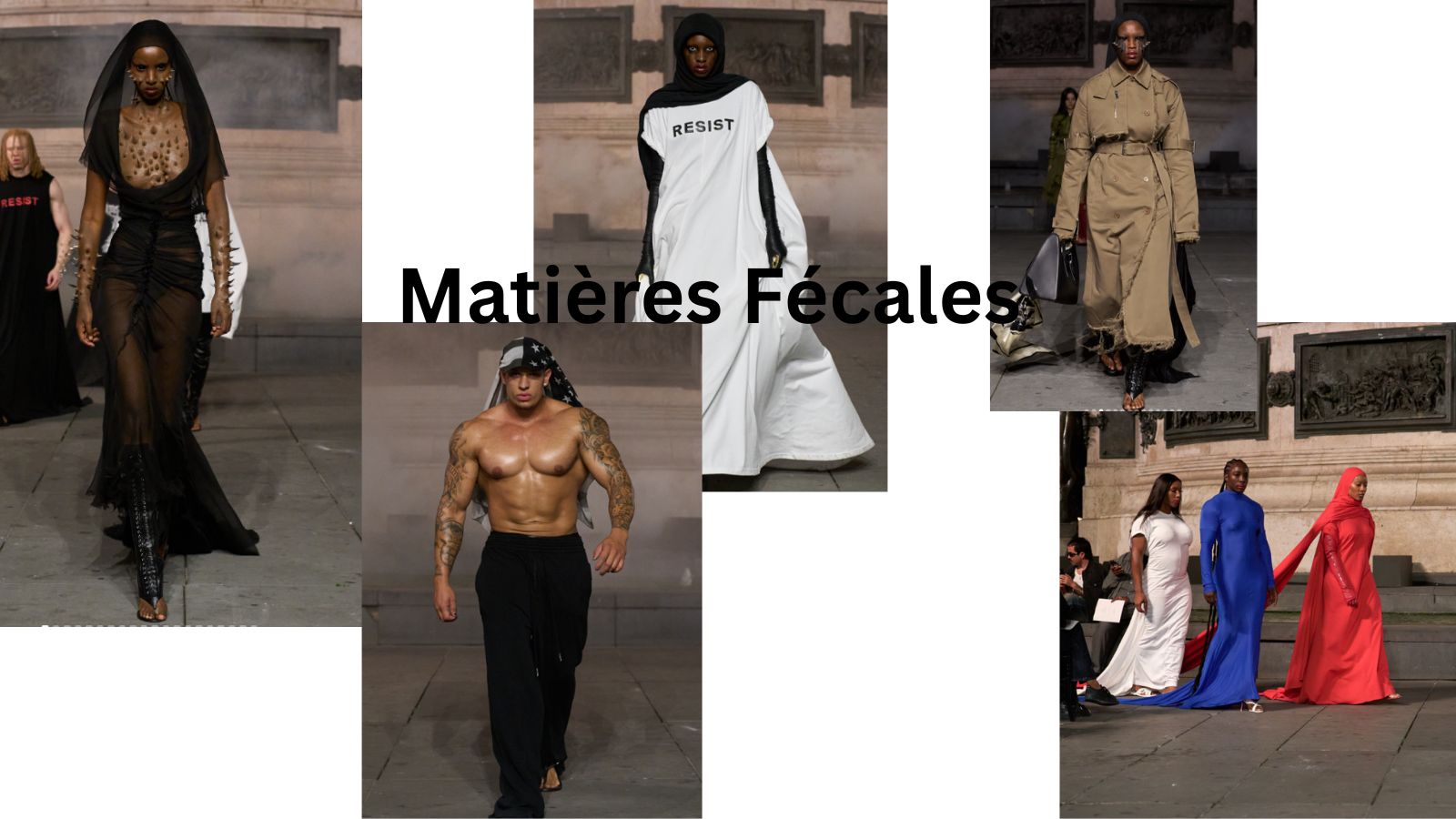
The tribe was more of an empowering painting of people of colour who were shown in strong representations in bold colours like army-green, vivid makeup, and funky-punk outfits. This part played the major political extravaganza with notable looks like hijabi women, ‘Resist’ printed fits, hunky models, and finally ending with three sturdy women in long dresses, in white, blue, and red colours, representing the French flag. The model in the red dress wore a hijab to complete the look, a take on the anti-hijab protests in France. Some had thorns and spike prosthetics growing from their bodies; many wore sclera lenses and even teeth coloured in red liquid to represent blood, depicting humans in an alien form and showing the representation of all kinds of beings.
The Gods (Couture section)
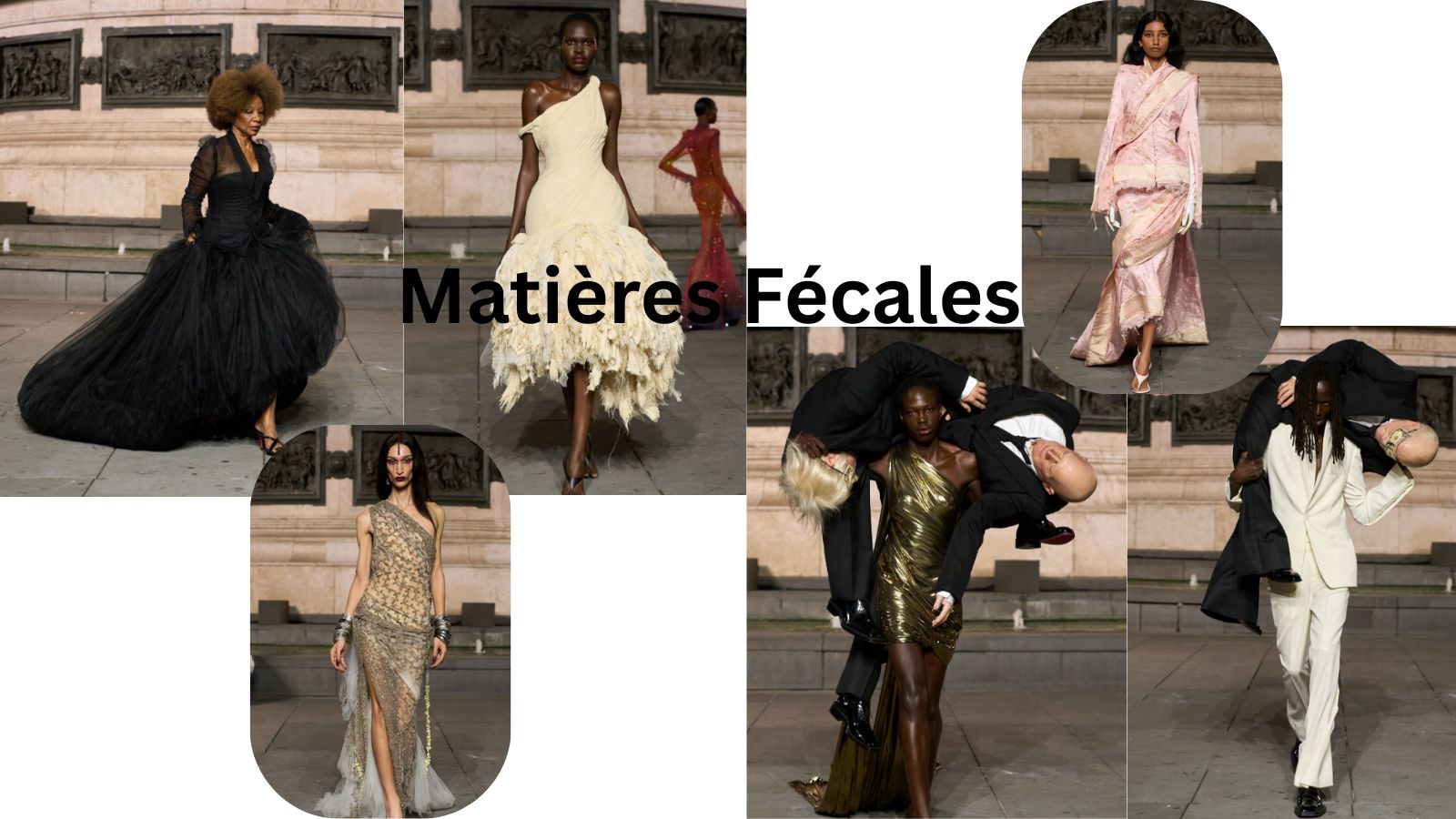
The Gods, the final couture section, was opened by Mounia, one of the first black couture models in history.
It mainly showed the highly eccentric looks of people of colour, with textiles made in Burkina Faso, Indian saree looks, and rich embroidery, giving camp style in full effect.
The session ended with two black models, both carrying dummies of white men. The dummy on the shoulder of the first model, who wore a full white suit, had a dollar-note blindfold. The other, who walked the ramp in a gold shimmer, one-shoulder, long-train dress, carried two dummies, one with the same blindfold and the other without one, portraying an image of plutocracy and their ‘blindness’ for money.
Bhaskaran and Dalton brought a very strong and impactful show, leaving the spectators mesmerised throughout. It showed the importance of art and its representation in the modern world.
The new hijab-outfits inspired by the anti-hijab protests in the country, the models wearing golden palm gloves showing the hard work and gold mines in Africa held against the previous season’s blood-red palm gloves which highlighted the violence and bloodbaths caused by the hands of the rich, the punk-art display of raw humans defying gender, class and norms, the three women representing the French flag, symbolising freedom, equality and fraternity, and the unconsidered men in dollar-note blindfolds, the latest show confronted the capitalist mindset of greed and obsession towards money, in stark contrast with the polarising display of wealth and greed in last season’s ‘The One Percent’ show.
The euphemism of deeply engraved political and discriminatory display of societal issues with artistic freedom and intricacy embossed the dark side into true light.
The show witnessed many star-studded attendees, including the legendary avant-garde designer couple Rick Owens-Michèle Lamy (whom the creator duo considers their mentors), pop icon Rihanna, influencer and model Nikki Lilly, Indian designer Diya Joukani, among others.
After the show, the house penned an emotional note on Instagram sharing a powerful message, “We stand with the many, not the few.”
In the letter, they described the intention of the show and how it was meant to honour the lives of the minorities and sidelined communities.
“We oppose fascism, authoritarianism, racism, xenophobia, misogyny, homophobia, transphobia, and all systems that divide people for the benefit of corrupted power,” read the note.
The team also pledged that a portion of proceeds from the collection will go to the non-profit programme, La Maison d’Allanah, which supports homeless LGBTQIA+ refugees in France.
The Paris Fashion Week Womenswear (Spring/Summer 2027) kicked off on September 28 and will close its curtains on October 6.